Combined biomarker testing for the prediction of left ventricular remodelling in ST-elevation myocardial infarction
- PMID: 27738517
- PMCID: PMC5030543
- DOI: 10.1136/openhrt-2016-000485
Combined biomarker testing for the prediction of left ventricular remodelling in ST-elevation myocardial infarction
Abstract
Objective: The utility of different biomarkers for the prediction of left ventricular remodelling (LVR) following ST-elevation myocardial infarction (STEMI) has been evaluated in several studies. However, very few data exist on the prognostic value of combined biomarkers. The aim of this study was to comprehensively investigate the prognostic value for LVR of routinely available biomarkers measured after reperfused STEMI.
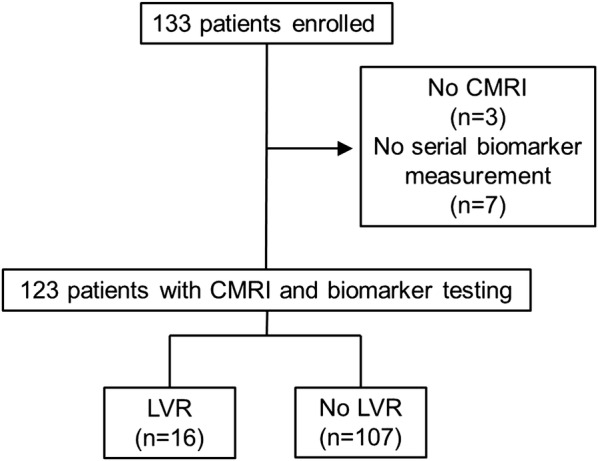
Methods: Serial measurements of N-terminal pro-B-type natriuretic peptide (NT-proBNP), high-sensitivity cardiac troponin T (hs-cTnT), aspartate aminotransferase (AST), alanine aminotransferase (ALT), lactate dehydrogenase (LDH) and high-sensitivity C reactive protein (hs-CRP) were performed in 123 patients with STEMI treated with primary percutaneous coronary intervention in this prospective observational study. Patients underwent cardiac MRI at 2 (1-4) and 125 (121-146) days after infarction. An increase in end-diastolic volume of ≥20% was defined as LVR.
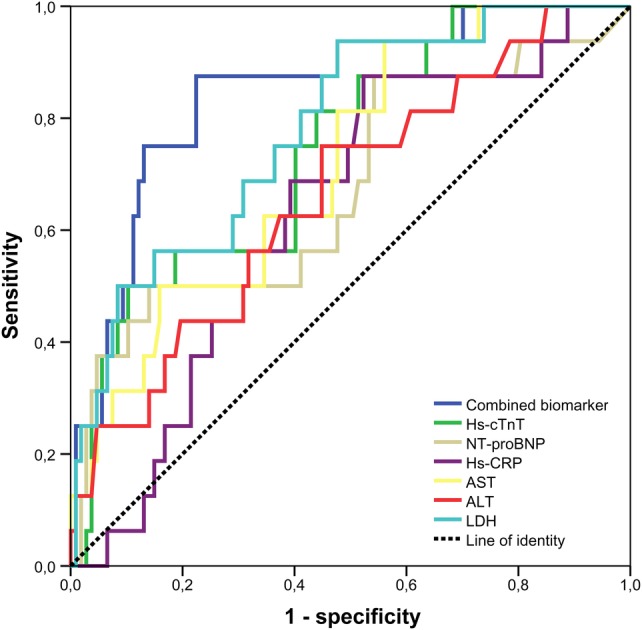
Results: LVR occurred in 16 (13%) patients. Peak concentrations of the following biomarkers showed significant areas under the curves (AUCs) for the prediction of LVR-NT-proBNP: 0.68 (95% CI 0.59 to 0.76, p=0.03), hs-cTnT: 0.75 (95% CI 0.66 to 0.82, p<0.01), AST: 0.72 (95% CI 0.63 to 0.79, p<0.01), ALT: 0.66 (95% CI 0.57 to 0.75, p=0.03), LDH: 0.78 (95% CI 0.70 to 0.85, p<0.01) and hs-CRP: 0.63 (95% CI 0.54 to 0.72, p=0.05). The combination of all biomarkers yielded a significant increase in AUC to 0.85 (95% CI 0.77 to 0.91) (all vs NT-proBNP: p=0.02, all vs hs-cTnT: p=0.02, all vs AST: p<0.01, all vs ALT: p<0.01, all vs hs-CRP: p<0.01 and all vs LDH: p=0.04).
Conclusions: In patients with reperfused STEMI, the combined assessment of peak NT-proBNP, hs-cTnT, AST, ALT, hs-CRP and LDH provide incremental prognostic information for the prediction of LVR when compared with single-biomarker measurement.
Keywords: ST-elevation myocardial infarction; biomarker; cardiac magnetic resonance imaging; left ventricular remodeling.
Figures
References
-
- Cohn JN, Ferrari R, Sharpe N. Cardiac remodeling—concepts and clinical implications: a consensus paper from an international forum on cardiac remodeling. Behalf of an International Forum on Cardiac Remodeling. J Am Coll Cardiol 2000;35:569–82. - PubMed
-
- Kramer DG, Trikalinos TA, Kent DM et al. Quantitative evaluation of drug or device effects on ventricular remodeling as predictors of therapeutic effects on mortality in patients with heart failure and reduced ejection fraction: a meta-analytic approach. J Am Coll Cardiol 2010;56:392–406. 10.1016/j.jacc.2010.05.011 - DOI - PMC - PubMed
Publication types
LinkOut - more resources
Full Text Sources
Other Literature Sources
Research Materials
Miscellaneous