Review
. 2017 Nov;1862(11):1386-1393.
doi: 10.1016/j.bbalip.2016.10.004. Epub 2016 Oct 11.

Making a membrane on the other side of the wall

Affiliations
Review

Making a membrane on the other side of the wall

Kerrie L May et al. Biochim Biophys Acta Mol Cell Biol Lipids. 2017 Nov.

Abstract

The outer membrane (OM) of Gram-negative bacteria is positioned at the frontline of the cell's interaction with its environment and provides a barrier against influx of external toxins while still allowing import of nutrients and excretion of wastes. It is a remarkable asymmetric bilayer with a glycolipid surface-exposed leaflet and a glycerophospholipid inner leaflet. Lipid asymmetry is key to OM barrier function and several different systems actively maintain this lipid asymmetry. All OM components are synthesized in the cytosol before being secreted and assembled into a contiguous membrane on the other side of the cell wall. Work in recent years has uncovered the pathways that transport and assemble most of the OM components. However, our understanding of how phospholipids are delivered to the OM remains notably limited. Here we will review seminal works in phospholipid transfer performed some 40years ago and place more recent insights in their context. This article is part of a Special Issue entitled: Bacterial Lipids edited by Russell E. Bishop.

Keywords: Gram-negative bacteria; Lipopolysaccharide; Lipoproteins; Outer membrane; Phospholipids; β-barrel proteins.


Figures

Figure 1
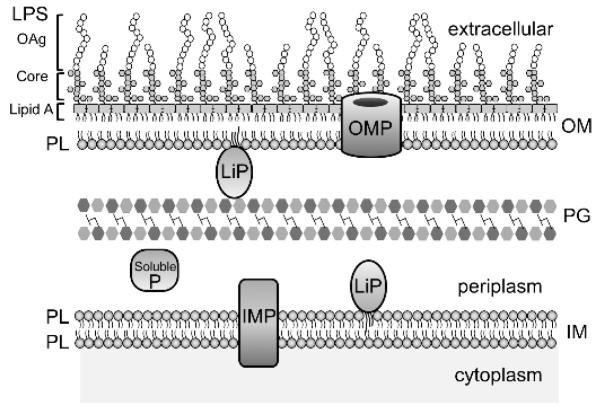
Figure 1. Architecture of the Gram-negative envelope
The outer membrane (OM) and inner membrane (IM) are separated by an aqueous periplasm that contains the peptidoglycan (PG) cell wall. The asymmetric distribution of lipids in the OM is shown with lipopolysaccharide (LPS) in the outer leaflet and glycerophospholipid (PL) in the inner-leaflet. LPS consists of a tripartite structure of lipid A, a core oligosaccharide component, and an O-antigen (OAg) polysaccharide chain that extends into the extracellular milieu. The three major membrane proteins are shown and include integral membrane proteins (IMP), lipoproteins (LiP) and outer membrane proteins (OMP). Soluble proteins (SolubleP) also exist both in the cytoplasm and periplasm.
Figure 2
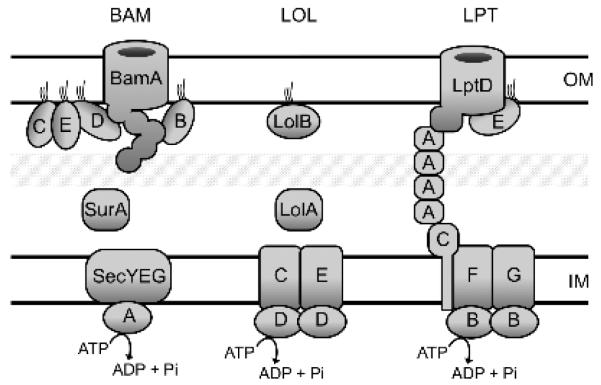
Figure 2. OM biogenesis machinery
Depicted are the components of three essential cellular machines required for outer membrane (OM) biogenesis. Chaperones, e.g. SurA and Skp deliver β-barrel outer membrane proteins to the β-barrel assembly machine (BAM) for assembly into the OM. While OM lipoproteins are delivered via the Lol machine. The LipoPolysaccharide Transport (LPT) Pathway transports LPS from the inner membrane (IM) to the cell surface via a hydrophobic conduit formed by the oligomerization of LptA. The molecular details of these machines are discussed in Section 2.
Figure 3
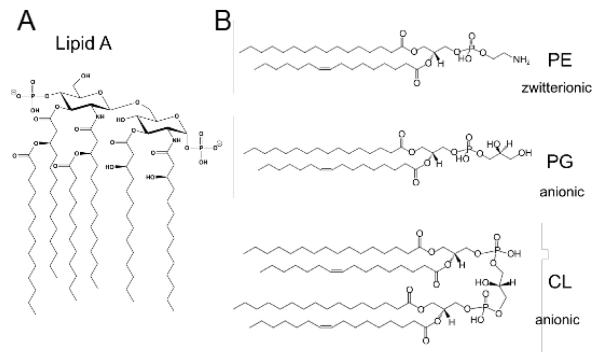
Figure 3. Major OM membrane lipids of E. coli K-12
The structures of the most abundant membrane lipids of E. coli K-12 are depicted. The asymmetric OM bilayer consist of LPS in the outer leaflet that is anchored to the OM via a lipid A moiety (A). The inner-leaflet is comprised primarily of the zwitterionic phospholipid phosphatidylethanolamine (PE; ~70% of total lipid by weight) as well as the anionic phospholipids phosphatidylglycerol (PG; ~20%) and cardiolipin (CL; ~10%) (B). Phospholipid structures were drawn using the ‘LipidMaps’ Tools [92].
Figure 4
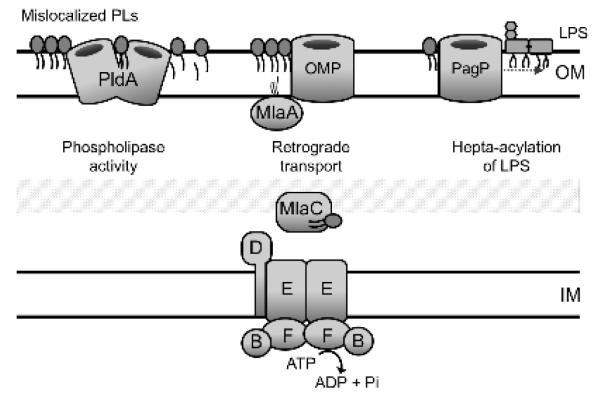
Figure 4. Maintenance of OM asymmetry
Shown are three systems in E. coli that facilitate removal of mislocalized phospholipids from the outer leaflet. The OM phospholipase, PldA, processively degrades mislocalized PLs. The Mla system is comprised of components in each cellular compartment (MlaA,B,C,D,E,F) that collectively facilitate retrograde PL trafficking. The palmitoyltransferase, PagP, also uses mislocalized PLs as a substrate, and transfers an acyl chain to lipid A. The resultant heptaacylated LPS contributes to OM stability and the lyso-PL by-products can presumably be recycled.

References

    1. Silhavy TJ, Kahne D, Walker S. The bacterial cell envelope. Cold Spring Harb Perspect Biol. 2010;2:a000414–a000414. - PMC - PubMed
    1. Nikaido H. Molecular basis of bacterial outer membrane permeability revisited. Microbiol. Mol. Biol. Rev. 2003;67:593–656. - PMC - PubMed
    1. Kamio Y, Nikaido H. Outer membrane of Salmonella typhimurium: accessibility of phospholipid head groups to phospholipase C and cyanogen bromide activated dextran in the external medium. Biochemistry. 1976;15:2561–2570. - PubMed
    1. Funahara Y, Nikaido H. Asymmetric localization of lipopolysaccharides on the outer membrane of Salmonella typhimurium. J. Bacteriol. 1980;141:1463–1465. - PMC - PubMed
    1. Ricci DP, Silhavy TJ. The Bam machine: a molecular cooper. Biochim. Biophys. Acta. 2012;1818:1067–1084. - PMC - PubMed

Publication types

LinkOut - more resources