Postoperative nausea and vomiting: A simple yet complex problem
- PMID: 27746521
- PMCID: PMC5062207
- DOI: 10.4103/0259-1162.179310
Postoperative nausea and vomiting: A simple yet complex problem
Abstract
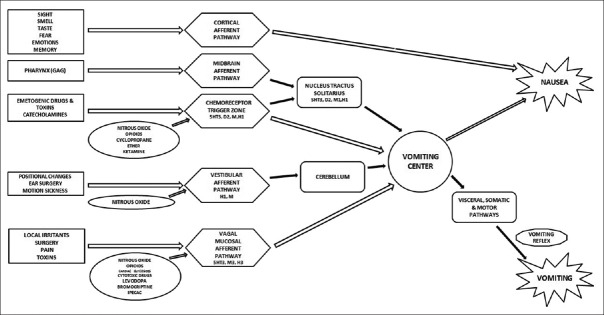
Postoperative nausea and vomiting (PONV) is one of the complex and significant problems in anesthesia practice, with growing trend toward ambulatory and day care surgeries. This review focuses on pathophysiology, pharmacological prophylaxis, and rescue therapy for PONV. We searched the Medline and PubMed database for articles published in English from 1991 to 2014 while writing this review using "postoperative nausea and vomiting, PONV, nausea-vomiting, PONV prophylaxis, and rescue" as keywords. PONV is influenced by multiple factors which are related to the patient, surgery, and pre-, intra-, and post-operative anesthesia factors. The risk of PONV can be assessed using a scoring system such as Apfel simplified scoring system which is based on four independent risk predictors. PONV prophylaxis is administered to patients with medium and high risks based on this scoring system. Newer drugs such as neurokinin-1 receptor antagonist (aprepitant) are used along with serotonin (5-hydroxytryptamine subtype 3) receptor antagonist, corticosteroids, anticholinergics, antihistaminics, and butyrophenones for PONV prophylaxis. Combination of drugs from different classes with different mechanism of action are administered for optimized efficacy in adults with moderate risk for PONV. Multimodal approach with combination of pharmacological and nonpharmacological prophylaxis along with interventions that reduce baseline risk is employed in patients with high PONV risk.
Keywords: Nausea-vomiting; and rescue; postoperative nausea and vomiting; postoperative nausea and vomiting prophylaxis.
Figures
References
-
- Fortier J, Chung F, Su J. Unanticipated admission after ambulatory surgery – A prospective study. Can J Anaesth. 1998;45:612–9. - PubMed
-
- Gold BS, Kitz DS, Lecky JH, Neuhaus JM. Unanticipated admission to the hospital following ambulatory surgery. JAMA. 1989;262:3008–10. - PubMed
-
- Hill RP, Lubarsky DA, Phillips-Bute B, Fortney JT, Creed MR, Glass PS, et al. Cost-effectiveness of prophylactic antiemetic therapy with ondansetron, droperidol, or placebo. Anesthesiology. 2000;92:958–67. - PubMed
-
- Tramèr MR. Strategies for postoperative nausea and vomiting. Best Pract Res Clin Anaesthesiol. 2004;18:693–701. - PubMed
Publication types
LinkOut - more resources
Full Text Sources
Other Literature Sources
Medical