


Pubertal Development, Emotion Regulatory Styles, and the Emergence of Sex Differences in Internalizing Disorders and Symptoms in Adolescence
- PMID: 27747141
- PMCID: PMC5061504
- DOI: 10.1177/2167702616643008
Pubertal Development, Emotion Regulatory Styles, and the Emergence of Sex Differences in Internalizing Disorders and Symptoms in Adolescence
Abstract
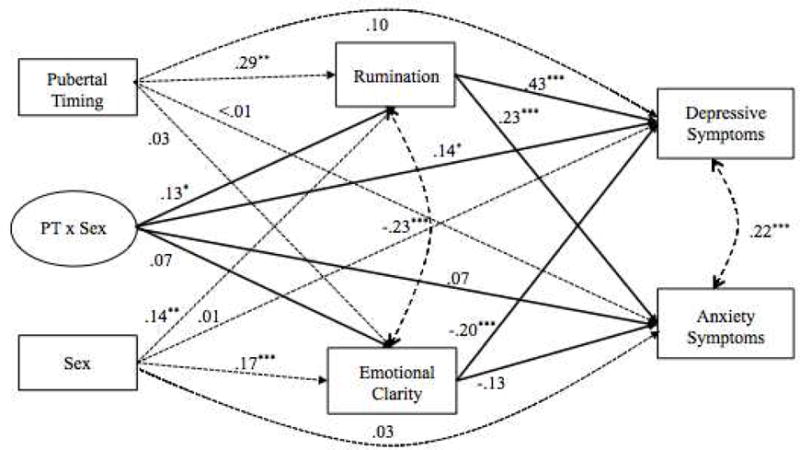
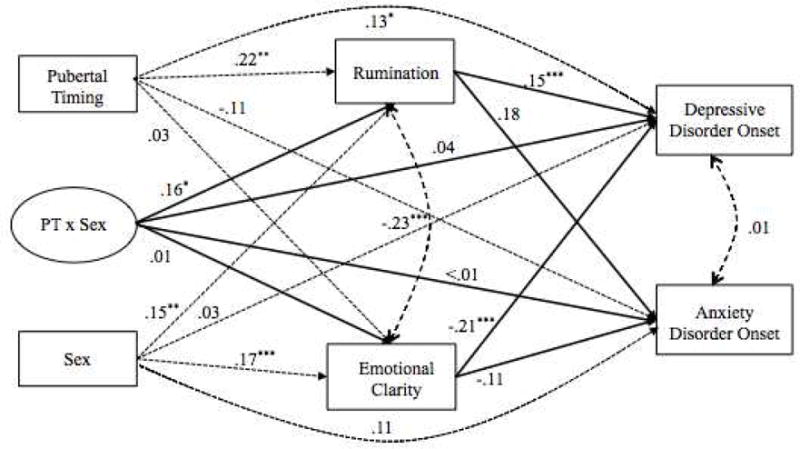
Adolescence marks the emergence of sex differences in internalizing symptoms and disorders, with girls at increased risk for depression and anxiety during the pubertal transition. However, the mechanisms through which puberty confers risk for internalizing psychopathology for girls, but not boys, remain unclear. We examined two pubertal indicators (pubertal status and timing) as predictors of the development of emotion regulation styles (rumination and emotional clarity) and depressive and anxiety symptoms and disorders in a three-wave study of 314 adolescents. Path analyses indicated that early pubertal timing, but not pubertal status, predicted increased rumination, but not decreased emotional clarity, in adolescent girls, but not boys. Additionally, rumination mediated the association between early pubertal timing and increased depressive, but not anxiety, symptoms and disorder onset among adolescent girls. These findings suggest that the sex difference in depression may result partly from early maturing girls' greater tendency to develop ruminative styles than boys.
Keywords: anxiety; depression; emotional clarity; puberty; rumination.
Figures
References
-
- Abela JRZ, Vanderbilt E, Rochon A. A test of the integration of the response styles and social support theories of depression in third and seventh grade children. Journal of Social and Clinical Psychology. 2004;23:653–674.
-
- Abela JRZ, Hankin BL. Cognitive vulnerability to depression in children and adolescents: A developmental psychopathology perspective. In: Abela JRZ, Hankin BL, editors. Handbook of depression in children and adolescents. New York: Guilford; 2008. pp. 35–78.
-
- Abela JRZ, Hankin BL. Rumination as a vulnerability factor to depression during the transition from early to middle adolescence: a multiwave longitudinal study. Journal of Abnormal Psychology. 2011;120:259–71. - PubMed
-
- American Psychiatric Association. Diagnostic and statistical manual of mental disorders. 4th. Washington, DC: Author; 2000. text rev.
Grants and funding
LinkOut - more resources
Full Text Sources
Other Literature Sources