


Development of bullous pemphigoid during the haemodialysis of a young man: case report and literature survey
- PMID: 27748034
- PMCID: PMC7949801
- DOI: 10.1111/iwj.12670
Development of bullous pemphigoid during the haemodialysis of a young man: case report and literature survey
Abstract
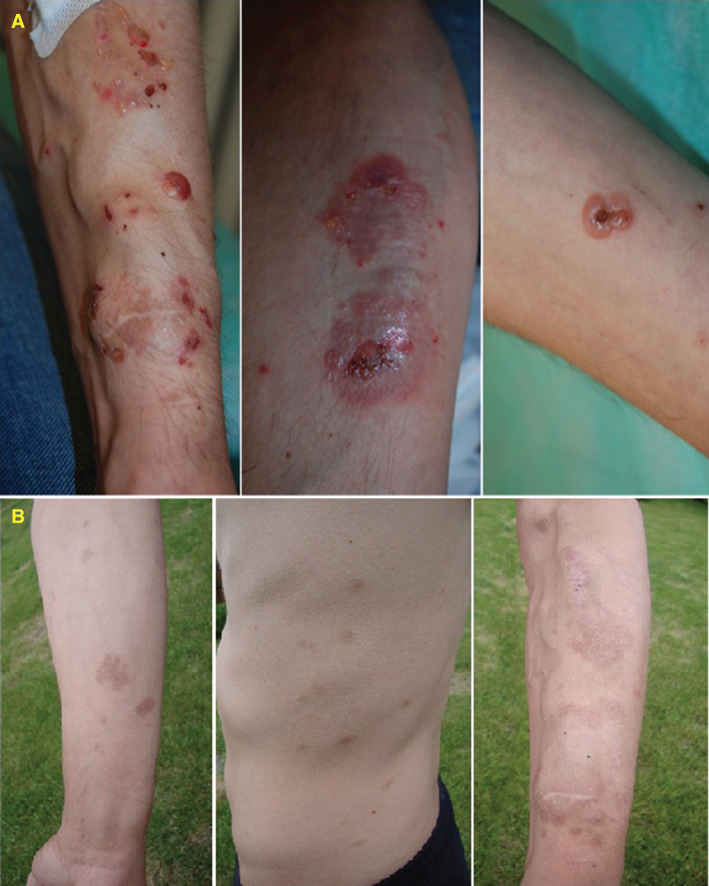
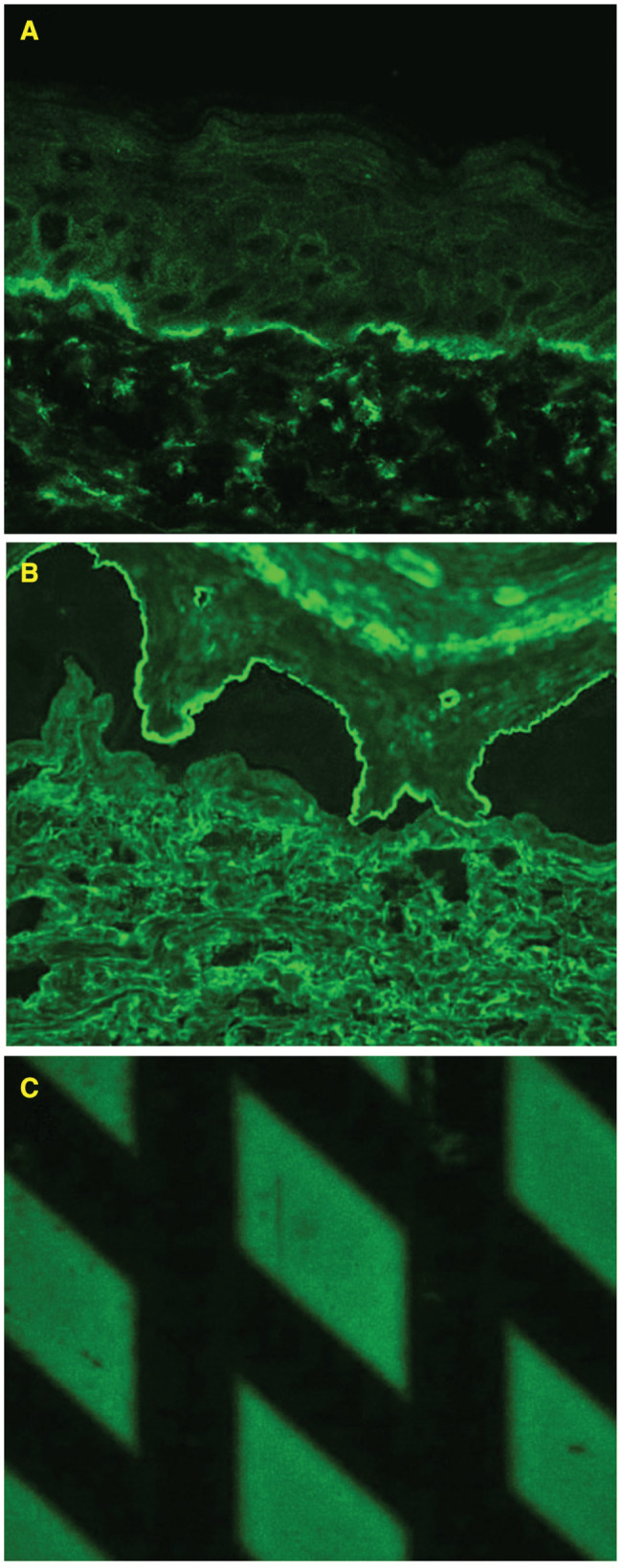
Haemodialysis is the most frequent form of renal replacement therapy (RRT) in patients with end-stage renal disorder (ESRD). Patients with ESRD frequently develop skin problems, mainly xerosis, pruritus and hyperpigmentation, as well as bullous diseases, mainly porphyria or pseudoporphyria and, in some cases, bullous pemphigoid (BP). BP is the most common autoimmune sub-epidermal blistering disease, and it predominantly affects elderly people. Clinically, BP is characterised by generalised pruritic, bullous eruptions and urticaria-like lesions. Usually, BP is an idiopathic disorder; however, in some cases, underlying internal disorders are present, like diabetes or neurological disorders. Herein, we present a 33-year-old man with ESRD, maintained on haemodialysis, who developed BP. There are only six cases with BP provoked by the placement of a fistula for haemodialysis. BP in the current patient was confirmed by direct immunofluorescence (DIF) and indirect immunofluorescence using BIOCHIP. The patient responded promptly to tertracycline and 0·05% clobetasol propionate lesionally. However, the relationship between BP and the fistula for haemodialisys still remains unknown. It is highly likely that the skin injury associated with fistula placement was responsible for the alteration of the basement membrane zone (BMZ) and the stimulation of the immune system, leading to BP development. To explain the real role of fistula placement as a provocative factor in BP, other such cases are required for assessment.
Keywords: BIOCHIP; Bullous pemphigoid; Fistula; Haemodialysis; Renal allograft.
© 2016 Medicalhelplines.com Inc and John Wiley & Sons Ltd.
Figures
References
-
- Lupi O, Rezende L, Zangrando M, Sessim M, Silveira CB, Sepulcri MA, Duarte DJ, Cardim P, Fernandes MM, Santos OR. Cutaneous manifestations in end‐stage renal disease. An Bras Dermatol 2011;86:319–26. - PubMed
-
- Schmidt E, Zillikens D. Pemphigoid disease. Lancet 2013;381:320–32. - PubMed
-
- van Beek N, Rentzsch K, Probst C, Komorowski L, Kasperkiewicz M, Fechner K, Bloecker IM, Zillikens D, Stöcker W, Schmidt E. Serological diagnosis of autoimmune bullous skin diseases: prospective comparison of the BIOCHIP mosaic‐based indirect immunofluorescence technique with the conventional multi‐step single test strategy. Orphanet J Rare Dis 2012;7:49. - PMC - PubMed
-
- Taghipour K, Chi CC, Vincent A, Groves RW, Venning V, Wojnarowska F. The association of bullous pemphigoid with cerebrovascular disease and dementia: a case‐control study. Arch Dermatol 2010;146:1251–4. - PubMed
-
- Freeman BD, Rubin BG. Bullous pemphigoid after prosthetic vascular graft placement. Surgery 1997;124:112–3. - PubMed
Publication types
MeSH terms
LinkOut - more resources
Full Text Sources
Other Literature Sources
Medical
