


Metronomic chemotherapy with oral vinorelbine (mVNR) and capecitabine (mCAPE) in advanced HER2-negative breast cancer patients: is it a way to optimize disease control? Final results of the VICTOR-2 study
- PMID: 27752847
- PMCID: PMC5090011
- DOI: 10.1007/s10549-016-4009-3
Metronomic chemotherapy with oral vinorelbine (mVNR) and capecitabine (mCAPE) in advanced HER2-negative breast cancer patients: is it a way to optimize disease control? Final results of the VICTOR-2 study
Abstract
Purpose: The VICTOR-1 study demonstrated that the all-oral metronomic combination of vinorelbine and capecitabine is highly active and well tolerated in hormone receptor-positive/HER2-negative patients. The VICTOR-2 study was designed to confirm these results.
Methods: Patients received mVNR 40 mg three times a week and mCAPE 500 mg three times a day, continuously. The primary endpoint was the clinical benefit rate (CBR); secondary endpoints were toxicity, objective response rate (ORR), and progression-free survival (PFS).
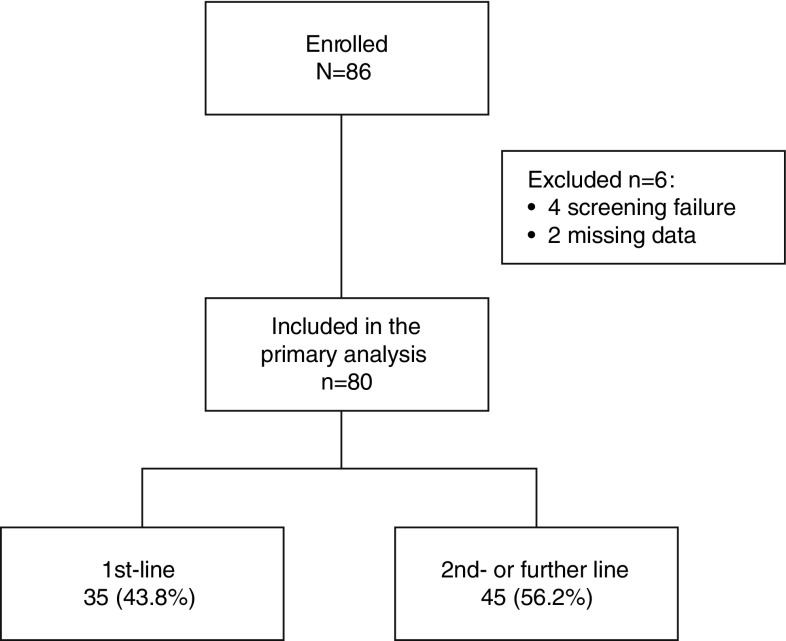
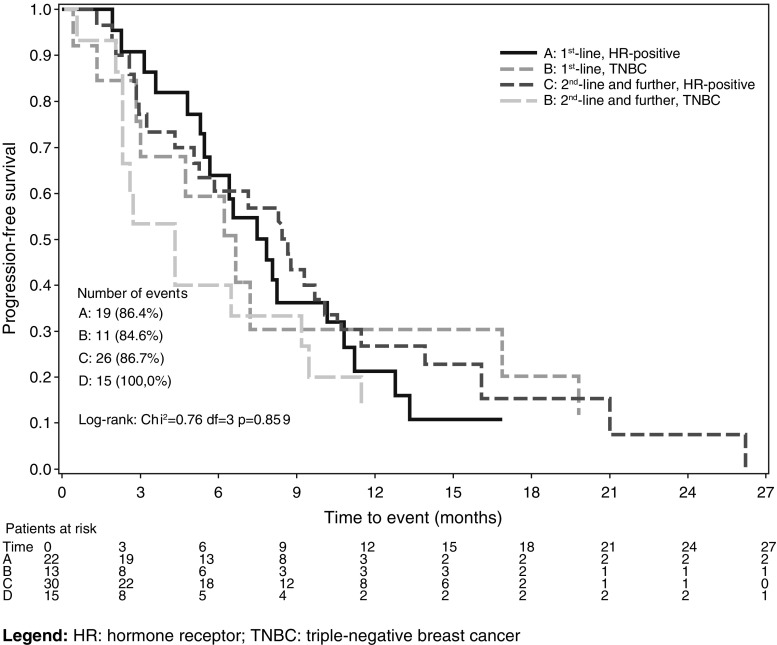
Results: Eighty patients were evaluable for the primary efficacy analysis. Median age was 65.3 years; most patients had HR-positive tumors (65 %). The CBR was 45.7 % (95 % CI 28.8-63.4) and 51.1 % (95 % CI 35.8-66.3) in first- and ≥ second-line therapy, respectively. The ORR was 35.5 % in first-line (95 % CI 19.2-54.6) and 25.6 % in ≥second-line (95 % CI 13.5-41.2). The median duration of response was 11.3 and 6.4 months and PFS rates at 1 year were 24.3 and 22.2 %, respectively. In triple-negative breast cancer patients (N = 28, 35 %) a lower, but clinically relevant CBR (35.7, 95 % CI 18.6-55.9) was observed. The main toxicities per cycle were non-febrile neutropenia (1.1 %), hand-foot syndrome (1.0 %), nausea and vomiting (1.0 %), leucopenia (0.8 %), fatigue (0.7 %), and diarrhea (0.4 %).
Conclusion: The VICTOR-2 study confirms the clinical activity of mVNR and mCAPE in HER2-negative breast cancer patients, suggesting that the easy schedule of administration, which requires monthly blood tests and limits patients' dependence on hospitals, and the low cost of the drugs are valuable elements, even for countries with limited access to innovative or expensive drugs.
Keywords: Breast cancer; Capecitabine; Metronomic chemotherapy; Vinorelbine.
Conflict of interest statement
The authors have declared no conflicts of interest. Informed consent The study was conducted in accordance with the 1987 Declaration of Helsinki and adhered to Good Clinical Practice guidelines. Approval of the protocol was obtained from the local ethics committee for each participating center; all patients were required to give written informed consent before enrolment and to comply with the protocol for the duration of the study.
Figures
Comment in
-
First-line all-oral NORCAP (vinorelbine/capecitabine) might be alternative to taxane-based chemotherapy for HER2-negative metastatic breast cancer.Breast Cancer Res Treat. 2017 Jan;161(2):385. doi: 10.1007/s10549-016-4055-x. Epub 2016 Nov 17. Breast Cancer Res Treat. 2017. PMID: 27858315 No abstract available.
-
In reply to Kadri Altundag.Breast Cancer Res Treat. 2017 Jan;161(2):387. doi: 10.1007/s10549-016-4056-9. Epub 2016 Nov 21. Breast Cancer Res Treat. 2017. PMID: 27873134 No abstract available.
References
-
- Cazzaniga ME, Torri V, Villa F, et al. Efficacy and safety of the all-oral schedule of metronomic vinorelbine and capecitabine in locally advanced or metastatic breast cancer patients: the phase I-II VICTOR-1 study. Int J Breast Cancer. 2014;2014:769790. doi: 10.1155/2014/769790. - DOI - PMC - PubMed
-
- Montagna E, Lai A, Palazzo A, et al. A phase II study of metronomic oral chemotherapy for metastatic breast cancer patients: Safety and efficacy results of vinorelbine, cyclophosphamide plus capecitabine (VEX) combination. Eur J Cancer Congr. 2015;51:S291–S292. doi: 10.1016/S0959-8049(16)30826-7. - DOI
Publication types
MeSH terms
Substances
LinkOut - more resources
Full Text Sources
Other Literature Sources
Medical
Research Materials
Miscellaneous
