


The Potential Mechanisms of Berberine in the Treatment of Nonalcoholic Fatty Liver Disease
- PMID: 27754444
- PMCID: PMC6273247
- DOI: 10.3390/molecules21101336
The Potential Mechanisms of Berberine in the Treatment of Nonalcoholic Fatty Liver Disease
Abstract
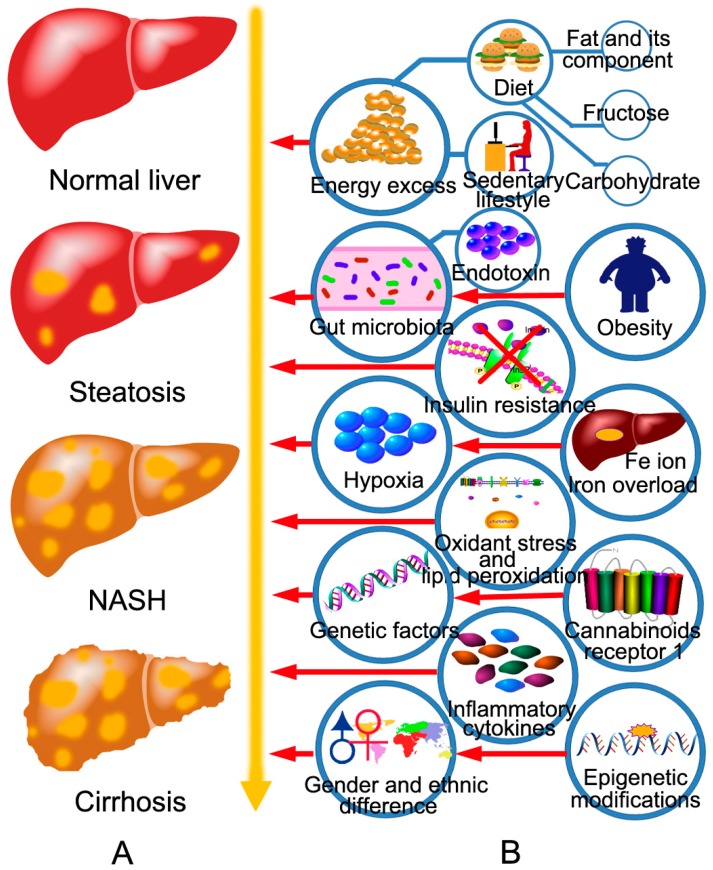
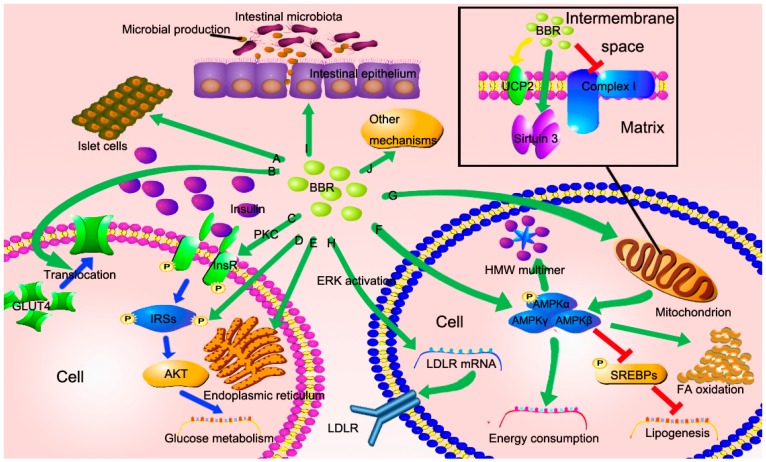
Nonalcoholic fatty liver disease (NAFLD) is a globally observed metabolic disease with high prevalence both in adults and children. However, there is no efficient medication available yet. Increased evidence indicates that berberine (BBR), a natural plant product, has beneficial effects on NAFLD, though the mechanisms are not completely known. In this review, we briefly summarize the pathogenesis of NAFLD and factors that influence the progression of NAFLD, and focus on the potential mechanisms of BBR in the treatment of NAFLD. Increase of insulin sensitivity, regulation of adenosine monophosphate-activated protein kinase (AMPK) pathway, improvement of mitochondrial function, alleviation of oxidative stress, LDLR mRNA stabilization, and regulation of gut microenvironment are the major targets of BBR in the treatment of NAFLD. Additionally, reduction of proprotein convertase subtilisin/kexin 9 (PCSK9) expression and DNA methylation are also involved in pharmacological mechanisms of berberine in the treatment of NAFLD. The immunologic mechanism of BBR in the treatment of NAFLD, development of berberine derivative, drug combinations, delivery routes, and drug dose can be considered in the future research.
Keywords: adenosine monophosphate-activated protein kinase; berberine; insulin resistance; mechanism; nonalcoholic fatty liver disease.
Conflict of interest statement
The authors declare no conflict of interest.
Figures
References
-
- Chalasani N., Younossi Z., Lavine J.E., Diehl A.M., Brunt E.M., Cusi K., Charlton M., Sanyal A.J. The diagnosis and management of non-alcoholic fatty liver disease: Practice guideline by the american association for the study of liver diseases, american college of gastroenterology, and the american gastroenterological association. Hepatology. 2012;55:2005–2023. doi: 10.1002/hep.25762. - DOI - PubMed
Publication types
MeSH terms
Substances
LinkOut - more resources
Full Text Sources
Other Literature Sources
Medical
Miscellaneous
