


Combination antiretroviral therapy and cancer risk
- PMID: 27755153
- PMCID: PMC5244841
- DOI: 10.1097/COH.0000000000000334
Combination antiretroviral therapy and cancer risk
Abstract
Purpose of review: To review the newest research about the effects of combination antiretroviral therapy (cART) on cancer risk.
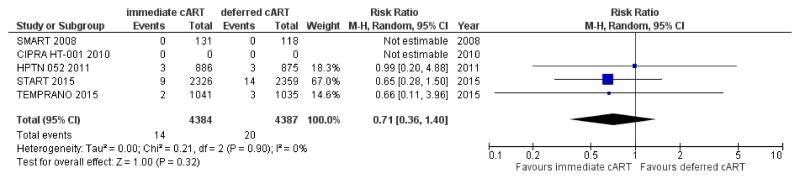
Recent findings: HIV+ persons are at increased risk of cancer. As this risk is higher for malignancies driven by viral and bacterial coinfections, classifying malignancies into infection-related and infection-unrelated has been an emerging trend. Cohorts have detected major reductions in the incidence of Kaposi sarcoma and non-Hodgkin lymphoma (NHL) following cART initiation among immunosuppressed HIV+ persons. However, recent randomized data indicate that cART reduces risk of Kaposi sarcoma and NHL also during early HIV infection before overt immunosuppression occurs. Long-term effects of cART exposure on cancer risk are not well defined; according to basic and epidemiological research, there might be specific associations of each cART class with distinct patterns of cancer risk.
Summary: The relationship between cART exposure and cancer risk is complex and nuanced. It is an intriguing fact that, whether initiated during severe immunosuppression or not, cART reduces risk of Kaposi sarcoma and NHL. Further research should identify mediators of the benefit of immediate cART initiation in reducing cancer risk, understand the relationship between long-term cART exposure and cancer incidence and assess whether adjuvant anti-inflammatory therapies can reduce cancer risk during treated HIV infection.
Figures
References
-
- Patel P, Hanson DL, Sullivan PS, et al. Incidence of types of cancer among HIV-infected persons compared with the general population in the United States, 1992-2003. Ann Intern Med. 2008;148:728–736. - PubMed
-
- Calabresi A, Ferraresi A, Festa A, et al. Incidence of AIDS-defining cancers and virus-related and non-virus-related non-AIDS-defining cancers among HIV-infected patients compared with the general population in a large health district of northern Italy, 1999-2009. HIV Med. 2013;14:481–490. - PubMed
Publication types
MeSH terms
Substances
Grants and funding
LinkOut - more resources
Full Text Sources
Other Literature Sources
Medical
Research Materials
