Obstetric Facility Quality and Newborn Mortality in Malawi: A Cross-Sectional Study
- PMID: 27755547
- PMCID: PMC5068819
- DOI: 10.1371/journal.pmed.1002151
Obstetric Facility Quality and Newborn Mortality in Malawi: A Cross-Sectional Study
Abstract
Background: Ending preventable newborn deaths is a global health priority, but efforts to improve coverage of maternal and newborn care have not yielded expected gains in infant survival in many settings. One possible explanation is poor quality of clinical care. We assess facility quality and estimate the association of facility quality with neonatal mortality in Malawi.
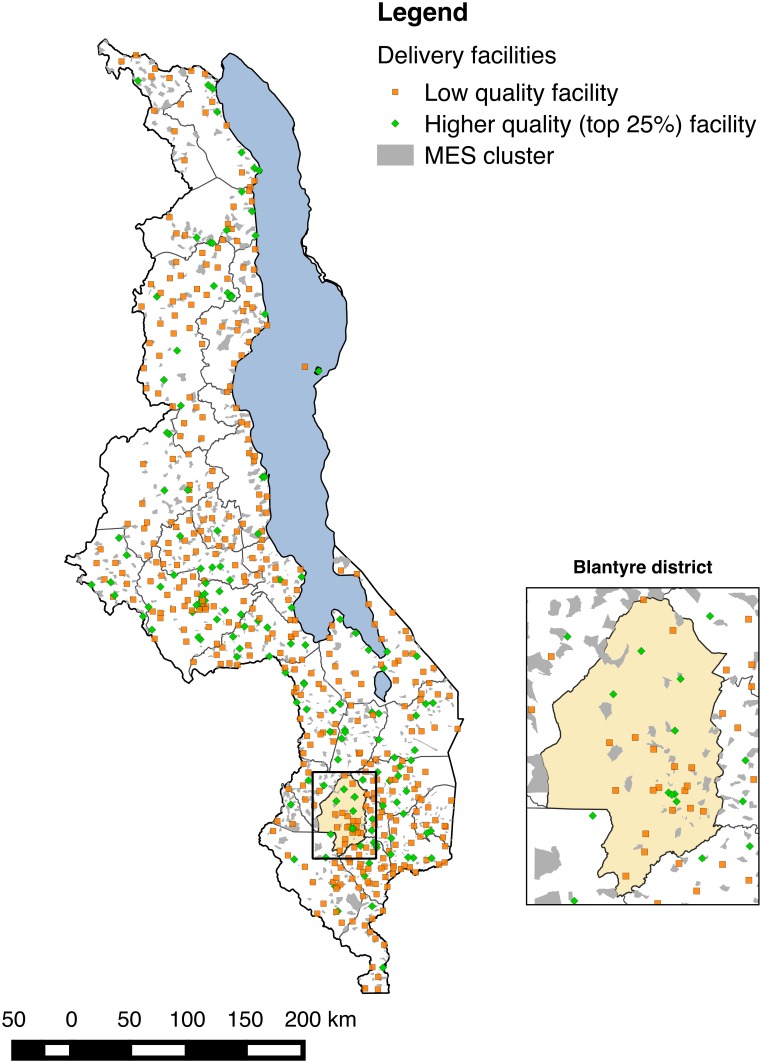
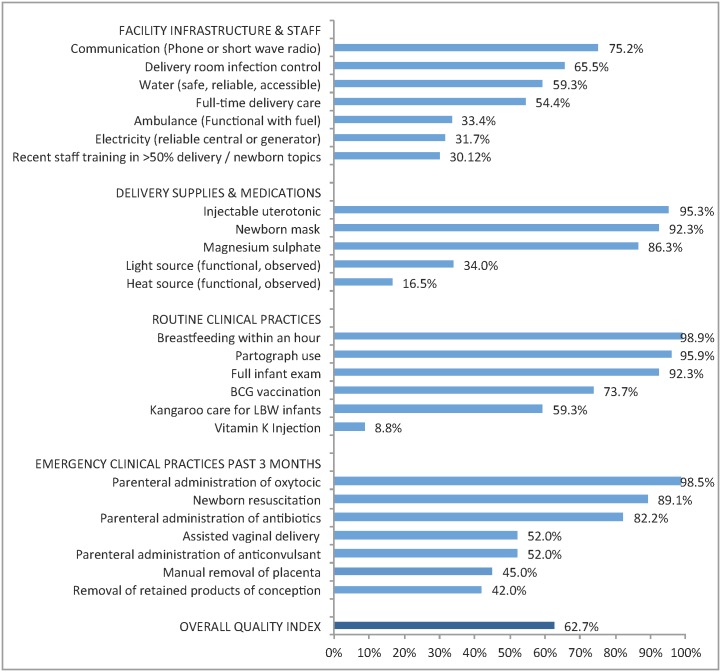
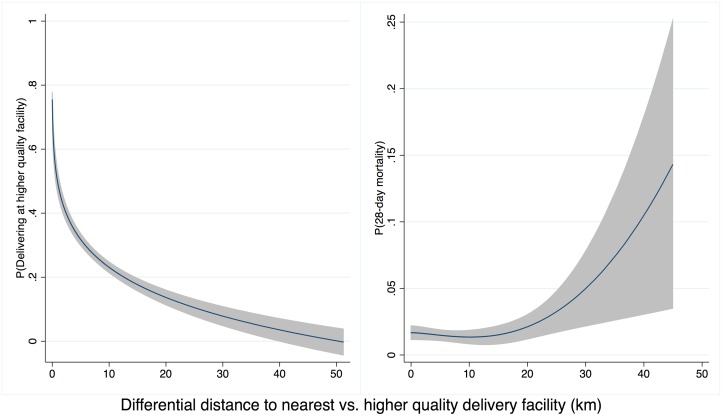
Methods and findings: Data on facility infrastructure as well as processes of routine and basic emergency obstetric care for all facilities in the country were obtained from 2013 Malawi Service Provision Assessment. Birth location and mortality for children born in the preceding two years were obtained from the 2013-2014 Millennium Development Goals Endline Survey. Facilities were classified as higher quality if they ranked in the top 25% of delivery facilities based on an index of 25 predefined quality indicators. To address risk selection (sicker mothers choosing or being referred to higher-quality facilities), we employed instrumental variable (IV) analysis to estimate the association of facility quality of care with neonatal mortality. We used the difference between distance to the nearest facility and distance to a higher-quality delivery facility as the instrument. Four hundred sixty-seven of the 540 delivery facilities in Malawi, including 134 rated as higher quality, were linked to births in the population survey. The difference between higher- and lower-quality facilities was most pronounced in indicators of basic emergency obstetric care procedures. Higher-quality facilities were located a median distance of 3.3 km further from women than the nearest delivery facility and were more likely to be in urban areas. Among the 6,686 neonates analyzed, the overall neonatal mortality rate was 17 per 1,000 live births. Delivery in a higher-quality facility (top 25%) was associated with a 2.3 percentage point lower newborn mortality (95% confidence interval [CI] -0.046, 0.000, p-value 0.047). These results imply a newborn mortality rate of 28 per 1,000 births at low-quality facilities and of 5 per 1,000 births at the top 25% of facilities, accounting for maternal and newborn characteristics. This estimate applies to newborns whose mothers would switch from a lower-quality to a higher-quality facility if one were more accessible. Although we did not find an indication of unmeasured associations between the instrument and outcome, this remains a potential limitation of IV analysis.
Conclusions: Poor quality of delivery facilities is associated with higher risk of newborn mortality in Malawi. A shift in focus from increasing utilization of delivery facilities to improving their quality is needed if global targets for further reductions in newborn mortality are to be achieved.
Conflict of interest statement
MEK is a member of the Editorial Board of PLOS Medicine.
Figures
References
-
- United Nations Development Program. Sustainable Development Goals. Geneva, Switzerland: United Nations, 2015.
-
- Wang H, Liddell CA, Coates MM, Mooney MD, Levitz CE, Schumacher AE, et al. Global, regional, and national levels of neonatal, infant, and under-5 mortality during 1990–2013: a systematic analysis for the Global Burden of Disease Study 2013. Lancet (London, England). 2014;384(9947):957–79. Epub 2014/05/07. 10.1016/s0140-6736(14)60497-9 - DOI - PMC - PubMed
-
- Child Mortality Estimates. In: UN Inter-agency Group for Child Mortality, editor.: UNICEF; 2015.
MeSH terms
LinkOut - more resources
Full Text Sources
Other Literature Sources