


Knowledge brokering for healthy aging: a scoping review of potential approaches
- PMID: 27756358
- PMCID: PMC5070130
- DOI: 10.1186/s13012-016-0504-5
Knowledge brokering for healthy aging: a scoping review of potential approaches
Abstract
Background: Developing a healthcare delivery system that is more responsive to the future challenges of an aging population is a priority in Canada. The World Health Organization acknowledges the need for knowledge translation frameworks in aging and health. Knowledge brokering (KB) is a specific knowledge translation approach that includes making connections between people to facilitate the use of evidence. Knowledge gaps exist about KB roles, approaches, and guiding frameworks. The objective of the scoping review is to identify and describe KB approaches and the underlying conceptual frameworks (models, theories) used to guide the approaches that could support healthy aging.
Methods: Literature searches were done in PubMed, EMBASE, PsycINFO, EBM reviews (Cochrane Database of systematic reviews), CINAHL, and SCOPUS, as well as Google and Google Scholar using terms related to knowledge brokering. Titles, abstracts, and full reports were reviewed independently by two reviewers who came to consensus on all screening criteria. Documents were included if they described a KB approach and details about the underlying conceptual basis. Data about KB approach, target stakeholders, KB outcomes, and context were extracted independently by two reviewers.
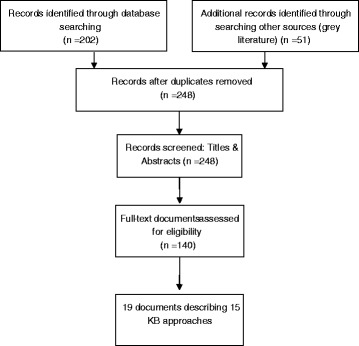
Results: Searches identified 248 unique references. Screening for inclusion revealed 19 documents that described 15 accounts of knowledge brokering and details about conceptual guidance and could be applied in healthy aging contexts. Eight KB elements were detected in the approaches though not all approaches incorporated all elements. The underlying conceptual guidance for KB approaches varied. Specific KB frameworks were referenced or developed for nine KB approaches while the remaining six cited more general KT frameworks (or multiple frameworks) as guidance.
Conclusions: The KB approaches that we found varied greatly depending on the context and stakeholders involved. Three of the approaches were explicitly employed in the context of health aging. Common elements of KB approaches that could be conducted in healthy aging contexts focussed on acquiring, adapting, and disseminating knowledge and networking (linkage). The descriptions of the guiding conceptual frameworks (theories, models) focussed on linkage and exchange but varied across approaches. Future research should gather KB practitioner and stakeholder perspectives on effective practices to develop KB approaches for healthy aging.
Keywords: Healthy aging; Knowledge broker; Knowledge transfer.
Figures
References
-
- Brazil K, Kaasalainen S, Williams A, Rodriguez C. Comparing the experiences of rural and urban family caregivers of the terminally ill. Rural Remote Health. 2013;13(1):2250. - PubMed
Publication types
MeSH terms
LinkOut - more resources
Full Text Sources
Other Literature Sources
Medical
