


Infliximab enhances the therapeutic effects of 5-fluorouracil resulting in tumor regression in colon cancer
- PMID: 27757041
- PMCID: PMC5055041
- DOI: 10.2147/OTT.S109342
Infliximab enhances the therapeutic effects of 5-fluorouracil resulting in tumor regression in colon cancer
Abstract
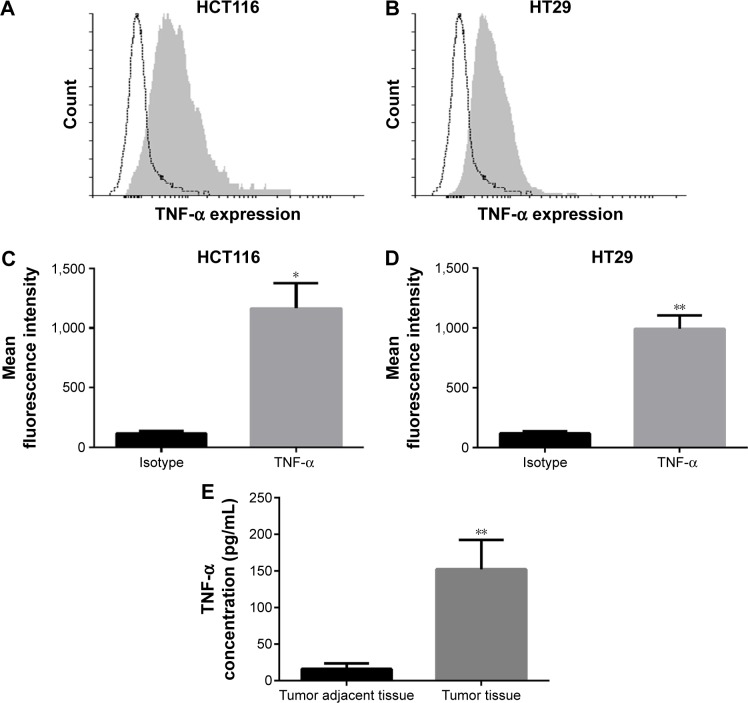
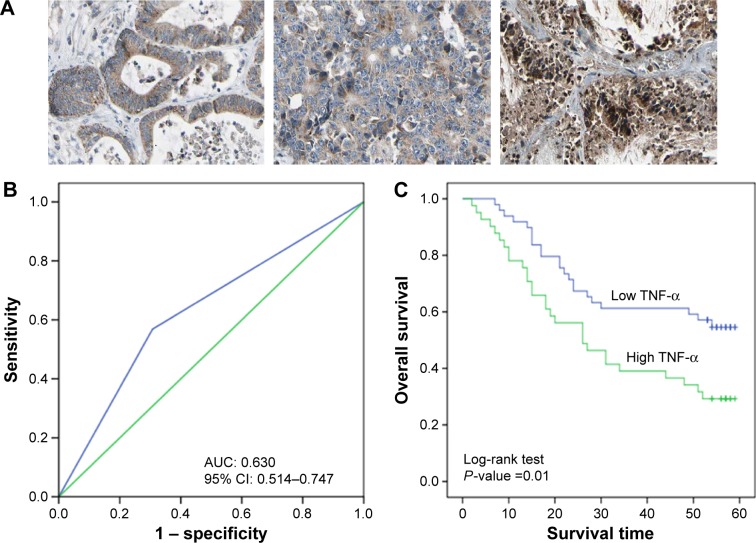
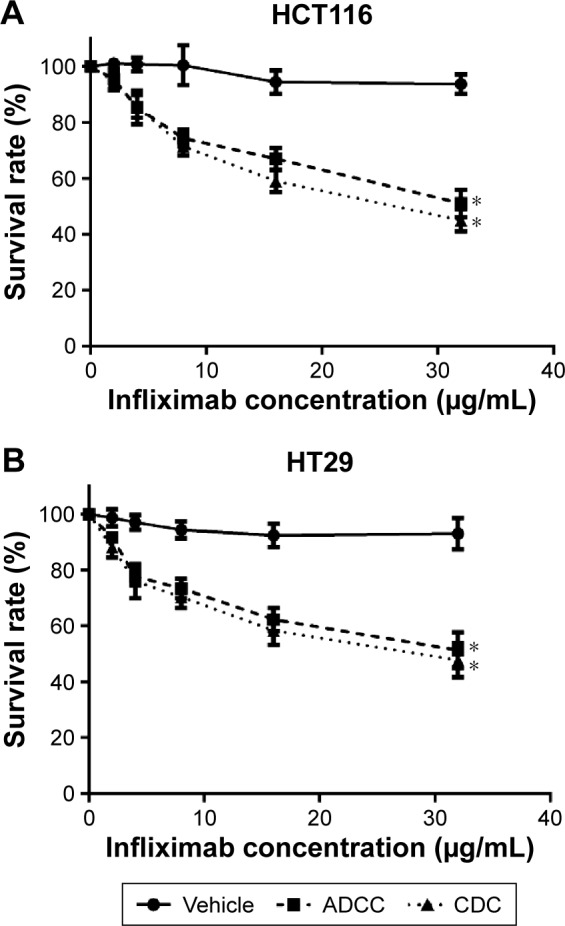
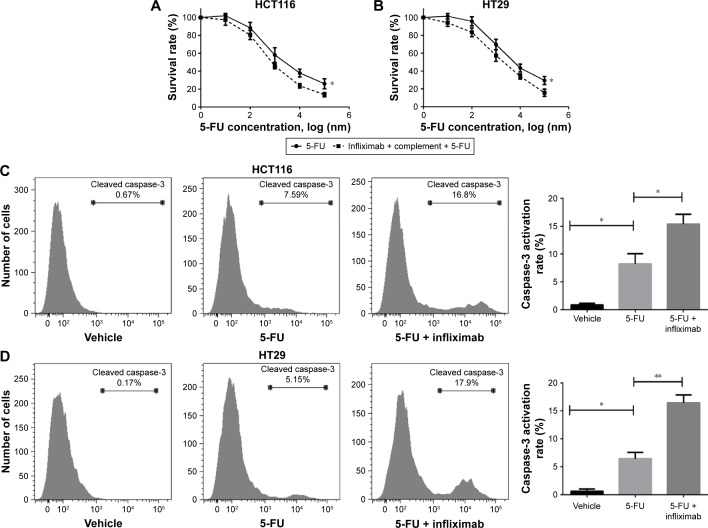
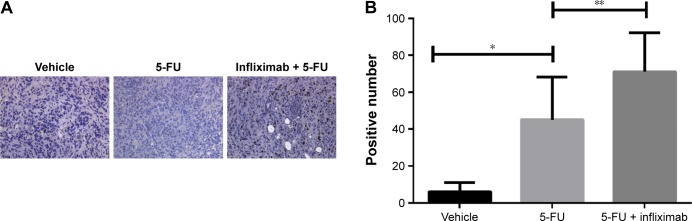
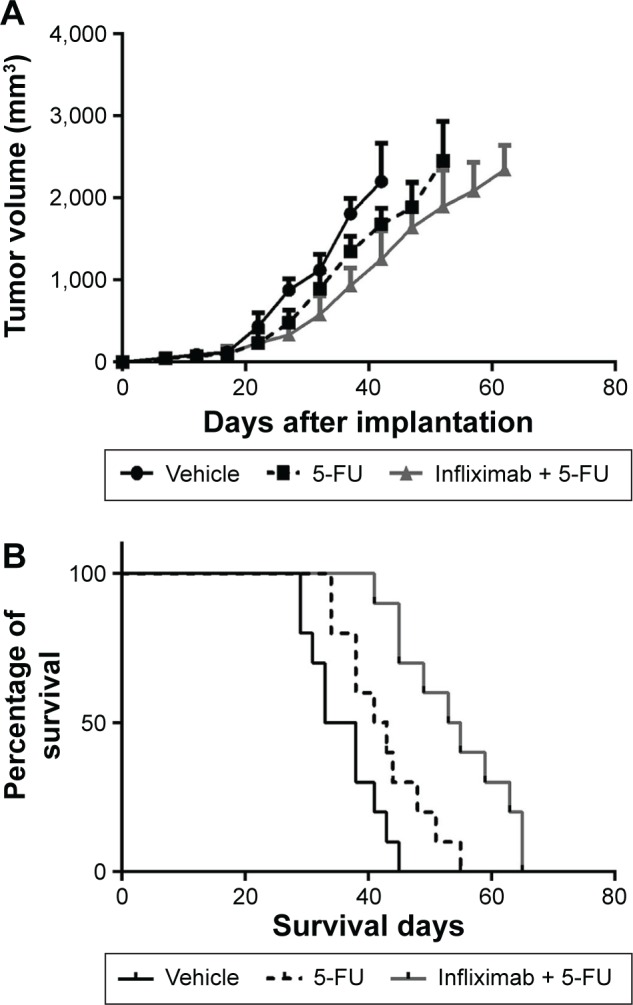
Colon cancer (CC) is among the most common malignant diseases with a dismal survival. Tumor necrosis factor-alpha (TNF-α) has been identified as a therapeutic target in various cancers, and anti-TNF-α treatment has shown promising effects in different cancer models. However, if TNF-α can be targeted in CC, the therapeutic values of anti-TNF-α treatment in CC remain unknown. Our study indicated that TNF-α is highly expressed in CC cell lines and patient tumor samples. High expression of TNF-α is an independent adverse prognosticator of CC. Targeting the TNF-α by its antibody infliximab induced antibody-dependent cellular cytotoxicity and complement-dependent cytotoxicity and enhanced apoptosis leading to cell death. The combination of infliximab with 5-fluorouracil showed better responses in vitro and in vivo than 5-fluorouracil alone. In conclusion, this study identified TNF-α as a target of CC and anti-TNF-α treatment synergized with chemotherapy leading to a better outcome in preclinical models.
Keywords: chemotherapy; colon cancer; prognosis; tumor necrosis factor-alpha; tumor regression.
Conflict of interest statement
The authors report no conflicts of interest in this work.
Figures
References
-
- Siegel R, Desantis C, Jemal A. Colorectal cancer statistics, 2014. CA Cancer J Clin. 2014;64(2):104–117. - PubMed
-
- Torre LA, Bray F, Siegel RL, Ferlay J, Lortet-Tieulent J, Jemal A. Global cancer statistics, 2012. CA Cancer J Clin. 2015;65(2):87–108. - PubMed
-
- Locksley RM, Killeen N, Lenardo MJ. The TNF and TNF receptor super-families: integrating mammalian biology. Cell. 2001;104(4):487–501. - PubMed
LinkOut - more resources
Full Text Sources
Other Literature Sources
