


Ability of procalcitonin to diagnose bacterial infection and bacteria types compared with blood culture findings
- PMID: 27757046
- PMCID: PMC5053384
- DOI: 10.2147/IJGM.S115277
Ability of procalcitonin to diagnose bacterial infection and bacteria types compared with blood culture findings
Abstract
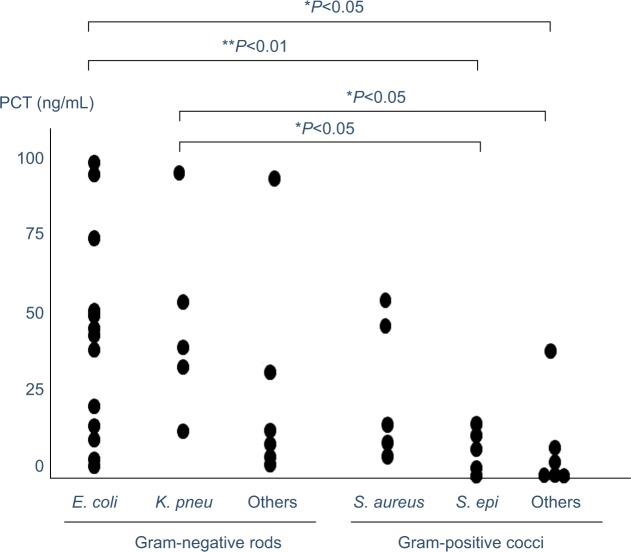
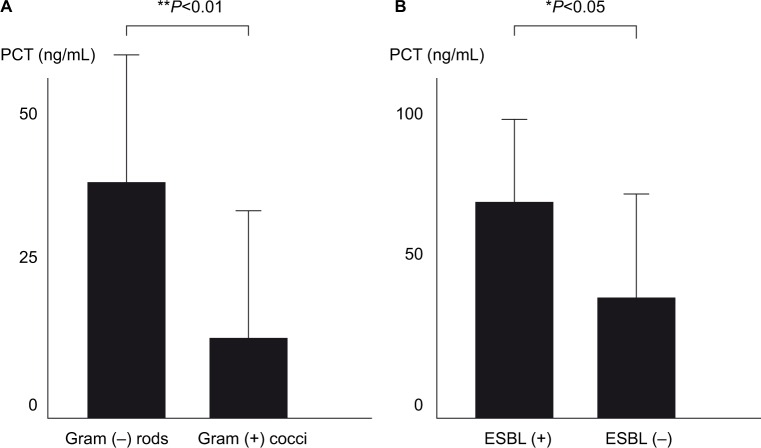
Procalcitonin (PCT) and C-reactive protein serve as biomarkers of infection in patients with sepsis/bacteremia. The present study assessed the clinical characteristics of 280 patients with suspected sepsis who were admitted to Tohoku Medical and Pharmaceutical University Hospital between January 2012 and December 2013. Among the patients, 133 and 147 were positive and negative for PCT, respectively. Patients who were PCT positive were older and more frequently male, had reduced levels of platelets and albumin, and increased levels of aspartate aminotransferase, alanine aminotransferase, blood urea nitrogen, creatinine, and C-reactive protein. Patients who were PCT positive had significantly higher blood culture positivity compared with those who were PCT negative, and the sensitivity and specificity of PCT for detecting positive blood cultures were 74.5% and 59.1%, respectively. Escherichia coli was detected in PCT-positive patients, whereas Staphylococcus epidermidis and Staphylococcus lugdunensis were frequently detected in PCT-negative patients. Levels of PCT were higher in the patients infected with gram-negative rods than those with gram-positive cocci. Furthermore, extended-spectrum β-lactamase (ESBL)-producing bacteria cases showed higher levels of PCT than those of non-ESBL cases. These results suggest that PCT may be a useful biomarker of sepsis, and it might serve as a strong tool to detect patients with severe gram-negative rod bacteremia including ESBL-producing bacteria cases early due to its relative high sensitivity.
Keywords: ESBL; Escherichia coli; biomarker; gram-negative rods; sepsis.
Conflict of interest statement
The authors report no conflicts of interest in this work.
Figures
References
-
- Nishikawa H, Shirano M, Kasamatsu Y, et al. Comparative usefulness of inflammatory markers to indicate bacterial infection-analyzed according to blood culture results and related clinical factors. Diagn Microbiol Infect Dis. 2016;84(1):69–73. - PubMed
-
- Dellinger RP, Levy MM, Rhodes A, et al. Surviving Sepsis Campaign Guidelines Committee including The Pediatric Subgroup Surviving sepsis campaign: international guidelines for management of severe sepsis and septic shock: 2012. Crit Care Med. 2013;42(2):580–637. - PubMed
-
- Seki M, Watanabe A, Mikasa K, Kadota J, Kohno S. Revision of the severity rating and classification of hospital-acquired pneumonia in the Japanese Respiratory Society guidelines. Respirology. 2008;13(6):880–885. - PubMed
LinkOut - more resources
Full Text Sources
Other Literature Sources
Research Materials
