


5T4 oncofoetal antigen: an attractive target for immune intervention in cancer
- PMID: 27757559
- PMCID: PMC11029567
- DOI: 10.1007/s00262-016-1917-3
5T4 oncofoetal antigen: an attractive target for immune intervention in cancer
Abstract
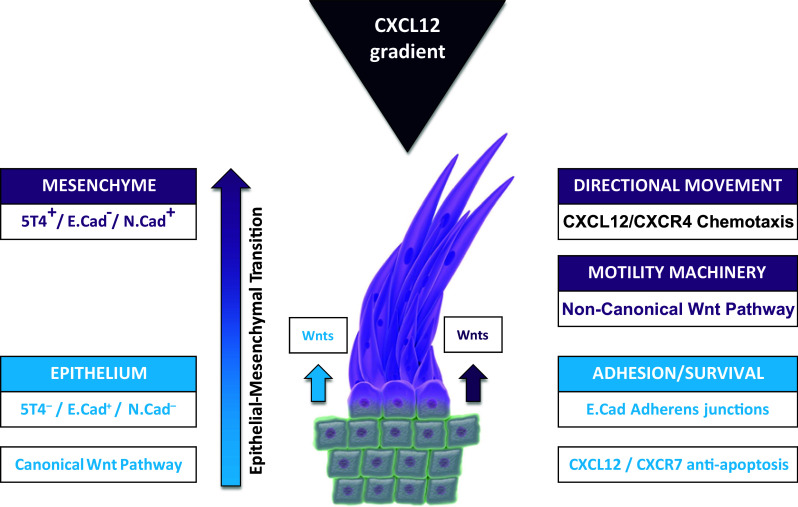
The natural history of a patient's cancer is often characterised by genetic diversity and sequential sweeps of clonal dominance. It is therefore not surprising that identifying the most appropriate tumour-associated antigen for targeted intervention is challenging. The 5T4 oncofoetal antigen was identified by searching for surface molecules shared between human trophoblast and cancer cells with the rationale that they may function to allow survival of the foetus as a semi-allograft in the mother or a tumour in its host. The 5T4 protein is expressed by many different cancers but rarely in normal adult tissues. 5T4 molecules are 72 kD, heavily N-glycosylated proteins with several leucine-rich repeats which are often associated with protein-protein interactions. 5T4 expression is associated with the directional movement of cells through epithelial mesenchymal transition, potentiation of CXCL12/CXCR4 chemotaxis and inhibition of canonical Wnt/beta-catenin while favouring non-canonical pathway signalling; all processes which help drive the spread of cancer cells. The selective pattern of 5T4 tumour expression, association with a tumour-initiating phenotype plus a mechanistic involvement with cancer spread have underwritten the clinical development of different immunotherapeutic strategies including a vaccine, a tumour-targeted superantigen and an antibody drug conjugate. In addition, a chimeric antigen receptor T cell approach targeting 5T4 expressing tumour cells is in pre-clinical development. A key challenge will include how best to combine each 5T4 targeted immunotherapy with the most appropriate standard of care treatment (or adjunct therapy) to maximise the recovery of immune control and ultimately eliminate the tumour.
Keywords: 5T4 oncofetal antigen; Antibody drug targeting; Cancer vaccine; Chimeric antigen receptors; Superantigen therapy; Trophoblast glycoprotein (TBPG).
Conflict of interest statement
Author Richard Harrop is employed by Oxford BioMedica who is developing 5T4-targeted therapies. Peter L. Stern is a consultant for Oxford BioMedica and has received speaker honoraria from Pfizer.
Figures
References
Publication types
MeSH terms
Substances
LinkOut - more resources
Full Text Sources
Other Literature Sources
Medical
Molecular Biology Databases
