Judgement bias in goats (Capra hircus): investigating the effects of human grooming
- PMID: 27761311
- PMCID: PMC5068416
- DOI: 10.7717/peerj.2485
Judgement bias in goats (Capra hircus): investigating the effects of human grooming
Abstract
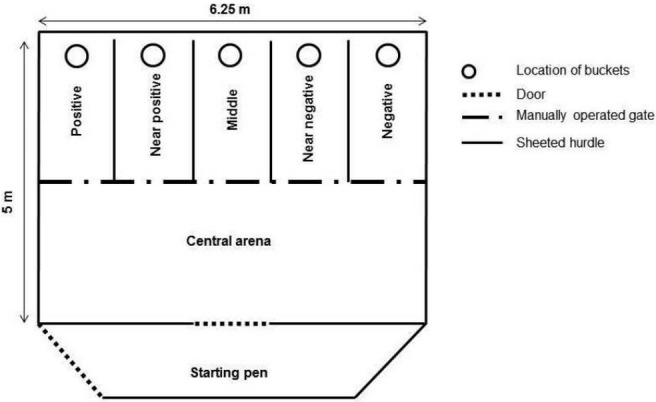
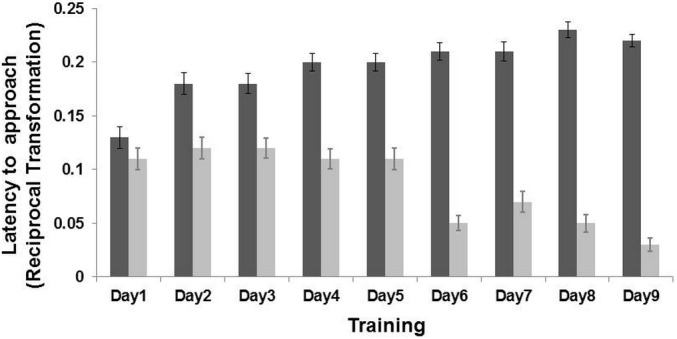
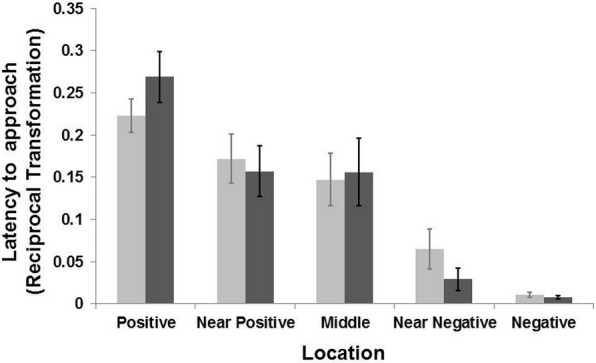
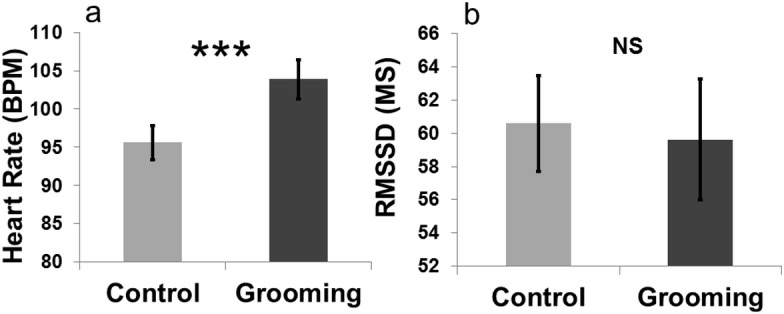
Animal emotional states can be investigated by evaluating their impact on cognitive processes. In this study, we used a judgement bias paradigm to determine if short-term positive human-animal interaction (grooming) induced a positive affective state in goats. We tested two groups of goats and trained them to discriminate between a rewarded and a non-rewarded location over nine training days. During training, the experimental group (n = 9) was gently groomed by brushing their heads and backs for five min over 11 days (nine training days, plus two testing days, total time 55 min). During training, the control group (n = 10) did not experience any direct interaction with the experimenter, but was kept unconstrained next to him for the same period of time. After successful completion of the training, the responses (latency time) of the two groups to reach ambiguous locations situated between the two reference locations (i.e., rewarded/non-rewarded) were compared over two days of testing. There was not a positive bias effect after the animals had been groomed. In a second experiment, 10 goats were tested to investigate whether grooming induced changes in physiological activation (i.e., heart rate and heart rate variability). Heart rate increased when goats were groomed compared to the baseline condition, when the same goats did not receive any contact with the experimenter. Also, subjects did not move away from the experimenter, suggesting that the grooming was positively accepted. The very good care and the regular positive contacts that goats received from humans at the study site could potentially account for the results obtained. Good husbandry outcomes are influenced by animals' perception of the events and this is based on current circumstances, past experiences and individual variables. Taking into account animals' individual characteristics and identifying effective strategies to induce positive emotions could increase the understanding and reliability of using cognitive biases paradigms to investigate and promote animal welfare.
Keywords: Cognition; Emotions; Heart rate; Human-animal interaction; Positive affective states; RMSSD; Stroking.
Conflict of interest statement
The authors declare there are no competing interests.
Figures
References
-
- Association for the study of animal Behaviour Guidelines for the treatment of animals in behavioural research and teaching. Animal Behaviour. 2016;111:I–X. doi: 10.1006/anbe.1996.0293. - DOI
-
- Baciadonna L, McElligott A. The use of judgement bias to assess welfare in farm Livestock. Animal Welfare. 2015;24:81–91. doi: 10.7120/09627286.24.1.081. - DOI
LinkOut - more resources
Full Text Sources
Other Literature Sources
Molecular Biology Databases
Miscellaneous