The potential impact of media reporting in syndromic surveillance: an example using a possible Cryptosporidium exposure in North West England, August to September 2015
- PMID: 27762208
- PMCID: PMC5073189
- DOI: 10.2807/1560-7917.ES.2016.21.41.30368
The potential impact of media reporting in syndromic surveillance: an example using a possible Cryptosporidium exposure in North West England, August to September 2015
Abstract
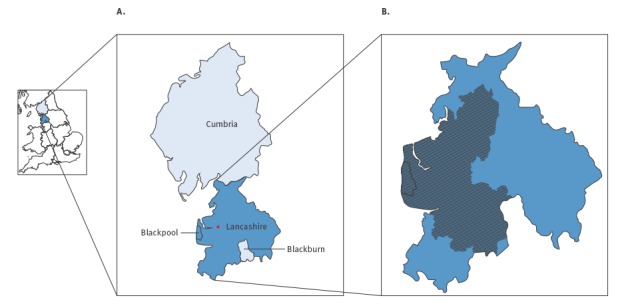
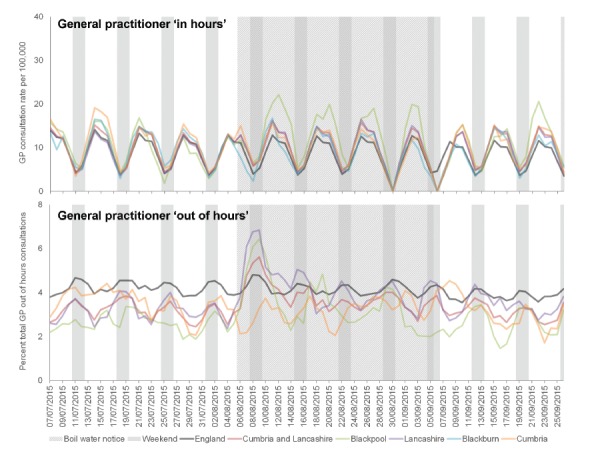
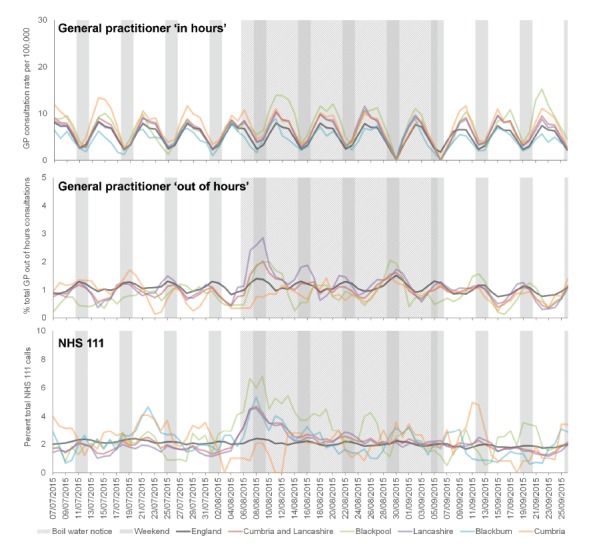
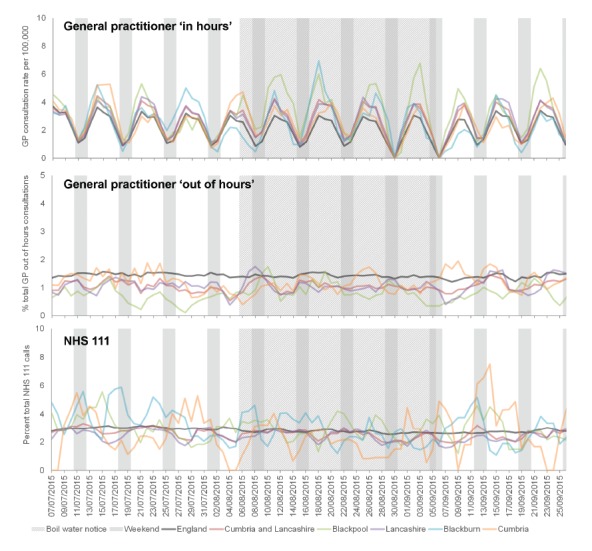
During August 2015, a boil water notice (BWN) was issued across parts of North West England following the detection of Cryptosporidium oocysts in the public water supply. Using prospective syndromic surveillance, we detected statistically significant increases in the presentation of cases of gastroenteritis and diarrhoea to general practitioner services and related calls to the national health telephone advice service in those areas affected by the BWN. In the affected areas, average in-hours general practitioner consultations for gastroenteritis increased by 24.8% (from 13.49 to 16.84) during the BWN period; average diarrhoea consultations increased by 28.5% (from 8.33 to 10.71). Local public health investigations revealed no laboratory reported cases confirmed as being associated with the water supply. These findings suggest that the increases reported by syndromic surveillance of cases of gastroenteritis and diarrhoea likely resulted from changes in healthcare seeking behaviour driven by the intense local and national media coverage of the potential health risks during the event. This study has further highlighted the potential for media-driven bias in syndromic surveillance, and the challenges in disentangling true increases in community infection from those driven by media reporting.
Keywords: Cryptosporidium; bias; diarrhoea; gastroenteritis; media; syndromic surveillance.
This article is copyright of The Authors, 2016.
Conflict of interest statement
Conflicts of Interest: None declared.
Figures
References
-
- Lima AA, Moore SR, Barboza MS, Jr, Soares AM, Schleupner MA, Newman RD, et al. Persistent diarrhea signals a critical period of increased diarrhea burdens and nutritional shortfalls: a prospective cohort study among children in northeastern Brazil. J Infect Dis. 2000;181(5):1643-51. 10.1086/315423 - DOI - PubMed
MeSH terms
LinkOut - more resources
Full Text Sources
Other Literature Sources
Medical