


Understanding mechanisms of autoimmunity through translational research in vitiligo
- PMID: 27764715
- PMCID: PMC5292941
- DOI: 10.1016/j.coi.2016.09.008
Understanding mechanisms of autoimmunity through translational research in vitiligo
Abstract
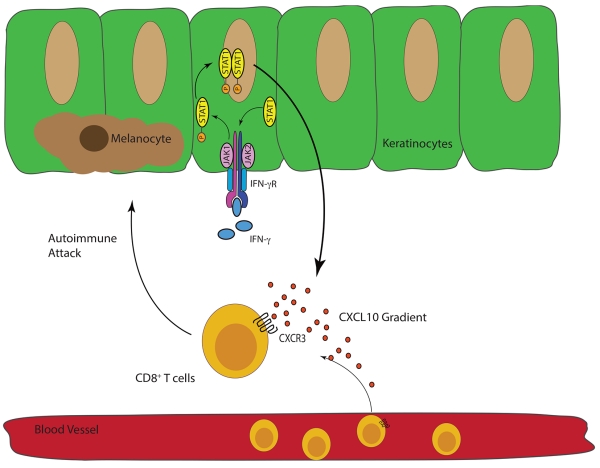
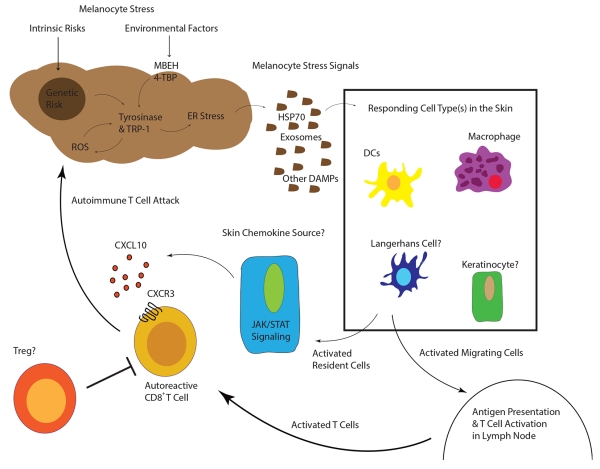
Vitiligo is an autoimmune disease of the skin that leads to life-altering depigmentation and remains difficult to treat. However, clinical observations and translational studies over 30-40 years have led to the development of an insightful working model of disease pathogenesis: Genetic risk spanning both immune and melanocyte functions is pushed over a threshold by known and suspected environmental factors to initiate autoimmune T cell-mediated killing of melanocytes. While under cellular stress, melanocytes appear to signal innate immunity to activate T cells. Once the autoimmune T cell response is established, the IFN-γ-STAT1-CXCL10 signaling axis becomes the primary inflammatory pathway driving both progression and maintenance of vitiligo. This pathway is a tempting target for both existing and developing pharmaceuticals, but further detailing how melanocytes signal their own demise may also lead to new therapeutic targets. Research in vitiligo may be the future key to understand the pathogenesis of organ-specific autoimmunity, as vitiligo is common, reversible, progresses over the life of the individual, has been relatively well-defined, and is quite easy to study using translational and clinical approaches. What is revealed in these studies can lead to innovative treatments and also help elucidate the principles that underlie similar organ-specific autoimmune diseases, especially in cases where the target organ is less accessible.
Copyright © 2016 Elsevier Ltd. All rights reserved.
Figures
References
-
- Picardo M, Dell’Anna ML, Ezzedine K, Hamzavi I, Harris JE, Parsad D, Taieb A. Vitiligo. Nature Reviews Disease Primers. 2015;1:15011. - PubMed
-
- Ezzedine K, Eleftheriadou V, Whitton M, van Geel N. Vitiligo. Lancet. 2015;386(9988):74–84. - PubMed
-
- Ezzedine K, Sheth V, Rodrigues M, Eleftheriadou V, Harris JE, Hamzavi IH, Pandya AG, Vitiligo Working Group Vitiligo is not a cosmetic disease. Journal of the American Academy of Dermatology. 2015;73(5):883–5. - PubMed
Publication types
MeSH terms
Substances
Grants and funding
LinkOut - more resources
Full Text Sources
Other Literature Sources
Medical
Research Materials
Miscellaneous
