


Ischaemic conditioning and targeting reperfusion injury: a 30 year voyage of discovery
- PMID: 27766474
- PMCID: PMC5073120
- DOI: 10.1007/s00395-016-0588-8
Ischaemic conditioning and targeting reperfusion injury: a 30 year voyage of discovery
Abstract
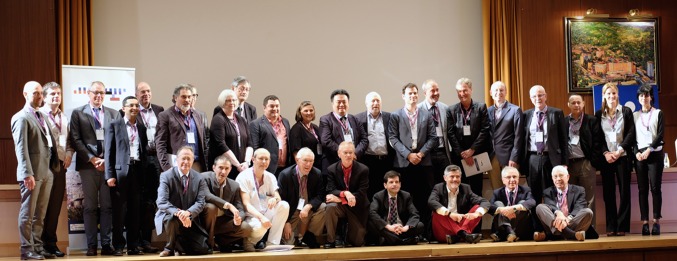
To commemorate the auspicious occasion of the 30th anniversary of IPC, leading pioneers in the field of cardioprotection gathered in Barcelona in May 2016 to review and discuss the history of IPC, its evolution to IPost and RIC, myocardial reperfusion injury as a therapeutic target, and future targets and strategies for cardioprotection. This article provides an overview of the major topics discussed at this special meeting and underscores the huge importance and impact, the discovery of IPC has made in the field of cardiovascular research.
Keywords: Cardioprotection; Ischaemic conditioning; Mitochondria; Myocardial reperfusion injury; RISK and SAFE pathway.
Conflict of interest statement
HEB is shareholder of CellAegis Inc. PF is a founder and CEO of Pharmahungary, a group of R&D companies. GH served as a consultant to Servier. MO was a consultant for Neurovive Pharmaceuticals. DGD served as consultant to Neurovive Pharmaceuticals. All other authors have no relevant disclosures.
Figures
References
-
- Alburquerque-Bejar JJ, Barba I, Inserte J, Miro-Casas E, Ruiz-Meana M, Poncelas M, Vilardosa U, Valls-Lacalle L, Rodriguez-Sinovas A, Garcia-Dorado D. Combination therapy with remote ischaemic conditioning and insulin or exenatide enhances infarct size limitation in pigs. Cardiovasc Res. 2015;107:246–254. - PubMed
-
- Ali N, Rizwi F, Iqbal A, Rashid A (2010) Induced remote ischemic pre-conditioning on ischemia–reperfusion injury in patients undergoing coronary artery bypass. J Coll Physicians Surg Pak 20:427–431. doi:07.2010/JCPSP.427431 - PubMed
-
- Ali ZA, Callaghan CJ, Lim E, Ali AA, Nouraei SA, Akthar AM, Boyle JR, Varty K, Kharbanda RK, Dutka DP, Gaunt ME. Remote ischemic preconditioning reduces myocardial and renal injury after elective abdominal aortic aneurysm repair: a randomized controlled trial. Circulation. 2007;116:I98–105. - PubMed
-
- Argaud L, Gateau-Roesch O, Raisky O, Loufouat J, Robert D, Ovize M. Postconditioning inhibits mitochondrial permeability transition. Circulation. 2005;111:194–197. - PubMed
-
- Auchampach JA, Grover GJ, Gross GJ. Blockade of ischaemic preconditioning in dogs by the novel ATP dependent potassium channel antagonist sodium 5-hydroxydecanoate. Cardiovasc Res. 1992;26:1054–1062. - PubMed
Publication types
MeSH terms
Grants and funding
LinkOut - more resources
Full Text Sources
Other Literature Sources
Medical
