


Survival Benefit of Kidney Transplantation in HIV-infected Patients
- PMID: 27768622
- PMCID: PMC5285482
- DOI: 10.1097/SLA.0000000000001761
Survival Benefit of Kidney Transplantation in HIV-infected Patients
Abstract
Objective: To determine the survival benefit of kidney transplantation in human immunodeficiency virus (HIV)-infected patients with end-stage renal disease (ESRD).
Summary background data: Although kidney transplantation (KT) has emerged as a viable option for select HIV-infected patients, concerns have been raised that risks of KT in HIV-infected patients are higher than those in their HIV-negative counterparts. Despite these increased risks, KT may provide survival benefit for the HIV-infected patient with ESRD, yet this important clinical question remains unanswered.
Methods: Data from the Scientific Registry of Transplant Recipients were linked to IMS pharmacy fills (January 1, 2001 to October 1, 2012) to identify and study 1431 HIV-infected KT candidates from the first point of active status on the waiting list. Time-dependent Cox regression was used to establish a counterfactual framework for estimating survival benefit of KT.
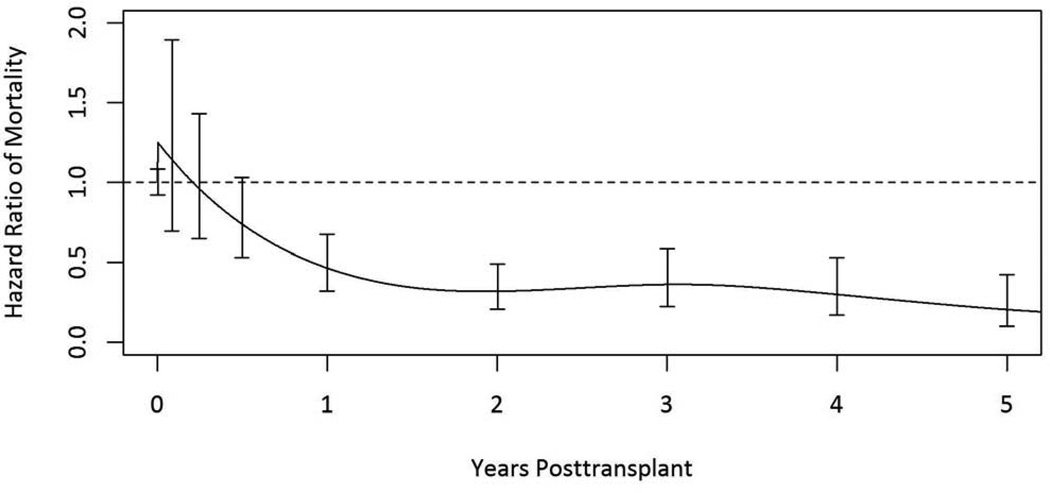
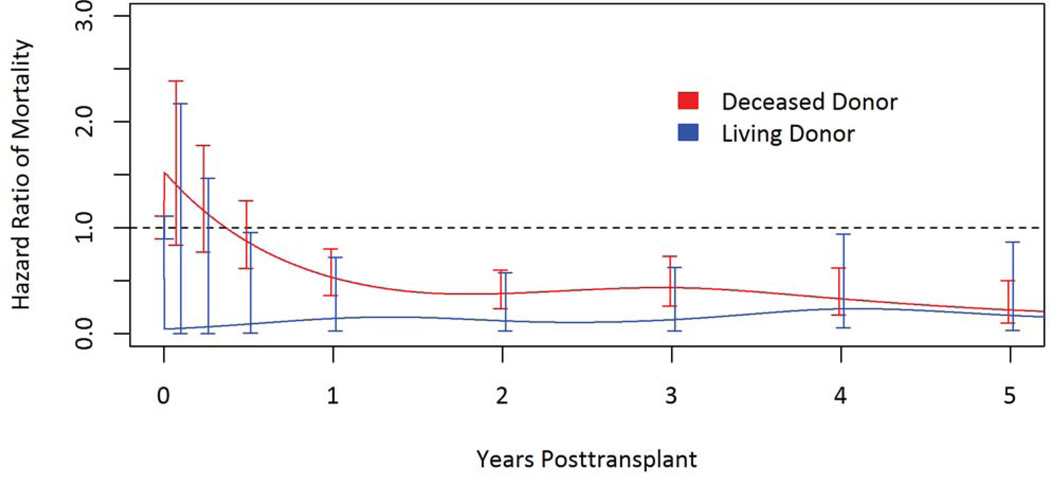
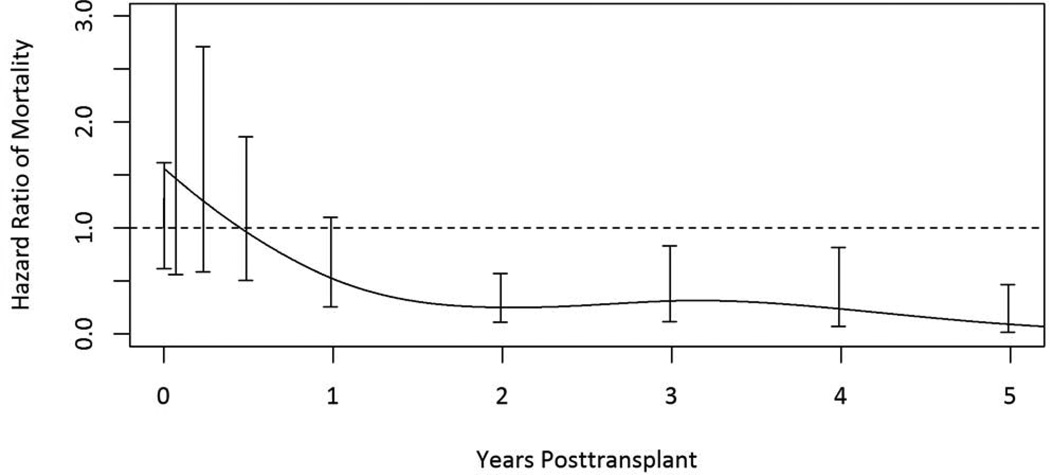
Results: Adjusted relative risk (aRR) of mortality at 5 years was 79% lower after KT compared with dialysis (aRR 0.21; 95% CI 0.10-0.42; P <0.001), and statistically significant survival benefit was achieved by 194 days of KT. Among patients coinfected with hepatitis C, aRR of mortality at 5 years was 91% lower after KT compared with dialysis (aRR 0.09; 95% CI 0.02-0.46; P < 0.004); however, statistically significant survival benefit was not achieved until 392 days after KT.
Conclusions: Evidence suggests that for HIV-infected ESRD patients, KT is associated with a significant survival benefit compared with remaining on dialysis.
Conflict of interest statement
OF CONFLICTS The other authors have nothing to disclose.
Figures
References
-
- Eggers PW, Kimmel PL. Is there an epidemic of HIV Infection in the US ESRD program? J Am Soc Nephrol. 2004;15:2477–2485. - PubMed
-
- United States Renal Data System (USRDS) 2011 Annual Data Report: Atlas of Chronic Kidney Disease and End-Stage Renal Disease in the United States. 2011 - PubMed
-
- Schwartz EJ, Szczech LA, Ross MJ, Klotman ME, Winston JA, Klotman PE. Highly active antiretroviral therapy and the epidemic of HIV+ end-stage renal disease. J Am Soc Nephrol. 2005;16:2412–2420. - PubMed
Publication types
MeSH terms
Grants and funding
LinkOut - more resources
Full Text Sources
Other Literature Sources
Medical
