. 2016 Oct 20;167(3):633-642.e11.
doi: 10.1016/j.cell.2016.09.028.

Progressive Loss of Function in a Limb Enhancer during Snake Evolution

Affiliations

Progressive Loss of Function in a Limb Enhancer during Snake Evolution

Evgeny Z Kvon et al. Cell. .

Abstract

The evolution of body shape is thought to be tightly coupled to changes in regulatory sequences, but specific molecular events associated with major morphological transitions in vertebrates have remained elusive. We identified snake-specific sequence changes within an otherwise highly conserved long-range limb enhancer of Sonic hedgehog (Shh). Transgenic mouse reporter assays revealed that the in vivo activity pattern of the enhancer is conserved across a wide range of vertebrates, including fish, but not in snakes. Genomic substitution of the mouse enhancer with its human or fish ortholog results in normal limb development. In contrast, replacement with snake orthologs caused severe limb reduction. Synthetic restoration of a single transcription factor binding site lost in the snake lineage reinstated full in vivo function to the snake enhancer. Our results demonstrate changes in a regulatory sequence associated with a major body plan transition and highlight the role of enhancers in morphological evolution. PAPERCLIP.

Keywords: CRISPR/Cas9; Sonic hedgehog (Shh); ZRS; cis-regulatory element; enhancer; evo-devo; genome editing; limb development; morphological evolution; snakes.


Figures

Figure 1
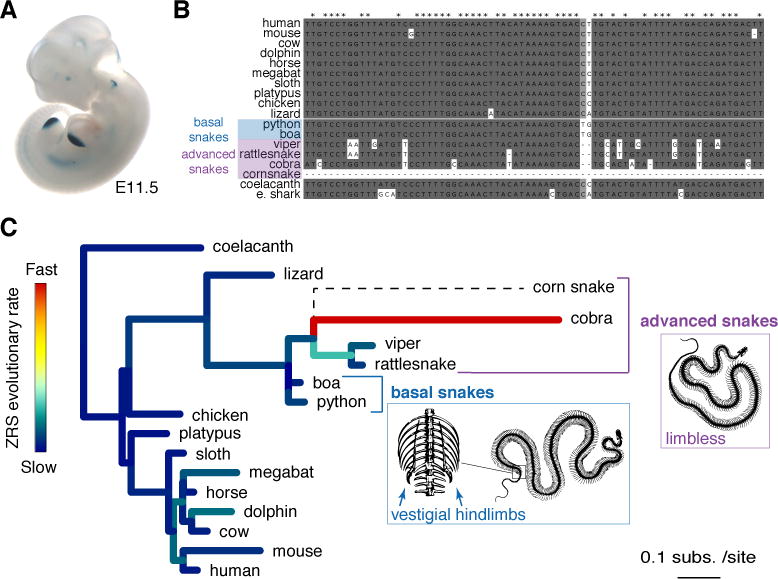
Figure 1. Evolution of a limb enhancer across the vertebrate tree
(A) Human ZRS enhancer activity in a mid-gestation (E11.5) mouse embryo. Staining in structures other than limb was not reproducible in additional transgenic embryos and due to ectopic effects. (B) Comparison of the core ZRS region across 18 different vertebrate species including two basal (blue) and four advanced (purple) snakes. See Figure S1 for full alignment. (C) Phylogeny of vertebrate species used in the study (based on UCSC (https://genome.ucsc.edu/cgi-bin/hgGateway) and (Hsiang et al., 2015; Pyron et al., 2013)). Branch length indicates absolute ZRS substitution rate, colors indicate relative ZRS evolutionary rate compared to other embryonic enhancers (see Figure S2 and Method Details). The schematic snake skeletons are drawn after (Romanes, 1892); http://www.zoochat.com/; and http://www.skullcleaning.com/.
Figure 2
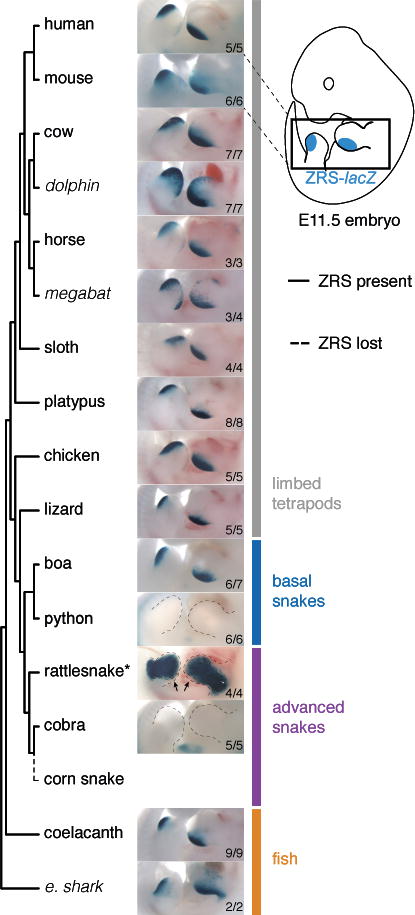
Figure 2. Comparison of enhancer activity across jawed vertebrates
Enhancer activities for 16 different vertebrate species in the limb buds of transgenic E11.5 stage mouse embryos. Numbers of embryos with lacZ activity in the limb over the total number of transgenic embryos screened are indicated. Some species (marked in italics) were active in the ZPA of the limb buds but had additional activity expanded anteriorly (dolphin and megabat) or proximally (elephant shark). * – The rattlesnake ZRS enhancer drives an ectopic reporter activity pattern that does not include the ZPA (arrows point to the ZPA area without detectable LacZ activity).
Figure 3
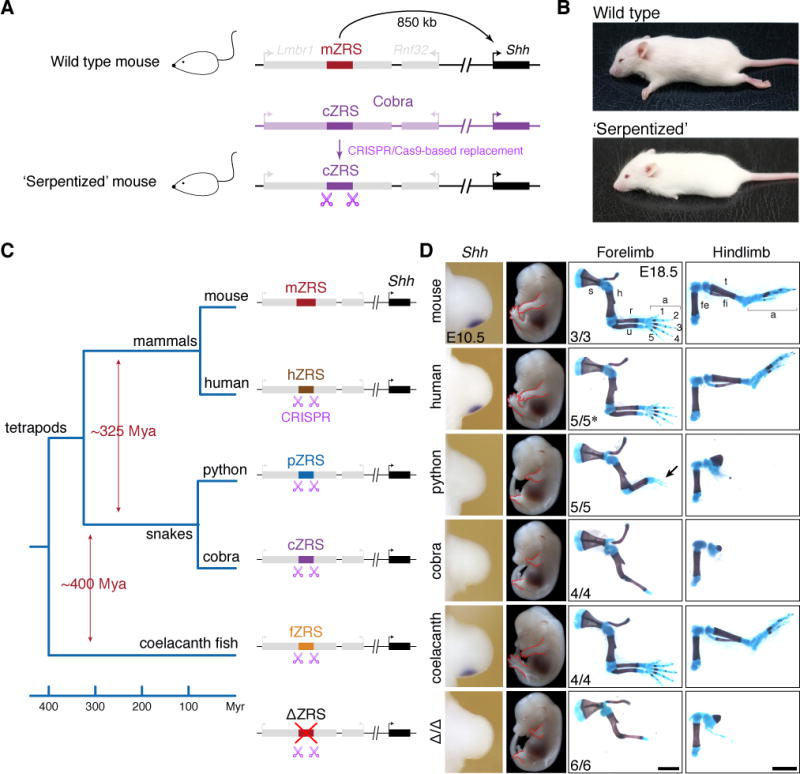
Figure 3. Limb phenotypes of knock-in mice with ZRS orthologs from other vertebrate species
(A) CRISPR/Cas9-mediated replacement of the mouse ZRS sequence with an orthologous sequence from cobra. Schematic of the mouse Shh locus is shown at the top. The ZRS is located in the intron of the Lmbr1 gene (intron-exon structure not shown), 850 kb away from the promoter of Shh. A homologous locus from king cobra with the cobra ZRS enhancer (cZRS) is indicated in purple. A CRISPR/Cas9 modified ‘serpentized’ mouse Shh locus is shown below. See also Figures S4A–S4F and Method Details. Gene diagram not to scale. (B) Gross phenotypes of ZRSWT/Δ (top) and ‘serpentized’ ZRScZRS/Δ (bottom) mice. Scale bars, 10 mm. (C and D) Limb phenotypes of knock-in mice with ZRS orthologs from other vertebrate species. (C) Phylogeny and approximate divergence estimates (Amemiya et al., 2013; Hsiang et al., 2015; Wright et al., 2015) are shown on the left. Schematic mouse Shh loci with the ZRS replaced by orthologs from human (hZRS), python (pZRS), cobra (cZRS) and coelacanth fish (fZRS) are shown. (D) Comparative Shh mRNA in situ hybridization analysis in knock-in mouse embryos during forelimb bud development (1st column). Per knock-in line, the Shh transcript distribution was assessed in at least three independent mouse embryos. Scale bars, 0.1 mm. See Figure S4G for hindlimb bud analysis of Shh expression. Corresponding whole-mount E14.5 knock-in mouse embryos (2nd column) and skeletal preparations at E18.5 (3rd and 4th columns) are shown; s, scapula; h, humerus; r, radius; u, ulna; fe, femur; fi, fibula; t, tibia; a, autopod. The genotypes of the embryos are ZRSWT/Δ (mouse), ZRShZRS/Δ (human), ZRSpZRS/Δ (python), ZRScZRS/Δ (cobra), and ZRSfZRS/Δ (coelacanth fish). Arrow points to rudimentary digits in ZRSpZRS/Δ embryos. Bottom embryo shows E14.5 gross and limb skeletal phenotypes of the ZRSΔ/Δ KO mice (see Figure S3 for details). Number of embryos that exhibited representative limb phenotype over the total number of embryos with the genotype are indicated. * − 3/5 mouse embryos displayed mild digit number variation (see Figures S4H–S4J). Scale bars, 2 mm.
Figure 4
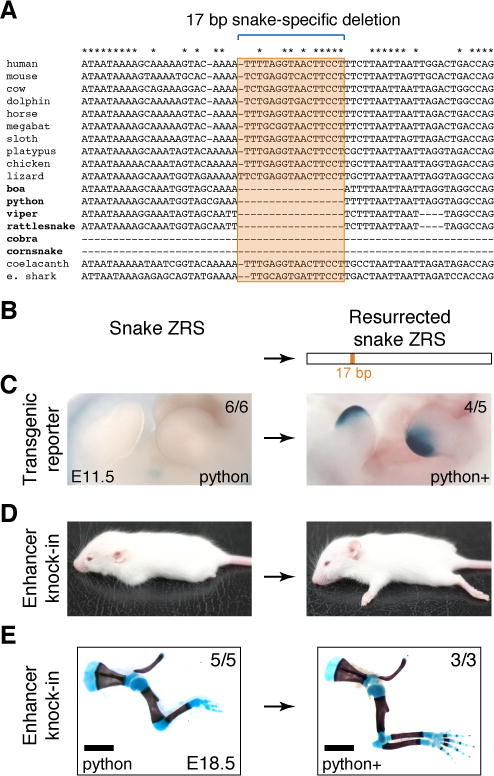
Figure 4. Resurrection of snake limb enhancer function in vivo
(A) Snake-specific deletion in the ZRS. An alignment of the central ZRS region for 18 vertebrates including six snakes. Asterisks indicate nucleotides that are conserved in limbed tetrapods and fish. (B) A 17 bp sequence is able to resurrect python ZRS enhancer function. (C) Shown are the wild type (left) and modified (right) python ZRS in vivo enhancer activities in the limb buds of transgenic E11.5 mouse embryos. Numbers of embryos with lacZ activity in the limb over the total number of transgenic embryos screened are indicated. (D) This resurrected allele is able to rescue limb development when knocked-in to the mouse genome in place of the wild type ZRS. Shown are gross phenotypes of ZRSpZRS/Δ (‘python’, left) and ZRSpZRS(r)/Δ (‘python+’, right) mice at two weeks of age. Scale bars, 10 mm. (E) Skeletal preparations from E18.5 knock-in mice are shown. See Figures S5B and S5C for more detailed skeletal phenotypes. Scale bars, 2 mm.
Figure 5
Figure 5. Loss of conserved ETS binding sites in the snake lineage
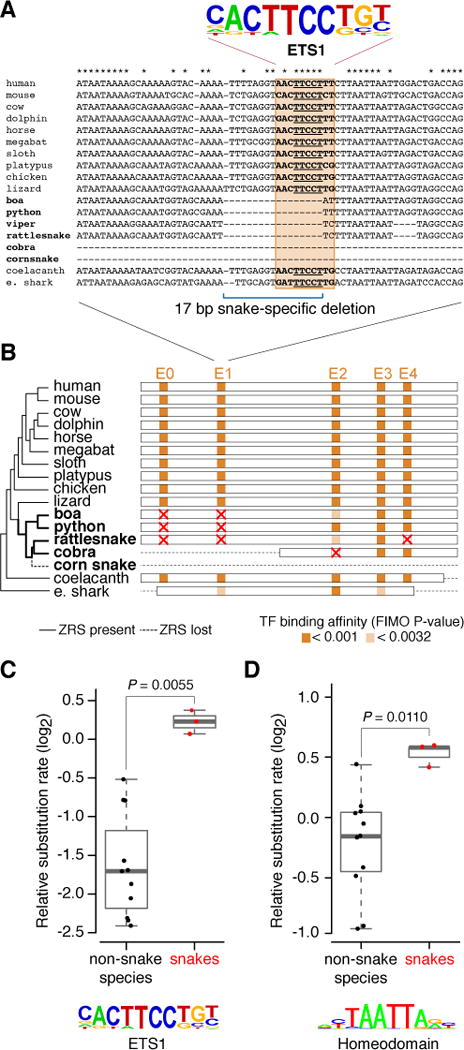
(A) A detailed view of the E1 ETS binding site alignment for 18 vertebrates including six snakes. ETS1 consensus motif is shown above. Asterisks indicate nucleotides that are conserved in limbed tetrapods and fish. (B) Distribution of tetrapod conserved ETS motifs in the ZRS enhancer in different jawed vertebrates. Shown is a schematic alignment of the ZRS for 16 vertebrates (tree) and the locations of predicted ETS binding sites (E0–E4). Red crosses indicate motifs that were lost. See Figure S5 for details. (C and D) Relative substitution rates in the ETS and homeodomain DNA motifs in the ZRS enhancer in non-snake species (black dots: species from Figure 5A) and snakes (red dots: boa, python and rattlesnake). Mann-Whitney P value is shown on top.

Comment in

References

    1. Acemel RD, Tena JJ, Irastorza-Azcarate I, Marlétaz F, Gomez-Marin C, la Calle-Mustienes de E, Bertrand S, Diaz SG, Aldea D, Aury J-M, et al. A single three-dimensional chromatin compartment in amphioxus indicates a stepwise evolution of vertebrate Hox bimodal regulation. Nat Genet. 2016;48:336–341. - PubMed
    1. Amemiya CT, Alföldi J, Lee AP, Fan S, Philippe H, MacCallum I, Braasch I, Manousaki T, Schneider I, Rohner N, et al. The African coelacanth genome provides insights into tetrapod evolution. Nature. 2013;496:311–316. - PMC - PubMed
    1. Apesteguía S, Zaher H. A Cretaceous terrestrial snake with robust hindlimbs and a sacrum. Nature. 2006;440:1037–1040. - PubMed
    1. Arnold CD, Gerlach D, Spies D, Matts JA, Sytnikova YA, Pagani M, Lau NC, Stark A. Quantitative genome-wide enhancer activity maps for five Drosophila species show functional enhancer conservation and turnover during cis-regulatory evolution. Nat Genet 2014 - PMC - PubMed
    1. Attanasio C, Nord AS, Zhu Y, Blow MJ, Li Z, Liberton DK, Morrison H, Plajzer-Frick I, Holt A, Hosseini R, et al. Fine tuning of craniofacial morphology by distant-acting enhancers. Science. 2013;342:1241006. - PMC - PubMed

Publication types

Substances