


Genetic Adaptation and Neandertal Admixture Shaped the Immune System of Human Populations
- PMID: 27768888
- PMCID: PMC5075285
- DOI: 10.1016/j.cell.2016.09.024
Genetic Adaptation and Neandertal Admixture Shaped the Immune System of Human Populations
Abstract
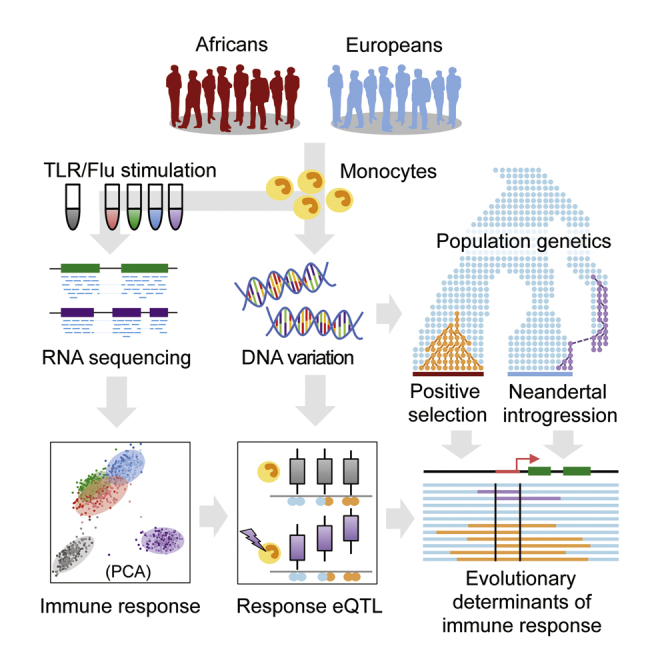
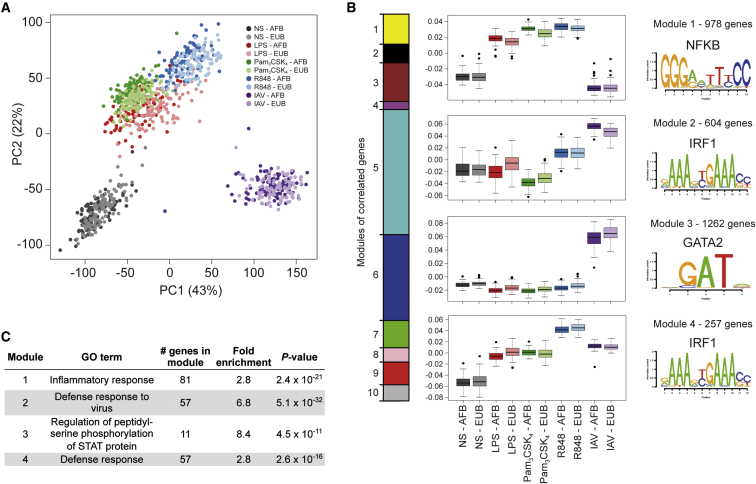
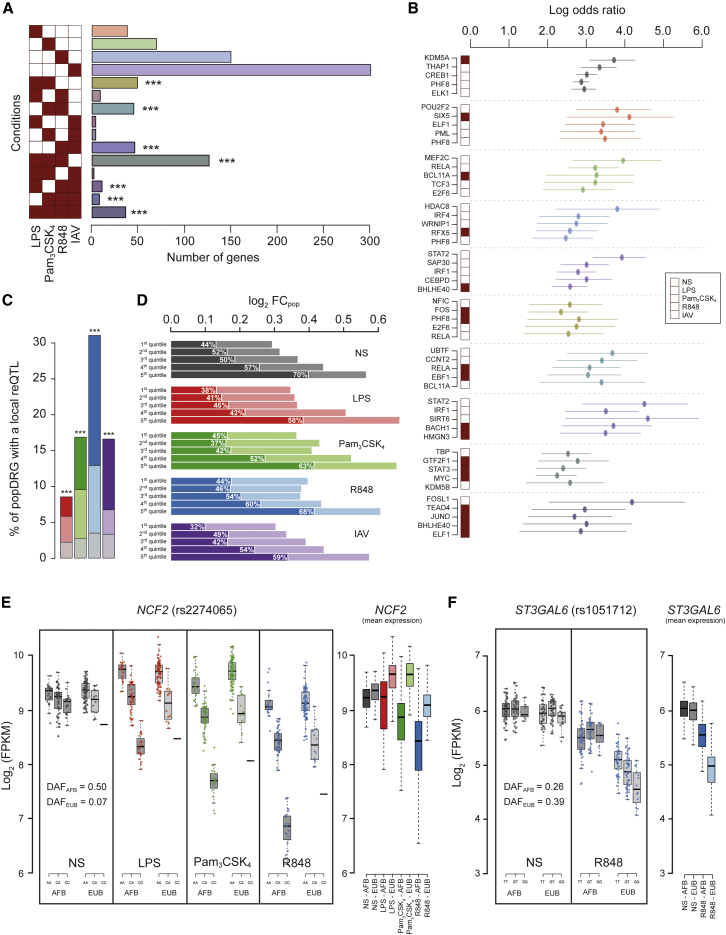
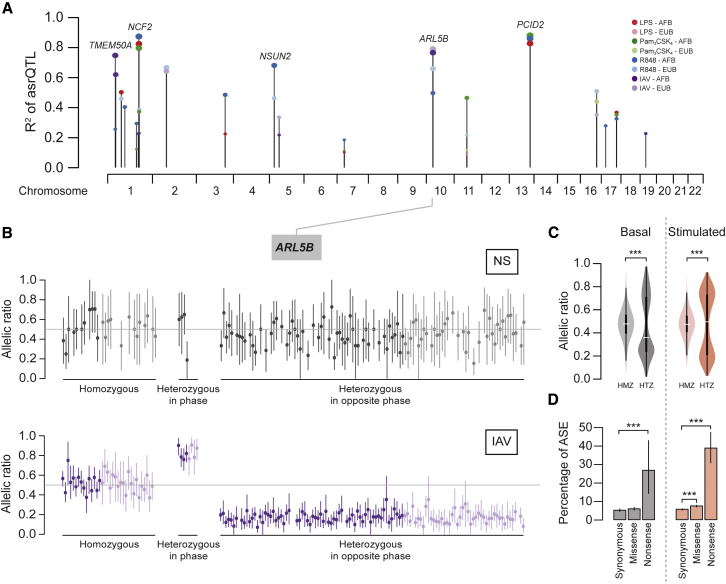
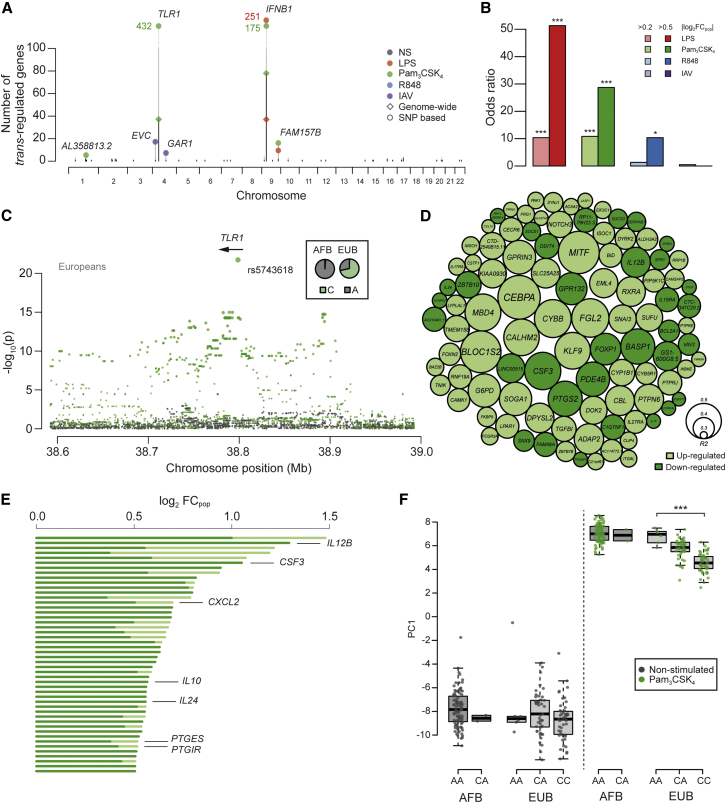
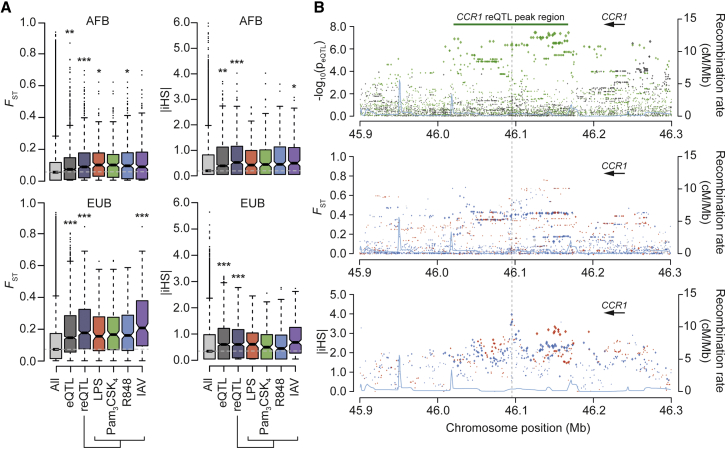
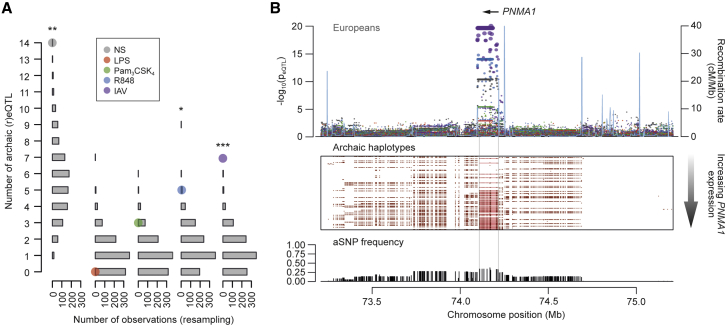
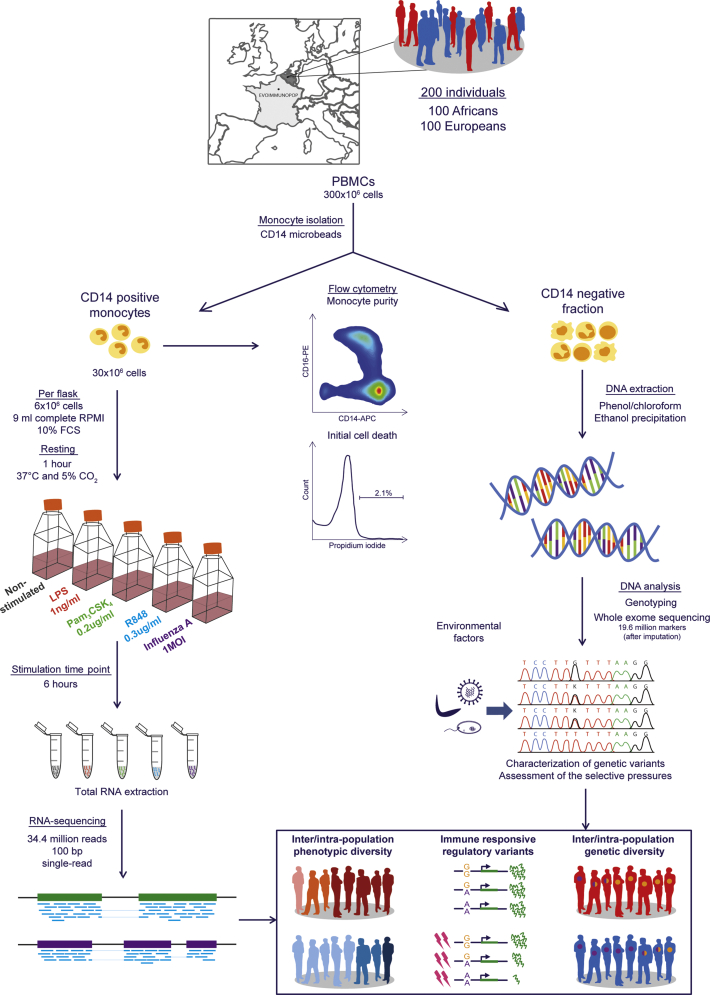
Humans differ in the outcome that follows exposure to life-threatening pathogens, yet the extent of population differences in immune responses and their genetic and evolutionary determinants remain undefined. Here, we characterized, using RNA sequencing, the transcriptional response of primary monocytes from Africans and Europeans to bacterial and viral stimuli-ligands activating Toll-like receptor pathways (TLR1/2, TLR4, and TLR7/8) and influenza virus-and mapped expression quantitative trait loci (eQTLs). We identify numerous cis-eQTLs that contribute to the marked differences in immune responses detected within and between populations and a strong trans-eQTL hotspot at TLR1 that decreases expression of pro-inflammatory genes in Europeans only. We find that immune-responsive regulatory variants are enriched in population-specific signals of natural selection and show that admixture with Neandertals introduced regulatory variants into European genomes, affecting preferentially responses to viral challenges. Together, our study uncovers evolutionarily important determinants of differences in host immune responsiveness between human populations.
Keywords: Neandertal admixture; eQTL mapping; evolution; immune response; monocytes; natural selection; population genetics; transcriptional responses.
Copyright © 2016 The Author(s). Published by Elsevier Inc. All rights reserved.
Figures
References
-
- Areschoug T., Gordon S. Scavenger receptors: role in innate immunity and microbial pathogenesis. Cell. Microbiol. 2009;11:1160–1169. - PubMed
Publication types
MeSH terms
Substances
Grants and funding
LinkOut - more resources
Full Text Sources
Other Literature Sources
Molecular Biology Databases
