


Non-Invasive Glutamine PET Reflects Pharmacological Inhibition of BRAFV600E In Vivo
- PMID: 27770401
- PMCID: PMC6476310
- DOI: 10.1007/s11307-016-1008-z
Non-Invasive Glutamine PET Reflects Pharmacological Inhibition of BRAFV600E In Vivo
Abstract
Purpose: This study aimed to study whether cancer cells possess distinguishing metabolic features compared with surrounding normal cells, such as increased glutamine uptake. Given this, quantitative measures of glutamine uptake may reflect critical processes in oncology. Approximately, 10 % of patients with colorectal cancer (CRC) express BRAF V600E , which may be actionable with selective BRAF inhibitors or in combination with inhibitors of complementary signaling axes. Non-invasive and quantitative predictive measures of response to these targeted therapies remain poorly developed in this setting. The primary objective of this study was to explore 4-[18F]fluoroglutamine (4-[18F]F-GLN) positron emission tomography (PET) to predict response to BRAFV600E-targeted therapy in preclinical models of colon cancer.
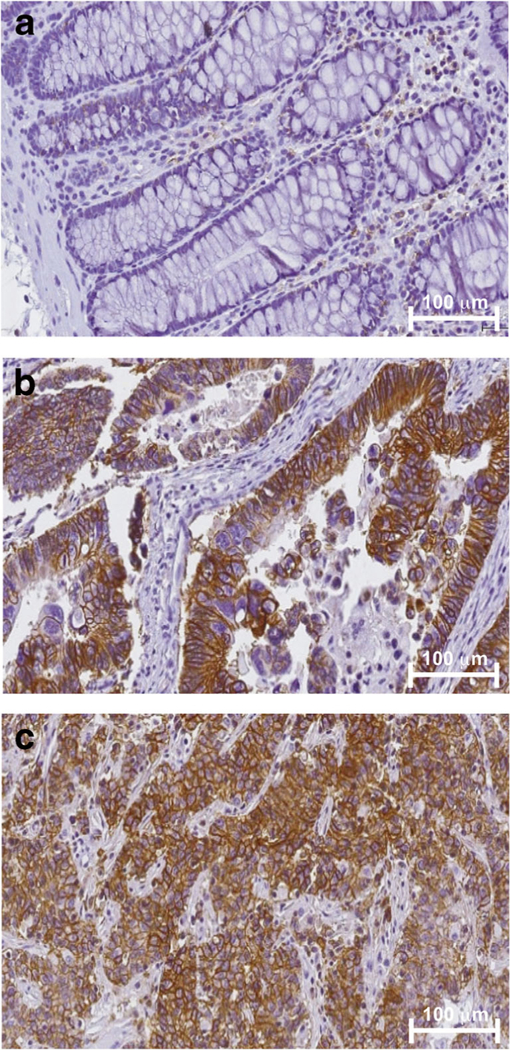
Procedures: Tumor microarrays from patients with primary human colon cancers (n = 115) and CRC liver metastases (n = 111) were used to evaluate the prevalence of ASCT2, the primary glutamine transporter in oncology, by immunohistochemistry. Subsequently, 4-[18F]F-GLN PET was evaluated in mouse models of human BRAF V600E -expressing and BRAF wild-type CRC.
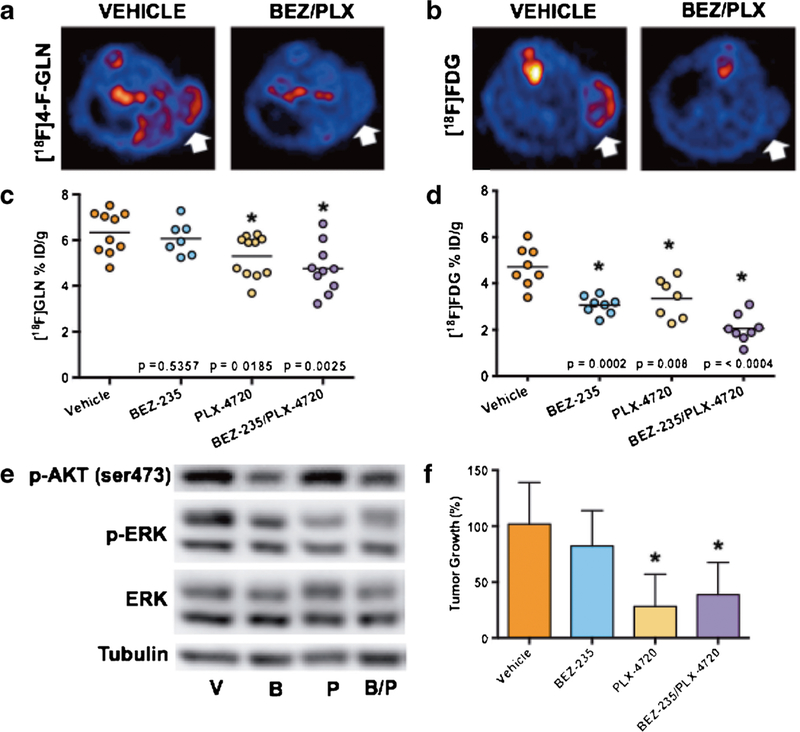
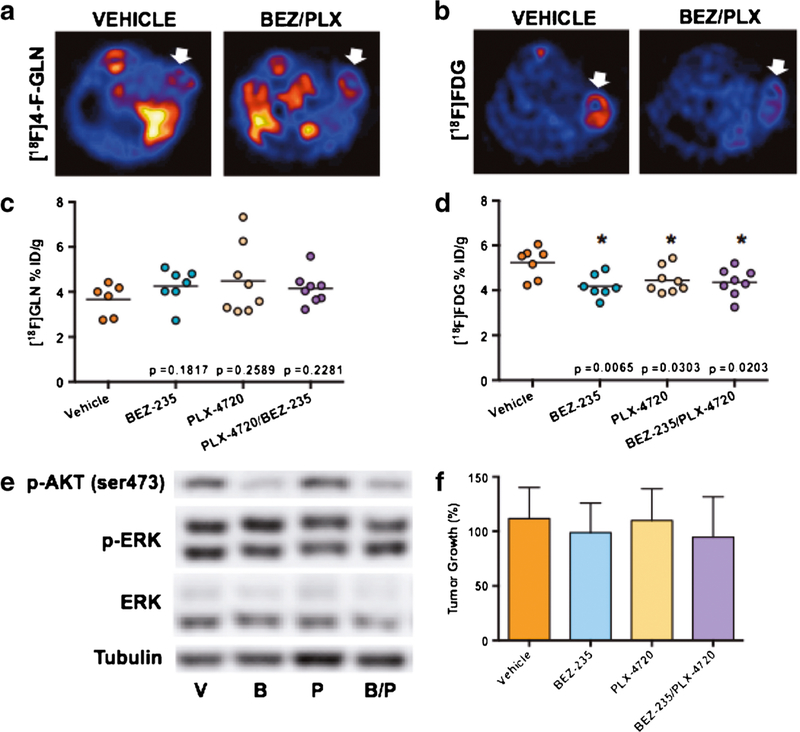
Results: Approximately 70 % of primary colon cancers and 53 % of metastases exhibited positive ASCT2 immunoreactivity, suggesting that [18F]4-F-GLN PET could be applicable to a majority of patients with colon cancer. ASCT2 expression was not associated selectively with the expression of mutant BRAF. Decreased 4-[18F]F-GLN predicted pharmacological response to single-agent BRAF and combination BRAF and PI3K/mTOR inhibition in BRAF V600E -mutant Colo-205 tumors. In contrast, a similar decrease was not observed in BRAF wild-type HCT-116 tumors, a setting where BRAFV600E-targeted therapies are ineffective.
Conclusions: 4-[18F]F-GLN PET selectively reflected pharmacodynamic response to BRAF inhibition when compared with 2-deoxy-2[18F]fluoro-D-glucose PET, which was decreased non-specifically for all treated cohorts, regardless of downstream pathway inhibition. These findings illustrate the utility of non-invasive PET imaging measures of glutamine uptake to selectively predict response to BRAF-targeted therapy in colon cancer and may suggest further opportunities to inform colon cancer clinical trials using targeted therapies against MAPK activation.
Keywords: BRAF; Cancer; Colon; Glutamine; Pet.
Conflict of interest statement
Conflict of Interest
The authors declare that they have no conflicts of interest.
Figures
References
-
- Hsu PP, Sabatini DM (2008) Cancer cell metabolism: Warburg and beyond. Cell 134:703–707 - PubMed
-
- Ide M (2006) Cancer screening with FDG-PET. Q J Nucl Med Mol Imaging 50:23–27 - PubMed
-
- Tagliabue L, Del Sole A (2014) Appropriate use of positron emission tomography with [(18)F]fluorodeoxyglucose for staging of oncology patients. Eur J Intern Med 25:6–11 - PubMed
Publication types
MeSH terms
Substances
Grants and funding
LinkOut - more resources
Full Text Sources
Other Literature Sources
Research Materials
Miscellaneous
