. 2017 Jan:500:50-61.
doi: 10.1016/j.virol.2016.10.011. Epub 2016 Oct 20.

Characterization of a pathogenic full-length cDNA clone of a virulent porcine epidemic diarrhea virus strain AH2012/12 in China

Affiliations

Characterization of a pathogenic full-length cDNA clone of a virulent porcine epidemic diarrhea virus strain AH2012/12 in China

Baochao Fan et al. Virology. 2017 Jan.

Abstract

Since 2010, outbreaks of variant porcine epidemic diarrhea virus (PEDV) have swept across the world causing substantial economic losses. The development of new, more effective vaccines has been hampered by difficulties in isolating strains and viral genome manipulation. In the present study, we successfully isolated a highly pathogenic field strain AH2012/12, from a pig farm reporting severe diarrhea in China. Phylogenetic analysis revealed that the new isolate belongs to group G2, which represents epidemic and pandemic field strains. Furthermore, we constructed an infectious cDNA clone of the newly isolated strain, rAH2012/12, and the rescued virus displayed phenotypic properties identical to the parental virus in vitro. In vivo experiments demonstrated that the rescued virus displayed similar pathogenicity to the parental isolate, causing high mortality rates in suckling pigs. This study provided a strong basis for the development of live attenuated vaccines and for research into the pathogenic mechanisms of this virus.

Keywords: Highly pathogenic; Isolation; PEDV; Reverse genetics.


Figures

Fig. 1
Fig. 1
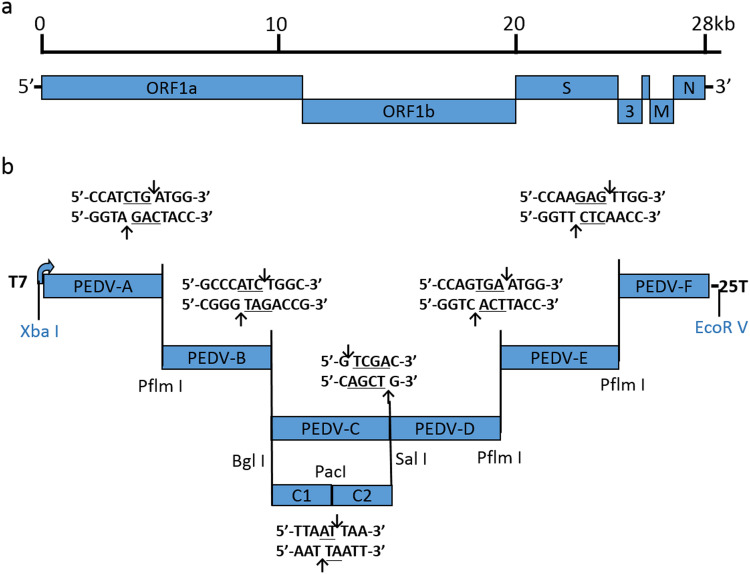
Organization of the PEDV strain AH2012/12 molecular clone. (a) The organization of the AH2012/12 genome. (b) The full-length AH2012/12 genome was divided into seven contiguous cDNAs designated PEDV A–F and flanked by enzyme sites that allowed for directed assembly of a full-length cDNA. The restriction enzyme site Xba I on the 5′-end of fragment A and the enzyme site EcoR V on the 3′-end of fragment F were existed in the enzyme sites area of the cloning vector pSMART.
Fig. 2
Fig. 2
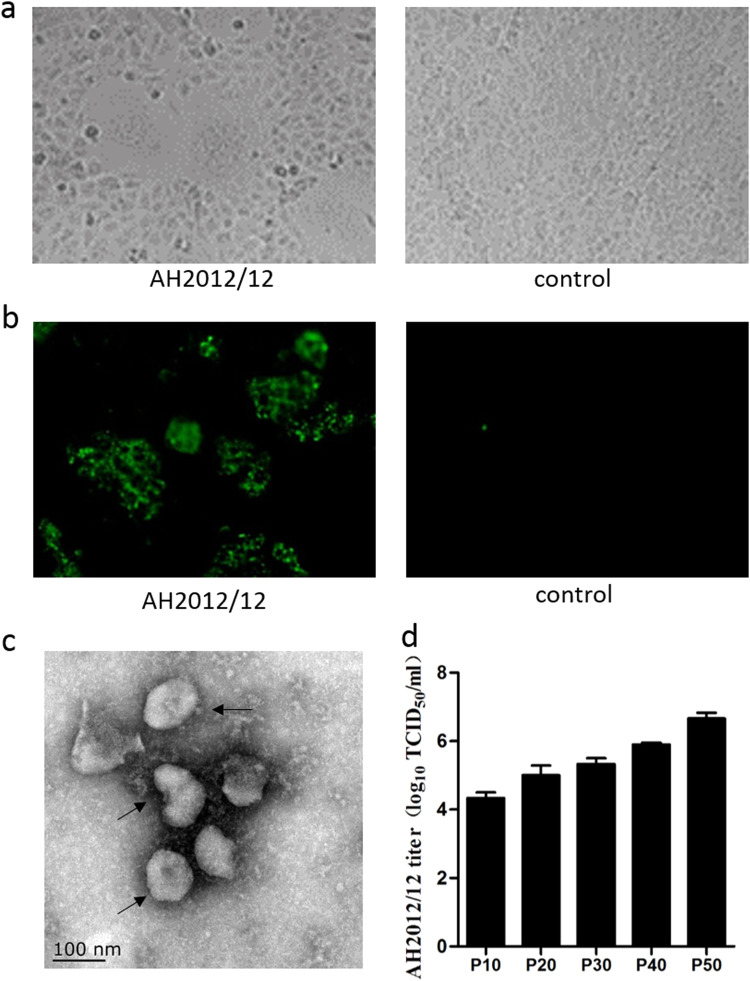
Virus isolation and identification of PEDV strain AH2012/12. (a) The CPEs of PEDV strain AH2012/12 on Vero cells. (b) Fluorescence microscopy of AH2012/12 on Vero cells. (c) Electron microscopy images of PEDV virions of PEDV strain AH2012/12 infecting Vero cells in cell culture media. Scale bars=50 nm. (d) Growth kinetics of AH2012/12 with different passages in Vero cells.
Fig. 3
Fig. 3
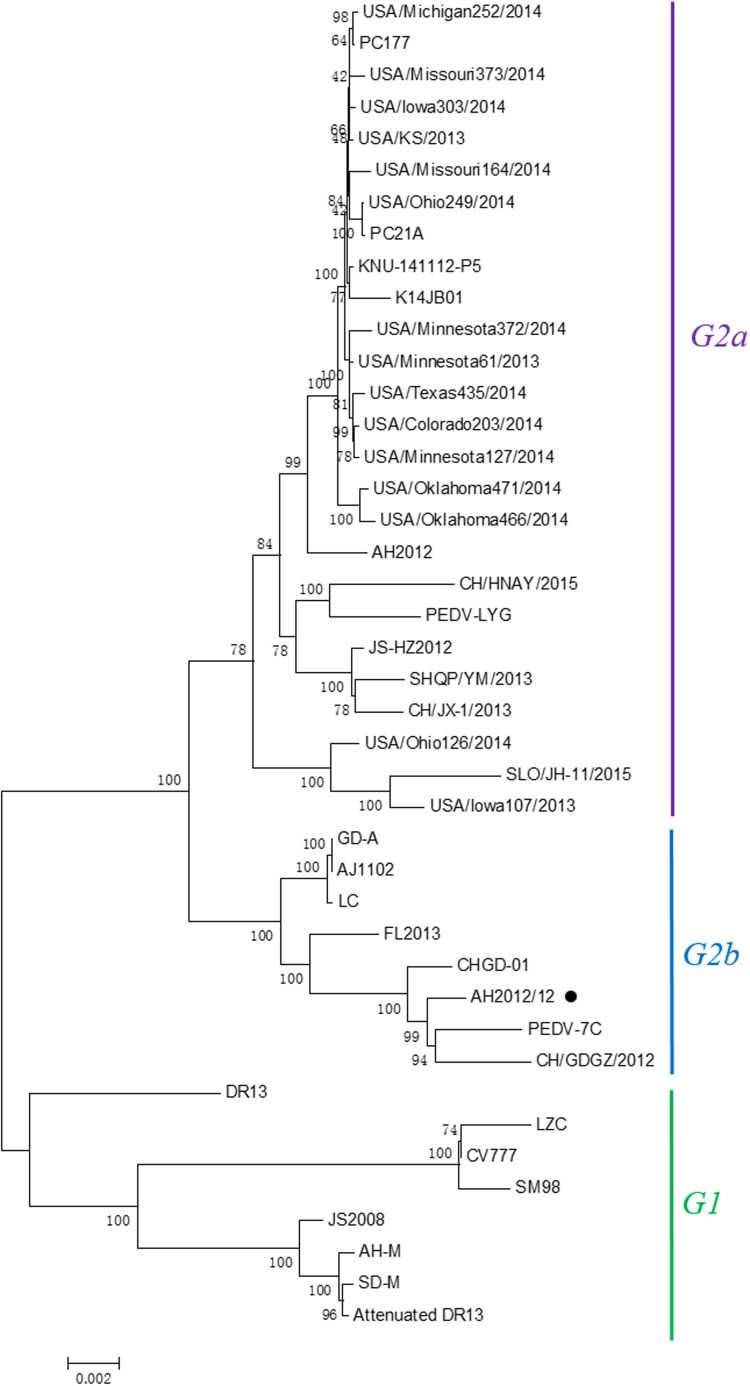
Phylogenetic analysis based on the nucleotide sequence of the full-length genome of AH2012/12. The evolutionary history was inferred using the Neighbor-Joining method. The percentage of replicate trees in which the associated taxa clustered together in the bootstrap test (1000 replicates) were shown next to the branches. The evolutionary distances were computed using the Jukes-Cantor method and were presented as the number of base substitutions per site. Evolutionary analyses were conducted using MEGA5 software.
Fig. 4
Fig. 4
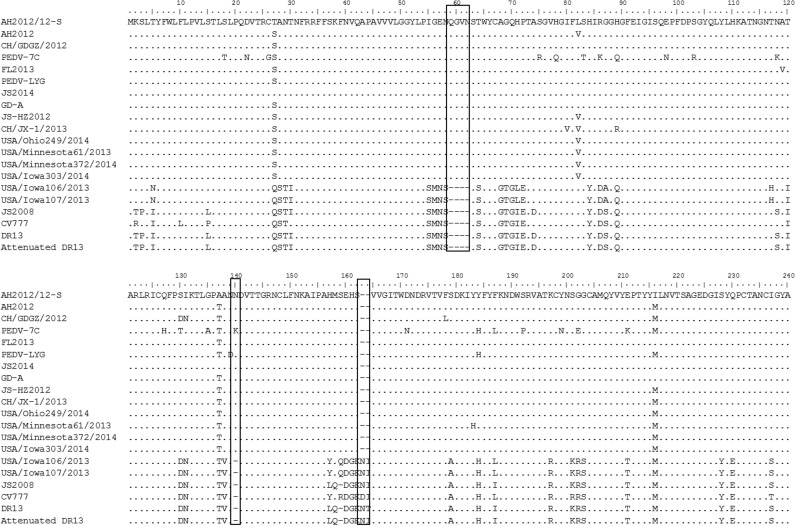
Alignment of the partial S protein amino acid sequence of AH2012/12 with several representative PEDV strains. The deletions and insertions are shown by grey bars.
Fig. 5
Fig. 5
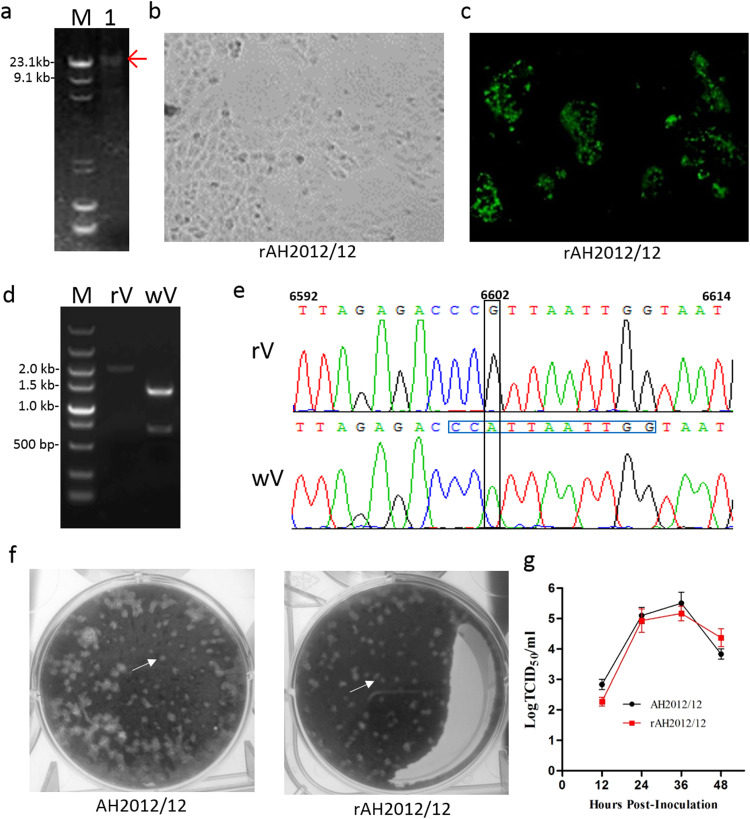
The recovery and growth characteristics of the recombinant PEDV rAH2012/12. (a) The full-length PEDV cDNA genome was generated by ligation of the digested fragments. The label “M” was the DNA maker λDNA/Hind III, and the label “1” was the ligation product of digested fragments. (b) The CPEs of the rescue strain rAH2012/12 on Vero cells. (c) Fluorescence microscopy of rAH2012/12 on Vero cells. (d) Verification of the marker mutation in the rescued virus from rAH2012/12. One silent mutation A6602G was introduced to remove the naturally occurring PflmI site. Two 2048-nt amplicons (nucleotide positions 5922–7969) were obtained from the rescued (panel rV) and parental virus (panel wV) strains, respectively. (e) The sequence chromatograms of partial fragments (nucleotide positions 6591–6614) of rV and wV. The difference between the two chromatograms was indicated by the black box. The PflmI recognition site is CCANNNNNTGG with blue box. (f) Representative plaques (arrows) of Vero cells infected with the parental AH2012/12 strain and rescued rAH2012/12 strain, from left to right, at 2 dpi. (g) The growth curves of the parental AH2012/12 strain and the rescued rAH2012/12 strain.
Fig. 6
Fig. 6
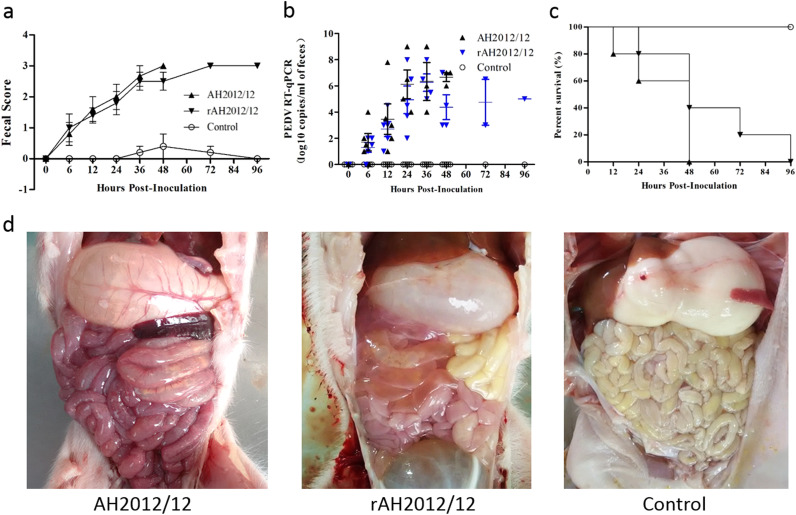
The rescued PEDV strain rAH2012/12 mimics wild-type PEDV AH2012/12 infection in newborn piglets. (a) Mean fecal scores after viral inoculation. (b) Mean RT-qPCR titers of the fecal samples. (c) The survival curves of the AH2012/12 and rAH2012/12 infected groups. (d) Macroscopic examinations of the intestine of piglets inoculated with AH2012/12, rAH2012/12, and control medium.
Fig. 7
Fig. 7
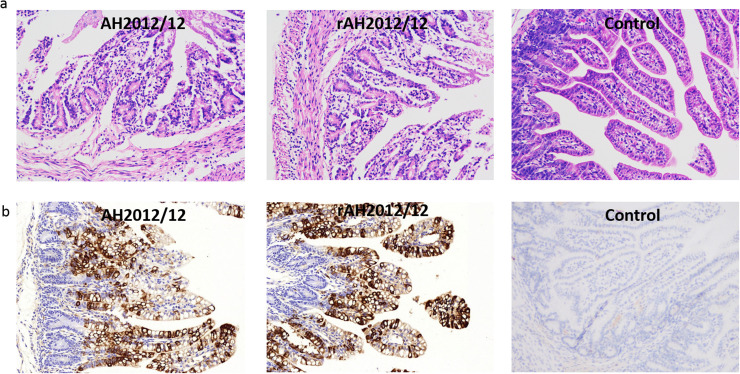
Histology and IHC staining of AH2012/12 and rAH2012/12-infected pig intestines. (a) HE-stained small intestines of piglets inoculated with different PEDV strains. Cell fusion and vacuolation were noted at the villus tips (arrows). (b) For IHC assays, the intestinal tissue sections were stained with a PEDV N monoclonal antibody (1:200 dilution). Positive cells presented in all segments of the small intestines.

References

    1. Almazan F., Dediego M.L., Galan C., Escors D., Alvarez E., Ortego J., Sola I., Zuniga S., Alonso S., Moreno J.L., Nogales A., Capiscol C., Enjuanes L. Construction of a severe acute respiratory syndrome coronavirus infectious cDNA clone and a replicon to study coronavirus RNA synthesis. J. Virol. 2006;80:10900–10906. - PMC - PubMed
    1. Almazan F., DeDiego M.L., Sola I., Zuniga S., Nieto-Torres J.L., Marquez-Jurado S., Andres G., Enjuanes L. Engineering a replication-competent, propagation-defective Middle East respiratory syndrome coronavirus as a vaccine candidate. mBio. 2013;4 (e00650-00613) - PMC - PubMed
    1. Almazan F., Gonzalez J.M., Penzes Z., Izeta A., Calvo E., Plana-Duran J., Enjuanes L. Engineering the largest RNA virus genome as an infectious bacterial artificial chromosome. Proc. Natl. Acad. Sci. USA. 2000;97:5516–5521. - PMC - PubMed
    1. Almazan F., Sola I., Zuniga S., Marquez-Jurado S., Morales L., Becares M., Enjuanes L. Coronavirus reverse genetic systems: infectious clones and replicons. Virus Res. 2014;189:262–270. - PMC - PubMed
    1. Beall, A., Yount, B., Lin, C.M., Hou, Y., Wang, Q., Saif, L., Baric, R., 2016. Characterization of a Pathogenic Full-Length cDNA Clone and Transmission Model for Porcine Epidemic Diarrhea Virus Strain PC22A. mBio vol. 7. - PMC - PubMed

Publication types

LinkOut - more resources