


A novel approach in the use of radiofrequency catheter ablation of septal hypertrophy in hypertrophic obstructive cardiomyopathy
- PMID: 27773399
- PMCID: PMC5079133
- DOI: 10.1016/j.ihj.2016.02.007
A novel approach in the use of radiofrequency catheter ablation of septal hypertrophy in hypertrophic obstructive cardiomyopathy
Abstract
Objective: Alcohol septal ablation (ASA) is a therapeutic alternative to surgical myectomy in patients with hypertrophic obstructive cardiomyopathy (HOCM). However, the anatomical variability of the septal branch, risk of complete heart block, and late onset ventricular arrhythmias are limitations to its therapeutic usage. There is recent interest in the use of radiofrequency catheter ablation (RFCA) as a therapeutic option in HOCM. We aimed to assess the safety and efficacy of RFCA in the treatment of symptomatic HOCM.
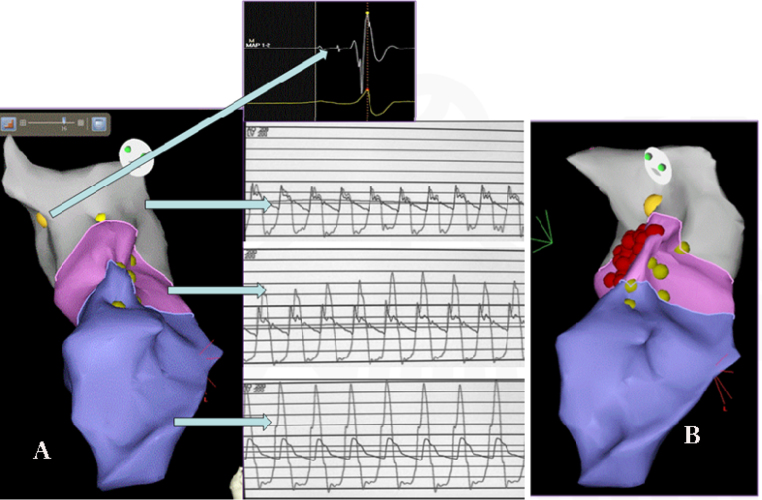
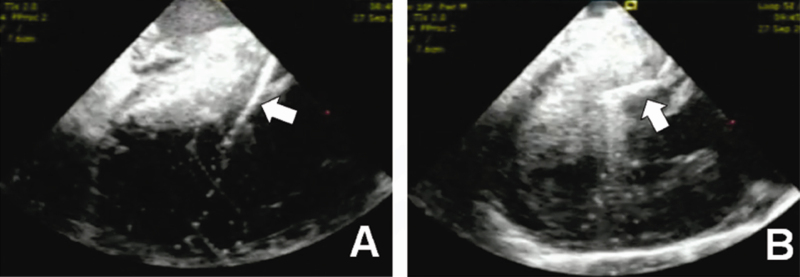
Methods: Seven patients with symptomatic HOCM (mean age 43.7±15.6 years, five males), and significant left ventricular outflow tract (LVOT) gradient despite optimal drug therapy, underwent ablation of the hypertrophied interventricular septum. These patients had unfavorable anatomy for ASA. Ablation was performed under 3D electro-anatomical system guidance using an open irrigated tip catheter. The region of maximal LV septal bulge as seen on intracardiac echocardiography was targeted. Patients were followed up at 1, 6, and 12 months post-procedure.
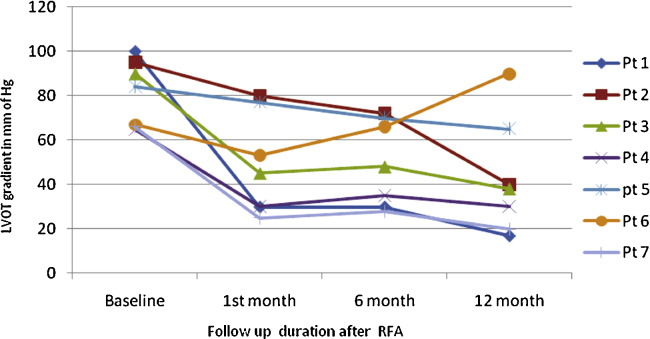
Results: The mean baseline LVOT gradient by Doppler echocardiography was 81±14.8mm of Hg which reduced to 48.5±22.6 (p=0.0004), 49.8±19.3 (p=0.0004), and 42.8±26.1mm of Hg (p=0.05) at 1, 6, and 12 months respectively. Symptoms improved at least by one NYHA class in all but one patient. One patient developed transient pulmonary edema post-RFA. There were no other complications.
Conclusion: RFCA of the hypertrophied septum causes sustained reduction in the LVOT gradient and symptomatic improvement among patients with HOCM. Electroanatomical mapping helps to perform the procedure safely.
Keywords: Alcohol septal ablation; Hypertrophic obstructive cardiomyopathy; Left ventricular outflow tract; Radiofrequency ablation.
Copyright © 2016 Cardiological Society of India. Published by Elsevier B.V. All rights reserved.
Figures
References
-
- Maron B.J. Hypertrophic cardiomyopathy. Lancet. 1997;350:127–133. - PubMed
-
- Gersh B.J., Maron B.J., Bonow R.O. 2011 ACCF/AHA guideline for the diagnosis and treatment of hypertrophic cardiomyopathy. J Thorac Cardiovasc Surg. 2011;142:e153–e203. - PubMed
-
- Alam M., Dohainish H., Lakkis N. Alcohol septal ablation for hypertrophic obstructive cardiomyopathy: a systematic review of published studies. J Interv Cardiol. 2006;19:319–327. - PubMed
-
- Fernandes V.L., Nielsen C., Nagueh S.F. Follow-up of alcohol septal ablation for symptomatic hypertrophic obstructive cardiomyopathy: the Baylor and Medical University of South Carolina experience 1996 to 2007. JACC: Cardiovasc Interv. 2008;1:561–570. - PubMed
-
- Kuhn H., Lawrenz T., Lieder F. Survival after transcoronary ablation of septal hypertrophy in hypertrophic obstructive cardiomyopathy (TASH): a 10 year experience. Clin Res Cardiol. 2008;97:234–243. - PubMed
MeSH terms
LinkOut - more resources
Full Text Sources
Other Literature Sources
