


Obesity: Current and potential pharmacotherapeutics and targets
- PMID: 27773782
- PMCID: PMC5274590
- DOI: 10.1016/j.pharmthera.2016.10.015
Obesity: Current and potential pharmacotherapeutics and targets
Abstract
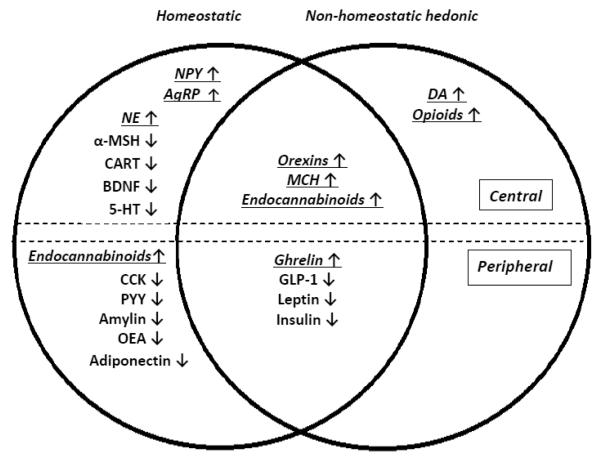
Obesity is a global epidemic that contributes to a number of health complications including cardiovascular disease, type 2 diabetes, cancer and neuropsychiatric disorders. Pharmacotherapeutic strategies to treat obesity are urgently needed. Research over the past two decades has increased substantially our knowledge of central and peripheral mechanisms underlying homeostatic energy balance. Homeostatic mechanisms involve multiple components including neuronal circuits, some originating in hypothalamus and brain stem, as well as peripherally-derived satiety, hunger and adiposity signals that modulate neural activity and regulate eating behavior. Dysregulation of one or more of these homeostatic components results in obesity. Coincident with obesity, reward mechanisms that regulate hedonic aspects of food intake override the homeostatic regulation of eating. In addition to functional interactions between homeostatic and reward systems in the regulation of food intake, homeostatic signals have the ability to alter vulnerability to drug abuse. Regarding the treatment of obesity, pharmacological monotherapies primarily focus on a single protein target. FDA-approved monotherapy options include phentermine (Adipex-P®), orlistat (Xenical®), lorcaserin (Belviq®) and liraglutide (Saxenda®). However, monotherapies have limited efficacy, in part due to the recruitment of alternate and counter-regulatory pathways. Consequently, a multi-target approach may provide greater benefit. Recently, two combination products have been approved by the FDA to treat obesity, including phentermine/topiramate (Qsymia®) and naltrexone/bupropion (Contrave®). The current review provides an overview of homeostatic and reward mechanisms that regulate energy balance, potential therapeutic targets for obesity and current treatment options, including some candidate therapeutics in clinical development. Finally, challenges in anti-obesity drug development are discussed.
Keywords: Homeostasis; Obesity; Pharmacotherapy; Reward.
Copyright © 2016 Elsevier Inc. All rights reserved.
Figures
References
-
- ADIPEX-P® Prescribing Information 2012 Available from URL: http://www.accessdata.fda.gov/drugsatfda_docs/label/2012/085128s065lbl.pdf.
-
- Agmo A, Galvan A, Talamantes B. Reward and reinforcement produced by drinking sucrose: two processes that may depend on different neurotransmitters. Pharmacol Biochem Behav. 1995;52:403–414. - PubMed
-
- Ahituv N, Kavaslar N, Schackwitz W, Ustaszewska A, Collier JM, Hebert S, et al. A PYY Q62P variant linked to human obesity. Hum Mol Genet. 2006;15:387–391. - PubMed
Publication types
MeSH terms
Substances
Grants and funding
LinkOut - more resources
Full Text Sources
Other Literature Sources
Medical
Miscellaneous
