


Evaluation and comparison of tools for diagnosing problematic prescription opioid use among chronic pain patients
- PMID: 27774717
- PMCID: PMC6877121
- DOI: 10.1002/mpr.1542
Evaluation and comparison of tools for diagnosing problematic prescription opioid use among chronic pain patients
Abstract
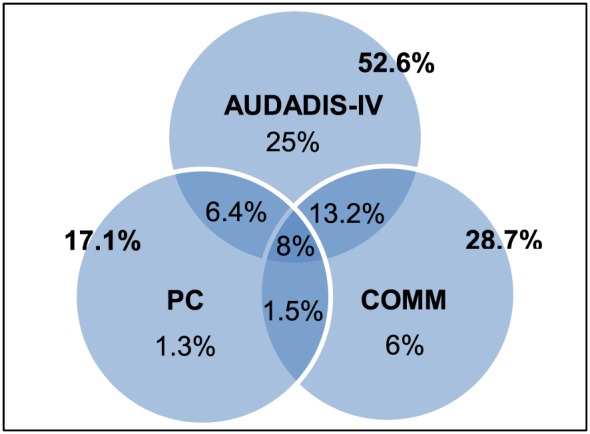
Prescription opioid medications are commonly used for the treatment of chronic pain. Assessments of problematic opioid use among pain patients are inconsistent across studies, partially due to differences between various measures. Therefore, the most appropriate measure to use is often unclear. In this study we assessed problematic opioid use in a sample of 551 individuals receiving treatment for chronic pain, using three questionnaires: the Alcohol Use Disorder and Associated Disabilities Interview Schedule - Fourth Edition (AUDADIS-IV), the Current Opioid Misuse Measure (COMM) questionnaire and Portenoy's criteria (PC). These questionnaires yielded discordant positive rates of problematic use: 52.6%, 28.7%, and 17.1%, respectively, which did not change substantially when excluding AUDADIS-IV criteria of physical symptoms of tolerance and withdrawal. Although these three questionnaires share some statistically correlated content-based congruent questions, positive response rates to them were significantly different based on construction features, including questionnaires' referred time-frame, wording of questions and response alternatives. The findings of the present study illustrate strengths and limitations of the AUDADIS-IV, COMM and PC in diagnosing problematic opioid use in a population of adults suffering from chronic pain, and highlight the importance of recognizing and addressing specific questionnaire and question-related differences when identifying problematic opioid use in this population.
Keywords: chronic pain; opioid; prevalence; problematic use; questionnaires.
Copyright © 2016 John Wiley & Sons, Ltd.
Figures
References
-
- American Psychiatric Association (APA) (1994). Diagnostic and Statistical Manual of Mental Disorders (Fourth ed.). Washington, DC: APA.
-
- Andrew, R. , Derry, S. , Taylor, R. S. , Straube, S. , & Phillips, C. J. (2014). The costs and consequences of adequately managed chronic non‐cancer pain and chronic neuropathic pain. Pain Practice: The Official Journal of World Institute of Pain, 14(1), 79–94. doi: 10.1111/papr.12050 - DOI - PubMed
-
- Berndt, S. , Maier, C. , & Schutz, H. W. (1993). Polymedication and medication compliance in patients with chronic non‐malignant pain. Pain, 52(3), 331–339. - PubMed
-
- Bowling, A. (1997). Data collection methods in quantitative research: questionnaires, interviews and their response rates In Research Methods in Health: Investigating Health and Health Services. (pp. 257–272). Milton Keynes: Open University Press.
Publication types
MeSH terms
LinkOut - more resources
Full Text Sources
Other Literature Sources
Medical
