. 2016 Nov 3;539(7627):93-97.
doi: 10.1038/nature19824. Epub 2016 Oct 24.

Olfactory receptor pseudo-pseudogenes

Affiliations

Olfactory receptor pseudo-pseudogenes

Lucia L Prieto-Godino et al. Nature. .

Abstract

Pseudogenes are generally considered to be non-functional DNA sequences that arise through nonsense or frame-shift mutations of protein-coding genes. Although certain pseudogene-derived RNAs have regulatory roles, and some pseudogene fragments are translated, no clear functions for pseudogene-derived proteins are known. Olfactory receptor families contain many pseudogenes, which reflect low selection pressures on loci no longer relevant to the fitness of a species. Here we report the characterization of a pseudogene in the chemosensory variant ionotropic glutamate receptor repertoire of Drosophila sechellia, an insect endemic to the Seychelles that feeds almost exclusively on the ripe fruit of Morinda citrifolia. This locus, D. sechellia Ir75a, bears a premature termination codon (PTC) that appears to be fixed in the population. However, D. sechellia Ir75a encodes a functional receptor, owing to efficient translational read-through of the PTC. Read-through is detected only in neurons and is independent of the type of termination codon, but depends on the sequence downstream of the PTC. Furthermore, although the intact Drosophila melanogaster Ir75a orthologue detects acetic acid-a chemical cue important for locating fermenting food found only at trace levels in Morinda fruit-D. sechellia Ir75a has evolved distinct odour-tuning properties through amino-acid changes in its ligand-binding domain. We identify functional PTC-containing loci within different olfactory receptor repertoires and species, suggesting that such 'pseudo-pseudogenes' could represent a widespread phenomenon.


Conflict of interest statement

Declared none.

Figures
Extended Data Fig. 1
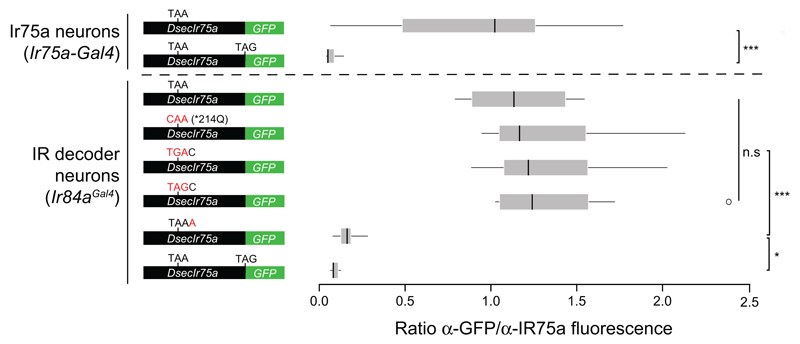
Extended Data Fig. 1. Quantification of efficiency and tissue-specificity of translational readthrough of the D. sechellia Ir75a PTC.
Quantification of GFP staining in the cell bodies of neurons expressing different readthrough reporter constructs in different populations of OSNs (see Fig. 2-3 for genotypes). GFP fluorescence levels were normalised by anti-IR75a fluorescent levels in the Cy3 channel within each analysed cell. Boxplots indicate the median and first and third quartile of the data. Asterisks indicate significance (* p <0.05, *** p <0.0005, n.s. p>0.05) (all pair-wise Wilcoxon-sum-rank-test, Benjamini & Hochberg correction).
Extended Data Fig. 2
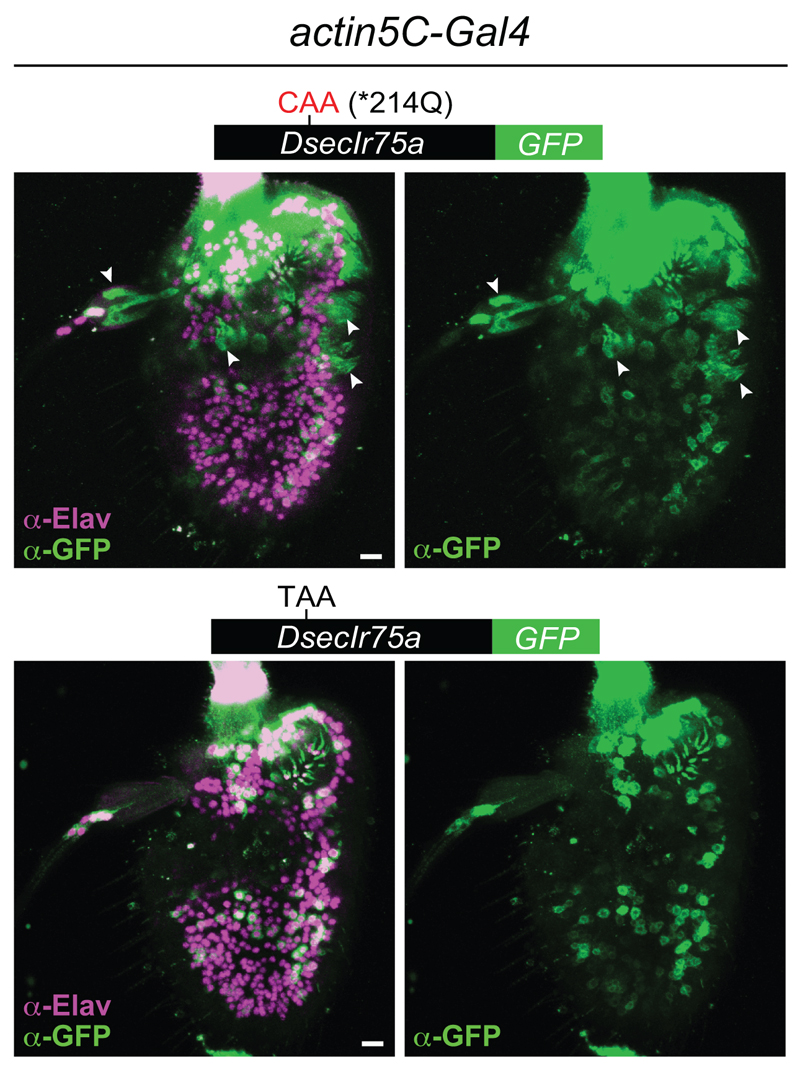
Extended Data Fig. 2. Tissue-specificity of translational readthrough of the D. sechellia Ir75a PTC.
Immunofluorescence with anti-GFP (green) and the neuron nuclear marker anti-Elav (magenta) on whole-mount D. melanogaster antennae in which actin5C-Gal4 drives broad expression of DsecIR75a*214Q:GFP (UAS-DsecIr75a*214Q:GFP/act5C-Gal4) or DsecIR75a:GFP (UAS-DsecIr75a:GFP/act5C-Gal4). Arrowheads indicate GFP-expressing, Elav-negative, non-neuronal cells that were observed in 6/6 antennae expressing the control transgene lacking the PTC, and in 0/6 antenna expressing the PTC-containing transgene. Note that the neuronal GFP signal of both transgenes is heterogeneous across the antenna, possibly because of variable strength of driver expression and/or instability of the GFP-tagged receptors in heterologous neurons. Scale bars = 10 µm.
Extended Data Fig. 3
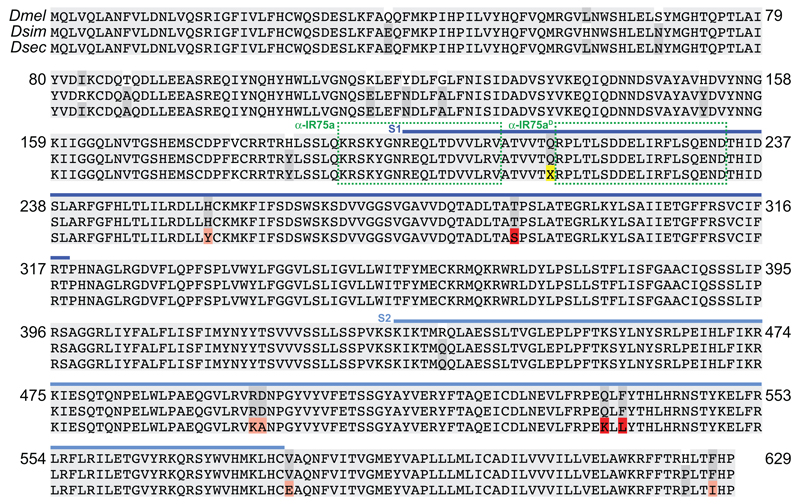
Extended Data Fig. 3. Alignment of drosophilid IR75a orthologues
Protein sequence alignment of D. melanogaster, D. simulans and D. sechellia IR75a. Blue bars indicate the S1 and S2 lobes of the predicted ligand-binding domain (LBD). The position of the premature termination codon (X) is highlighted in yellow. Dark grey columns in the alignment highlight amino acids conserved only in two of the three species. Pink/red shading represent D. sechellia-specific amino acid changes within the LBD; red are the subset located in the internal cavity of the binding pocket (Fig. 4a). The locations of the peptide epitopes for the IR75a antibodies are highlighted with green dashed boxes.
Fig. 1
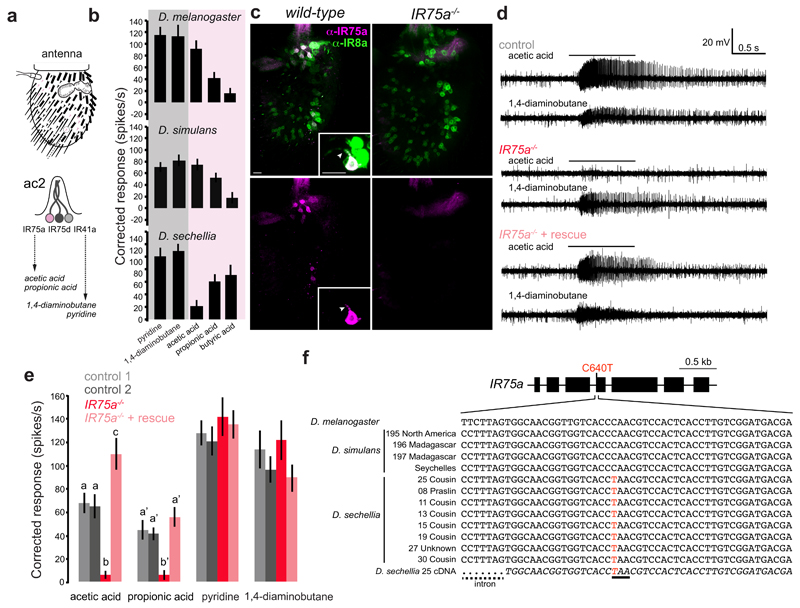
Fig. 1. Ir75a encodes an acetic acid receptor in D. melanogaster, and is a transcribed pseudogene in D. sechellia
a, Top: schematic of the third antennal segment covered with porous olfactory sensilla of various morphological classes. Bottom: schematic of the ac2 sensillum class, which houses three olfactory sensory neurons (OSNs) that express different Ir genes. b, Electrophysiological responses in ac2 sensilla to the indicated odours (mean±SEM; mixed genders) in D. melanogaster (n=9), D. simulans (n=9) and D. sechellia (n=8). The shading on the histograms distinguishes two broad chemical classes of odours (magenta [acids], grey [amines]). c, Immunostaining with ?anti-IR75a (magenta) and anti-IR8a (green) antibodies on antennae of wild-type (left) or Ir75a mutant (Ir75aMB00253, right) animals. The inset shows the colocalisation of IR75a and IR8a in the OSN soma and dendritic compartment (arrowhead). Scale bars = 10 μm. d, Representative traces of extracellular recordings of neuronal responses to the indicated stimuli in ac2 sensilla in control (Ir75a-Gal4,Ir75aMB00253/+), Ir75a hemizygous mutant (Ir75aMB00253/Df(3L)BSC415) and Ir75a rescue (UAS-DmelIr75a;Ir75a-Gal4,Ir75aMB00253/Df(3L)BSC415) animals. Bars above the traces mark 1 s stimulus time. e, Quantification of solvent-corrected responses in (d) (mean±SEM; mixed genders). Genotypes: control 1 (Df(3L)BSC415/+, n=12), control 2 (Ir75a-Gal4,Ir75aMB00253/+, n=11), Ir75a hemizygous mutant (Ir75a-Gal4,Ir75aMB00253/Df(3L)BSC415, n=12), Ir75a rescue (UAS-DmelIr75a;Ir75a-Gal4, Ir75aMB00253/Df(3L)BSC415, n=13). Bars labelled with different letters are significantly different (Source Data & Methods). For odours with unlabelled bars, no significant differences were found across genotypes. f, Top: gene model of Ir75a indicating the position of the C640T nucleotide change in the D. sechellia orthologue. Bottom: Genomic sequence spanning this nucleotide position in D. melanogaster and several geographically-distributed D. simulans and D. sechellia strains (Methods). The bottom italicised sequence is of the D. sechellia cDNA. The D. sechellia C640T substitution (highlighted in red) creates a premature termination codon (underlined).
Fig. 2
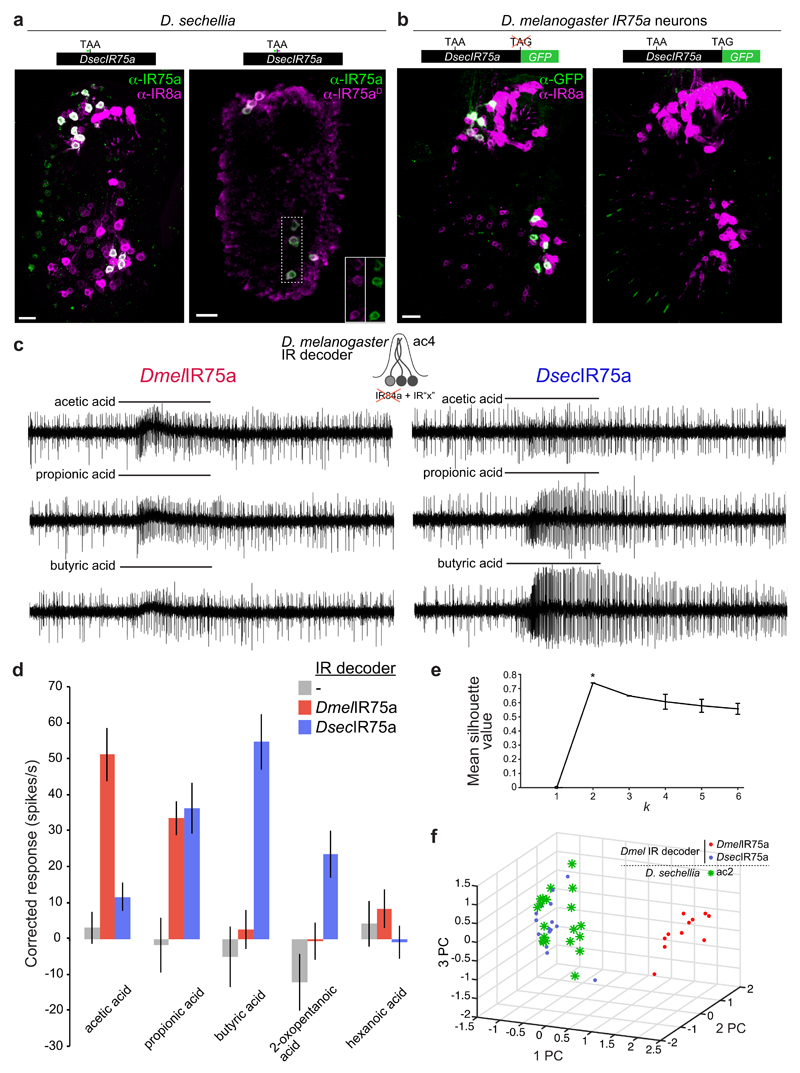
Fig. 2. Translational readthrough of the premature termination codon in D. sechellia Ir75a permits production of a functional olfactory receptor.
a, Immunofluorescence on D. sechellia antennae with anti-IR75a (green, recognising an epitope upstream of the PTC) and IR8a (magenta) (left) or anti-IR75a (green) and anti-IR75aD (magenta, recognising an epitope downstream of the PTC) (right). The insets show the separate channels for anti-IR75a and anti-IR75aD corresponding to the area demarcated with a dashed box. Scale bars = 10 µm. b, Immunofluorescence with anti-GFP antibodies (green) and anti-IR8a (magenta) on a D. melanogaster antenna in which Ir75a neurons express transgenes encoding DsecIR75a:GFP (UAS-DsecIr75a:GFP/+;Ir75a-Gal4/+) (left) or DsecIR75aSTOP:GFP (UAS-DsecIr75aSTOP:GFP/+;Ir75a-Gal4/+) (right). c, Representative traces of extracellular recordings of neuronal responses to the indicated stimuli in IR decoder neurons expressing DmelIR75a (UAS-DmelIr75a;Ir84aGal4) or DsecIR75a (UAS-DsecIr75a;Ir84aGal4). d, Quantification of odour-evoked responses in empty IR decoder neurons (Ir84aGal4, n=5), or the decoder neurons expressing DmelIR75a (n=7-11) or DsecIR75a (n=7-14) (genotypes as in (c)) (mean±SEM; mixed genders). e, k-means cluster analysis of the responses of DmelIR75a in the IR decoder, DsecIR75a in the IR decoder, and D. sechellia ac2 sensilla to the four main agonists (acetic acid, propionic acid, butyric acid, and 2-oxopentanoic acid). Mean silhouette value and standard deviation of all the solutions within each k value (n=100). The peak silhouette value at k = 2 was significantly different from other k values, indicating that responses of these three distinct neuron classes statistically fall within two clusters. f, Plot of the three first principal components (PC) from a Principle Component Analysis of the same odour response profiles as in (e).
Fig. 3
Fig. 3. Efficiency and tissue-specificity of translational readthrough of the D. sechellia Ir75a PTC.
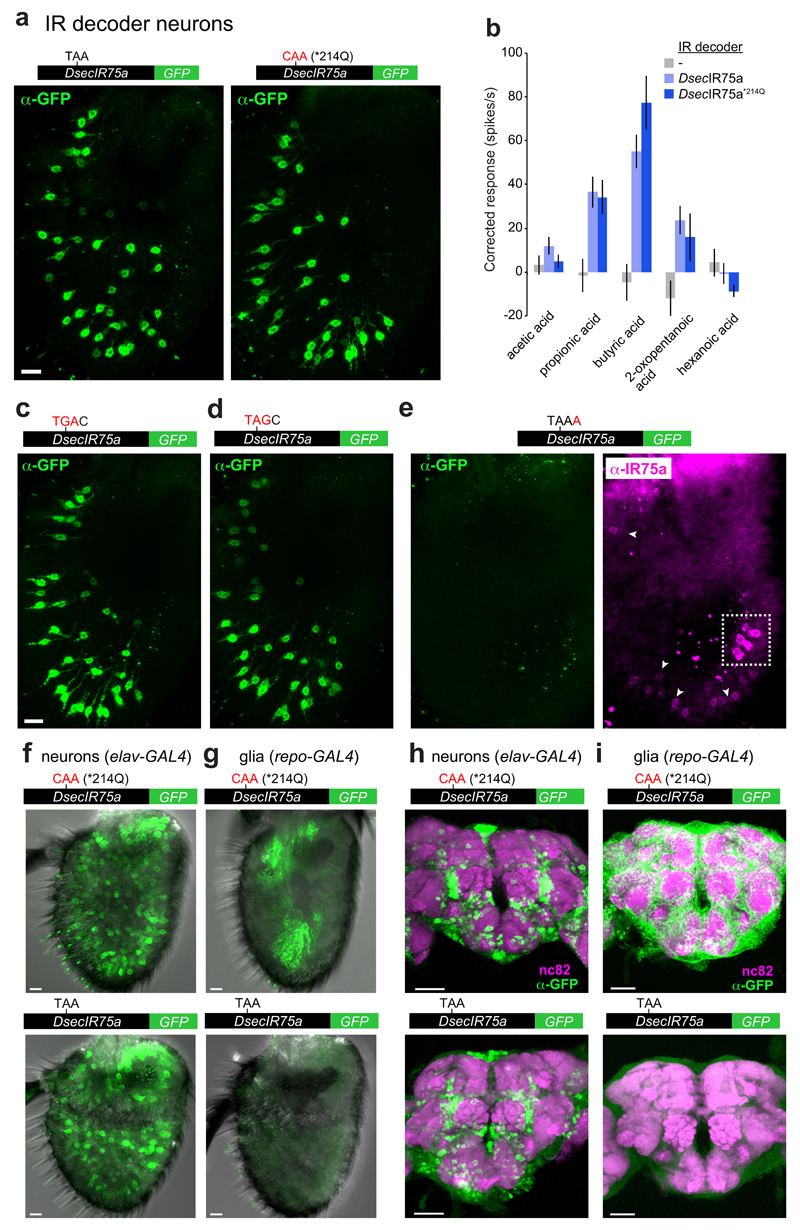
a, Immunofluorescence with anti-GFP on D. melanogaster antennae in which IR84a neurons express transgenes encoding DsecIR75a:GFP (UAS-DsecIr75a:GFP/+;Ir84aGal4/+) or DsecIR75a*214Q:GFP (UAS-DsecIr75a*214Q:GFP/+;Ir84aGal4/+). Scale bar = 10 µm. b, Quantification of odour-evoked responses in empty IR decoder neurons (Ir84aGal4, n=4-5), or those expressing DsecIR75a (UAS-DsecIr75a;Ir84aGal4), n=8-14) or DsecIR75a*214Q (UAS-DsecIr75a*214Q;Ir84aGal4, n=8-11) (mean±SEM; mixed genders). No significant differences were found between the two genotypes in the responses to any of the odours (Student’s t-test). c-e, Immunofluorescence with anti-GFP (green) on D. melanogaster antennae in which Ir84a neurons express DsecIr75a:GFP transgenes bearing the indicated mutations to the PTC or 3’ nucleotide (genotypes of the form: UAS-DsecIr75axxx:GFP/+;Ir84aGal4/+). In panel (e), immunofluorescence with anti-IR75a antibodies (magenta) is also shown, which reveals that this transgene encodes protein up to, but not beyond, the PTC i.e., signal is detected in Ir84a neurons with anti-IR75a (which detects an epitope upstream of the PTC) but not anti-GFP (arrowheads). The dashed white square indicates endogenous Ir75a neurons. Scale bar = 10 µm. f, Immunofluorescence with anti-GFP (green) on D. melanogaster antennae in which elav-Gal4 drives neuronal expression of DsecIR75a*214Q:GFP (UAS-DsecIr75a*214Q:GFP/elav-Gal4, 8/8 brain were GFP-positive) or DsecIR75a:GFP (UAS-DsecIr75a:GFP/elav-Gal4, 5/5 GFP-positive). Scale bars = 10 µm. g, Immunofluorescence with anti-GFP (green) on D. melanogaster antennae in which repo-Gal4 drives glial-specific expression of DsecIR75a*214Q:GFP (UAS-DsecIr75a*214Q:GFP/repo-Gal4, 10/10 GFP-positive) or DsecIR75a:GFP (UAS-DsecIr75a:GFP/repo-Gal4, 0/10 GFP-positive). Scale bars = 10 µm. h, Immunofluorescence with anti-GFP (green) and synaptic neuropil marker nc82 (magenta) antibodies on D. melanogaster brains in which elav-Gal4 drives neuronal expression of DsecIR75a*214Q:GFP (UAS-DsecIr75a*214Q:GFP/elav-Gal4, 6/6 GFP-positive) or DsecIR75a:GFP (UAS-DsecIr75a:GFP/elav-Gal4, 8//8 GFP-positive). Scale bars = 50 µm. i, Immunofluorescence with anti-GFP (green) and nc82 (magenta) on D. melanogaster brains in which repo-Gal4 drives glial-specific expression of DsecIR75a*214Q:GFP (UAS-DsecIr75a*214Q:GFP/repo-Gal4, 6/6 GFP-positive) or DsecIR75a:GFP (UAS-DsecIr75a:GFP/repo-Gal4, 0/8 GFP-positive). Scale bars = 50 µm.
Fig. 4
Fig. 4. Molecular basis of the functional divergence of D. sechellia Ir75a.
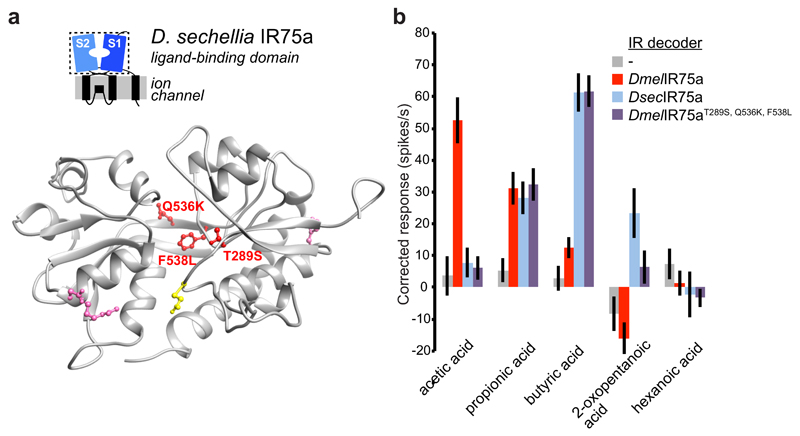
a, Protein homology model of the LBD of DsecIR75a (Methods). The side chains of the residues that are different in D. sechellia IR75a compared with D. simulans and D. melanogaster IR75a are represented in pink, and the subset of these mutated in this study are shown in red. The location of the residue putatively encoded by the PTC is shown in yellow. b, Quantification of odour-evoked responses in empty IR decoder neurons (Ir84aGal4, n=5-6) or the decoder neurons expressing DmelIR75a (n=9), DsecIR75a (n=8-9) or the DmelIR75aT289S,Q536K,F538L mutant (n=14) (genotypes: UAS-DxxxIr75axxx;Ir84aGal4) (mean±SEM;, mixed genders); experiments for all transgenes were performed in parallel. Responses to each odour of DsecIR75a and DmelIR75aT289S,Q536K,F538L are statistically indistinguishable (Wilcoxon sum-rank test).
Fig. 5
Fig. 5. Functional “pseudogene” alleles of other receptors in other species.
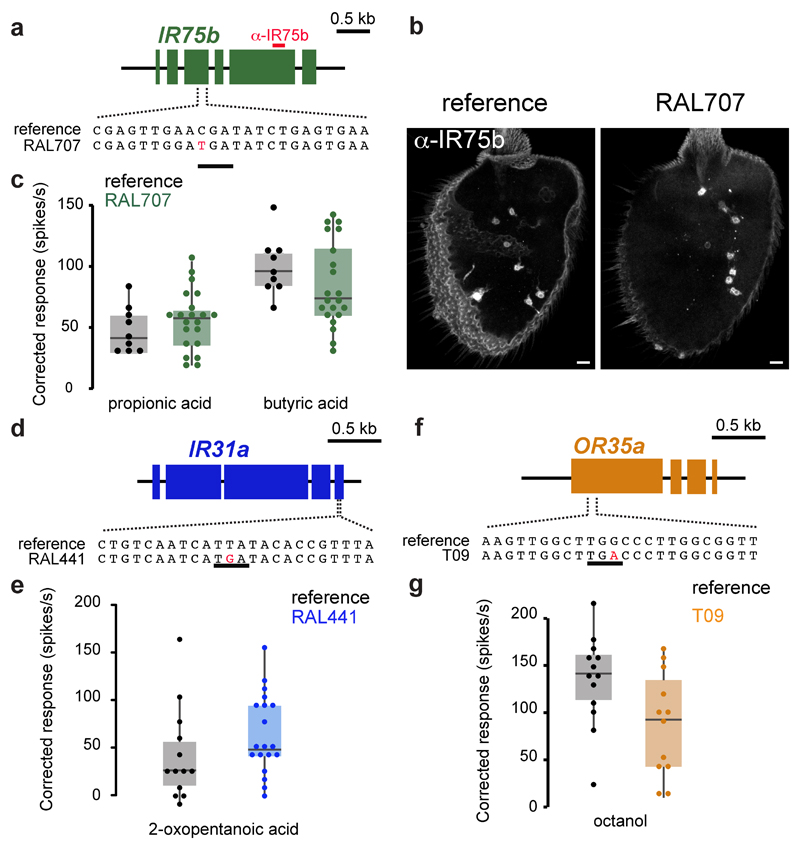
a, Gene structure of D. melanogaster Ir75b indicating the position of the PTC in the RAL707 strain (an identical sequence is found in all other strains containing a PTC at this position; Methods). The region encoding the epitope recognised by anti-IR75b antibodies is indicated with a red bar. b, Immunofluorescence with anti-IR75b antibodies on antennae of reference D. melanogaster (Methods) and RAL707 flies. Scale bar = 10 µm. c, Quantification of odour-evoked responses in ac3 sensilla to propionic acid and butyric acid in control (reference D. melanogaster) and RAL707 flies. Boxplots indicate the median and first and third quartile of the data; each dot corresponds to one recording. d, Gene structure of D. melanogaster Ir31a indicating the position of the PTC in the RAL441 strain. e, Quantification of odour-evoked responses to 2-oxopentanoic acid in ac1 sensilla of control (reference D. melanogaster) and RAL441 flies. f, Gene structure of D. melanogaster Or35a indicating the position of the PTC in the T09 (and T29) strain. g, Quantification of odour-evoked responses to octanol in ac3 sensilla of control (reference D. melanogaster) and T09 flies.

Comment in

References

    1. Salmena L. Pseudogene redux with new biological significance. Methods Mol Biol. 2014;1167:3–13. - PubMed
    1. Poliseno L, et al. A coding-independent function of gene and pseudogene mRNAs regulates tumour biology. Nature. 2010;465:1033–1038. - PMC - PubMed
    1. Ji Z, Song R, Regev A, Struhl K. Many lncRNAs, 5'UTRs, and pseudogenes are translated and some are likely to express functional proteins. Elife. 2015;4 - PMC - PubMed
    1. Nei M, Niimura Y, Nozawa M. The evolution of animal chemosensory receptor gene repertoires: roles of chance and necessity. Nat Rev Genet. 2008;9:951–963. - PubMed
    1. Benton R, Vannice KS, Gomez-Diaz C, Vosshall LB. Variant ionotropic glutamate receptors as chemosensory receptors in Drosophila. Cell. 2009;136:149–162. - PMC - PubMed

Publication types