Yoga in Women With Abdominal Obesityߞa Randomized Controlled Trial
- PMID: 27776622
- PMCID: PMC5098025
- DOI: 10.3238/arztebl.2016.0645
Yoga in Women With Abdominal Obesityߞa Randomized Controlled Trial
Abstract
Background: Abdominal obesity is a major risk factor for morbidity and mortality. The aim of this study was to investigate the effect of yoga on waist circumference and other anthropometric and self-reported variables in women with abdominal obesity.
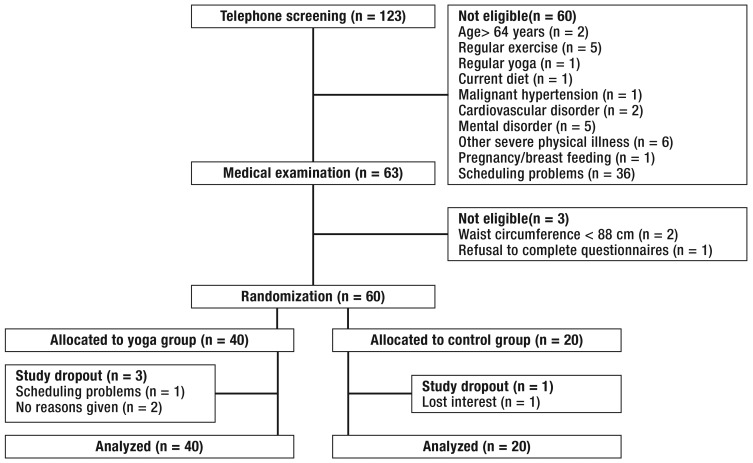
Methods: 60 women with abdominal obesity (waist circumference ≥ 88 cm; body-mass index [BMI] ≥ 25) were randomly allocated in a 2:1 ratio to either a 12-week yoga intervention (n = 40) or a waiting list (n = 20). The waist circumference was the primary endpoint. Secondary (exploratory) endpoints included the waist/hip ratio, body weight, BMI, body fat percentage, body muscle mass percentage, blood pressure, health-related quality of life, self-esteem, subjective stress, body awareness, and body responsiveness, and the safety of the intervention. The persons assessing the outcomes were blinded to the group to which the patients belonged.
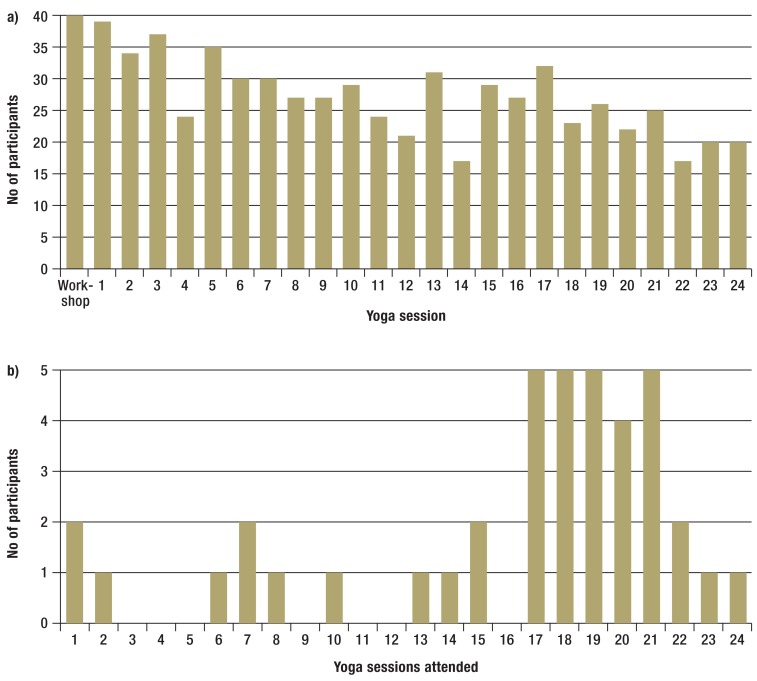
Results: The patients in the yoga group participated in a mean of 30.2±9.2 (maximum, 42) hours of supervised yoga practice. Their abdominal circum - ference was significantly reduced in comparison to the participants on the waiting list, with an intergroup difference of -3.8 cm (95% confidence interval [-6.1; -1,.5]; p = 0.001). There were further, moderate intergroup differences in the waist/hip ratio, body weight, BMI, body fat percentage, body muscle mass percentage, mental and physical well-being, self-esteem, subjective stress, body awareness, and trust in bodily sensations (all p<0.05). There were no serious adverse events. None of the participants embarked on a low-calorie diet while participating in the study.
Conclusion: The 12-week yoga intervention had moderately strong positive effects on anthropometric and self-reported variables in women with abdominal obesity. Yoga is safe in this population and can be recommended as a technique for combating abdominal obesity in women.
Figures
References
-
- World Health Organization. WHO Press. Geneva: 2014. Global status report on noncommunicable diseases 2014. - PubMed
-
- Westphal SA. Obesity, abdominal obesity, and insulin resistance. Clin Cornerstone. 2008;9:23–29. - PubMed
-
- Yusuf S, Hawken S, Ounpuu S, et al. Effect of potentially modifiable risk factors associated with myocardial infarction in 52 countries (the INTERHEART study): case-control study. Lancet. 2004;364:937–952. - PubMed
-
- Cecchini M, Sassi F, Lauer JA, Lee YY, Guajardo-Barron V, Chisholm D. Tackling of unhealthy diets, physical inactivity, and obesity: health effects and cost-effectiveness. Lancet. 2010;376:1775–1784. - PubMed
-
- Suppl 2: American College of Cardiology/American Heart Association. Task Force on Practice Guidelines, Obesity Expert Panel: Guidelines (2013) for the management of overweight and obesity in adults. Obesity (Silver Spring) 2014;22:S5–S39. - PubMed
Publication types
MeSH terms
LinkOut - more resources
Full Text Sources
Other Literature Sources
Medical