


Pharmacogenomic implications of the evolutionary history of infectious diseases in Africa
- PMID: 27779243
- PMCID: PMC5380847
- DOI: 10.1038/tpj.2016.78
Pharmacogenomic implications of the evolutionary history of infectious diseases in Africa
Abstract
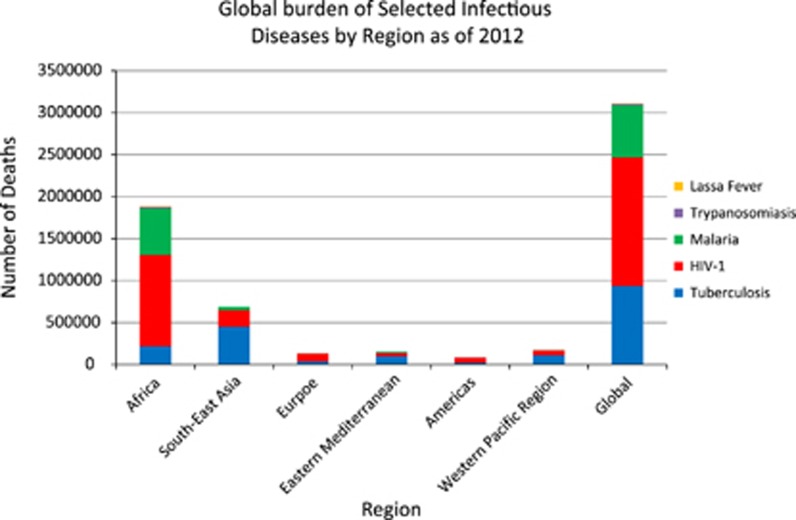
As the common birthplace of all human populations, modern humans have lived longer on the African continent than in any other geographical region of the world. This long history, along with the evolutionary need to adapt to environmental challenges such as exposure to infectious agents, has led to greater genetic variation in Africans. The vast genetic variation in Africans also extends to genes involved in the absorption, distribution, metabolism and excretion of pharmaceuticals. Ongoing cataloging of these clinically relevant variants reveals huge allele-frequency differences within and between African populations. Here, we examine Africa's large burden of infectious disease, discuss key examples of known genetic variation modulating disease risk, and provide examples of clinically relevant variants critical for establishing dosing guidelines. We propose that a more systematic characterization of the genetic diversity of African ancestry populations is required if the current benefits of precision medicine are to be extended to these populations.
Conflict of interest statement
The authors declare no conflict of interest.
Figures
References
-
- Harpending H, Rogers A. Genetic perspectives on human origins and differentiation. Annu Rev Genomics Hum Genet 2000; 1: 361–385. - PubMed
Publication types
MeSH terms
Substances
Grants and funding
LinkOut - more resources
Full Text Sources
Other Literature Sources
Medical
Research Materials
