


The Role of Catheter Angiography in the Diagnosis of Central Nervous System Vasculitis
- PMID: 27781050
- PMCID: PMC5075817
- DOI: 10.1159/000445255
The Role of Catheter Angiography in the Diagnosis of Central Nervous System Vasculitis
Abstract
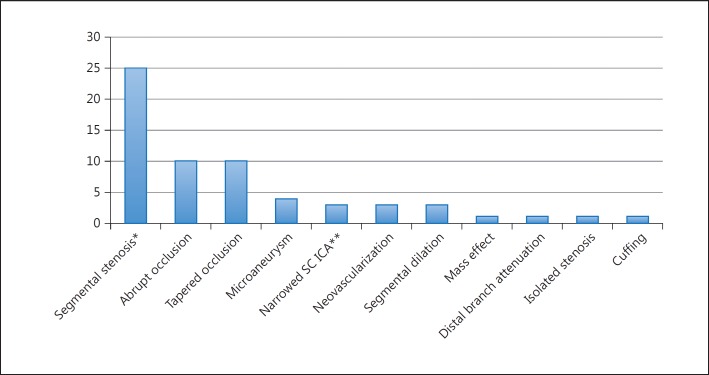
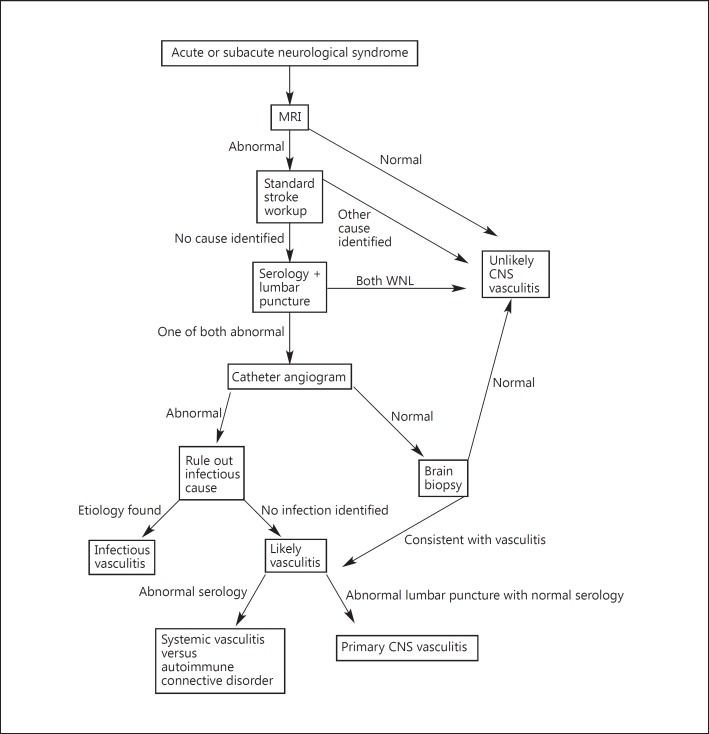
Background: Central nervous system vasculitis (CNSV) is a rare disorder, the pathophysiology of which is not fully understood. It involves a combination of inflammation and thrombosis. CNSV is most commonly associated with headache, gradual changes in mental status, and focal neurological symptoms. Diagnosis requires the effective use of history, laboratory testing, imaging, and biopsy. Catheter angiography can be a powerful tool in the diagnosis when common and low-frequency angiographic manifestations of CNSV are considered. We review these manifestations and their place in the diagnostic algorithm of CNSV.
Summary: We reviewed the PubMed database for case series of CNSV that included 5 or more patients. Demographic and angiographic findings were collected. Angiographic findings were dichotomized between common and low-frequency findings. A system for incorporating these findings into clinical decision-making is proposed.
Key message: CNSV is a diagnostic challenge due to the absence of a true gold standard test. In the absence of such a test, catheter angiography remains a central piece of the diagnostic puzzle when appropriately employed and interpreted.
Keywords: Angiitis; Angiography; Primary central nervous system vasculitis; Vasculitis.
Figures
References
-
- Kussmaul A, Maier R. Ueber eine bisher nicht beschriebene eigentümliche Arterienerkrankung (Periarteritis nodosa), die mit Morbus Brightii und rapid fortschreitender allgemeiner Muskellähmung einhergeht. Dtsch Arch Klin Med. 1866;1:484–518.
-
- Longcope WT. Periarteritis nodosa, with report of a case with autopsy. Bull Ayer Clin Lab. 1908;5:1.
-
- Harbitz F. Unknown forms of arteritis, with special reference to their relation to syphilitic arteritis and periarteritis nodosa. Am J Med Sci. 1922;163:250–271.
-
- Newman W, Wolf A. Non-infectious granulomatous angiitis involving the central nervous system. Trans Am Neurol Assoc. 1952;56:114–117. - PubMed
Publication types
LinkOut - more resources
Full Text Sources
Other Literature Sources
