


Fatigue in myasthenia gravis: risk factors and impact on quality of life
- PMID: 27781147
- PMCID: PMC5064345
- DOI: 10.1002/brb3.538
Fatigue in myasthenia gravis: risk factors and impact on quality of life
Abstract
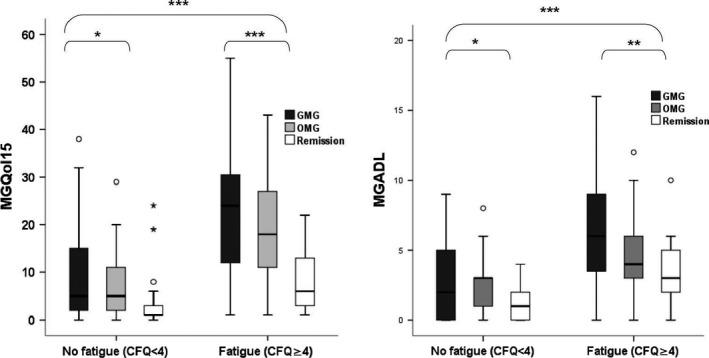
Objectives: Emerging evidence suggests that fatigue in myasthenia gravis (MG) is a relevant problem that negatively impacts activities of daily living (ADL). The relationship between fatigue and quality of life (QoL) has never been systematically explored in MG patients. The study aimed to assess the prevalence of fatigue and its relation to ADL and QoL as well as to identify factors associated with fatigue in MG.
Material and methods: This was a cross-sectional observational study in patients with confirmed diagnosis of MG independent of disease severity. Prevalence of fatigue was assessed using the Chalder Fatigue Scale (CFQ). Impact of fatigue on ADL and QoL was assessed by the MG activities of daily living profile (MG-ADL) and the MG-specific quality-of-life instrument (MG-QoL), respectively. Association of fatigue with sociodemographics, clinical characteristics of MG, and comorbidities including mood and anxiety disorders as well as sleep disorders was investigated using multivariable logistic regression analyses.
Results: Overall, 200 MG patients were included. The observed rate of fatigue was 56.1%, of those 70.4% fulfilled the criteria of chronic fatigue (CF) with a duration of ≥6 months. Relevant fatigue was strongly associated to ADL and QoL. Factors associated with relevant fatigue were disease severity and depressive state. Furthermore, positive muscle-specific tyrosine kinase (MuSK) antibody status showed a strong association with relevant fatigue.
Conclusions: MG patients have a high prevalence of fatigue which negatively impacts ADL and QoL. MG-specific clinical characteristics are related to fatigue and might help to identify MG patients at risk for fatigue.
Keywords: activities of daily living; cohort studies; depression; fatigue; myasthenia gravis; quality of life.
Figures
References
-
- Askmark, H. , Haggard, L. , Nygren, I. , & Punga, A. R. (2012). Vitamin D deficiency in patients with myasthenia gravis and improvement of fatigue after supplementation of vitamin D3: A pilot study. European Journal of Neurology, 19, 1554–1560. - PubMed
-
- Bastien, C. H. , Vallieres, A. , & Morin, C. M. (2001). Validation of the Insomnia Severity Index as an outcome measure for insomnia research. Sleep Medicine, 2, 297–307. - PubMed
-
- Bjelland, I. , Dahl, A. A. , Haug, T. T. , & Neckelmann, D. (2002). The validity of the Hospital Anxiety and Depression Scale. An updated literature review. Journal of Psychosomatic Research, 52, 69–77. - PubMed
-
- Braley, T. J. , Segal, B. M. , & Chervin, R. D. (2015). Hypnotic use and fatigue in multiple sclerosis. Sleep Medicine, 16(1), 131–137. - PubMed
Publication types
MeSH terms
LinkOut - more resources
Full Text Sources
Other Literature Sources
Medical
