


Feasibility of offline head & neck adaptive radiotherapy using deformed planning CT electron density mapping on weekly cone beam computed tomography
- PMID: 27781491
- PMCID: PMC5605016
- DOI: 10.1259/bjr.20160420
Feasibility of offline head & neck adaptive radiotherapy using deformed planning CT electron density mapping on weekly cone beam computed tomography
Abstract
Objective: The purpose of the study was to use deformable mapping of planning CT (pCT) electron density values on weekly cone-beam CT (CBCT) to quantify the anatomical changes and determine the dose-volume relationship in offline adaptive volumetric-modulated arc therapy.
Methods: 10 patients treated with RapidArc plans who had weekly CBCTs were selected retrospectively. The pCT was deformed to weekly CBCTs and the deformed contours were checked for any discrepancies. Clinical target volume 66 Gy and 60 Gy (CTV66 and CTV60), parotids and spinal cord were the structures selected for analysis. Volume reduction and dice similarity index (DSI) were determined. Hybrid RapidArc plans were created and the cumulative dose-volume histograms for selected structures were analyzed.
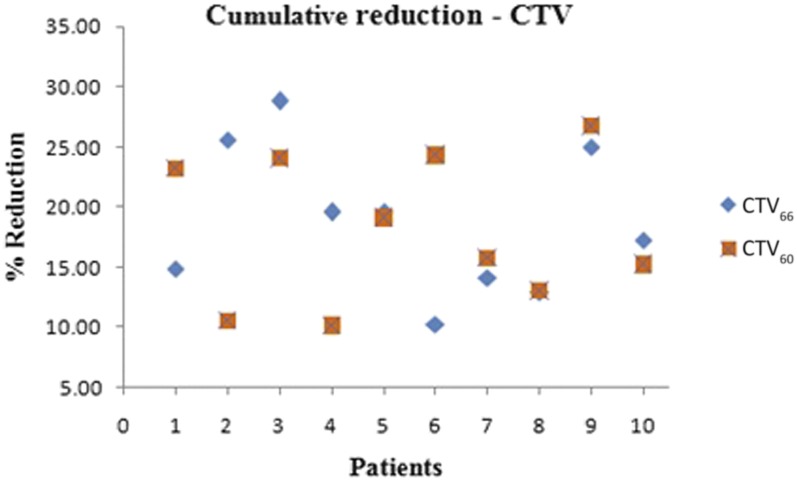
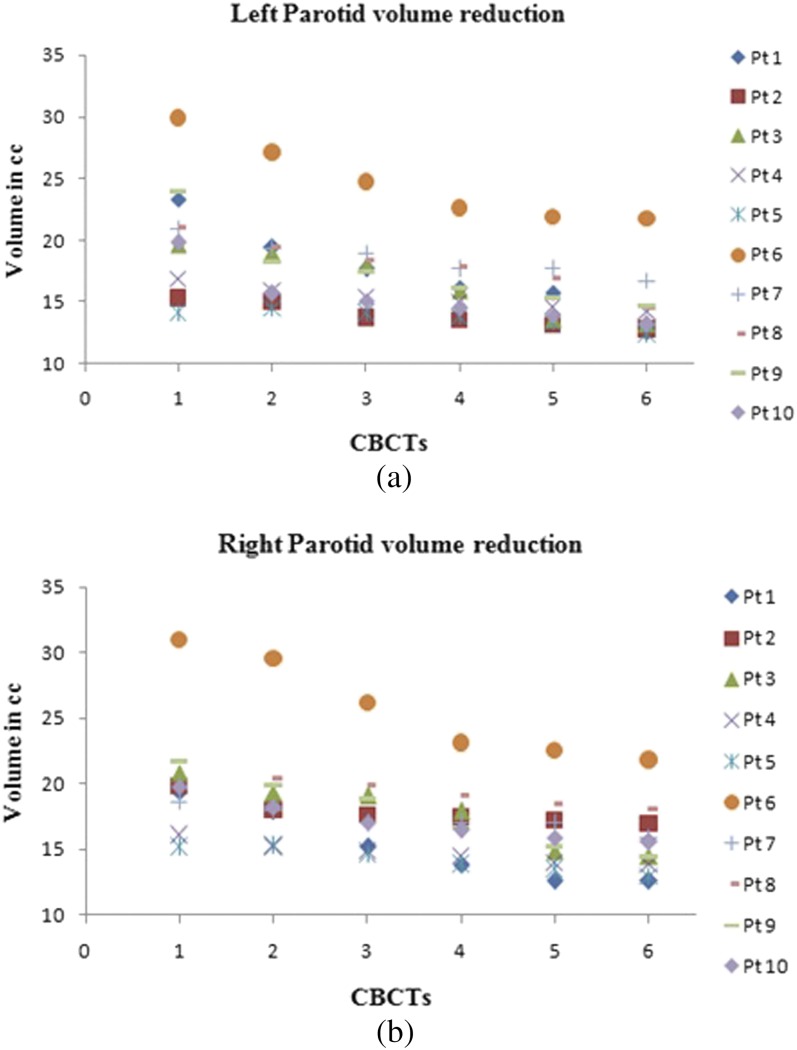
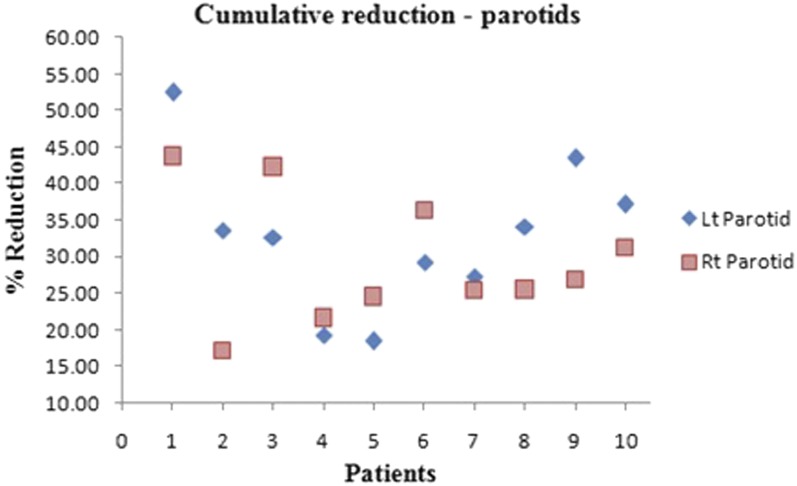
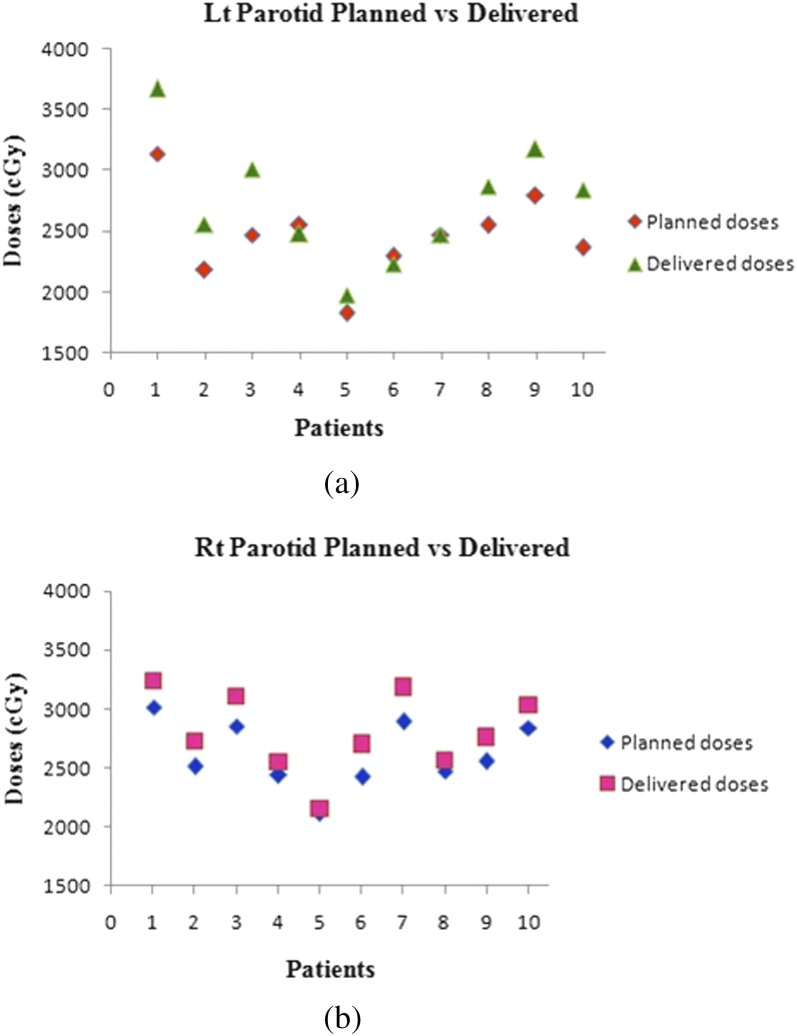
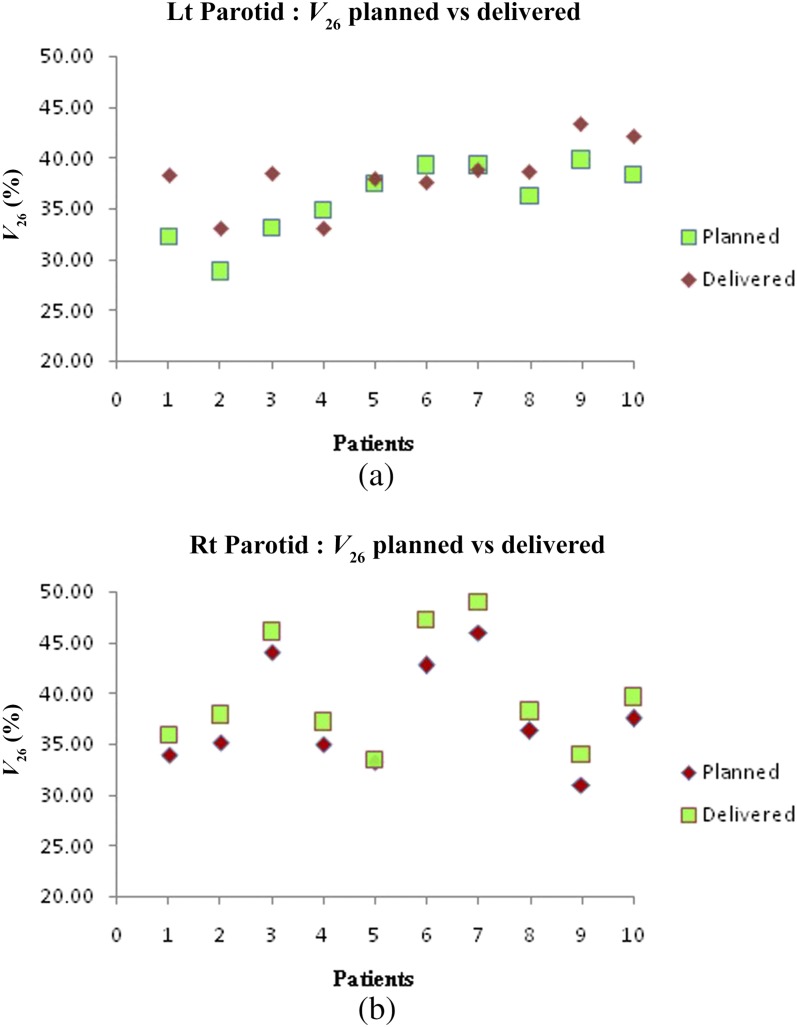
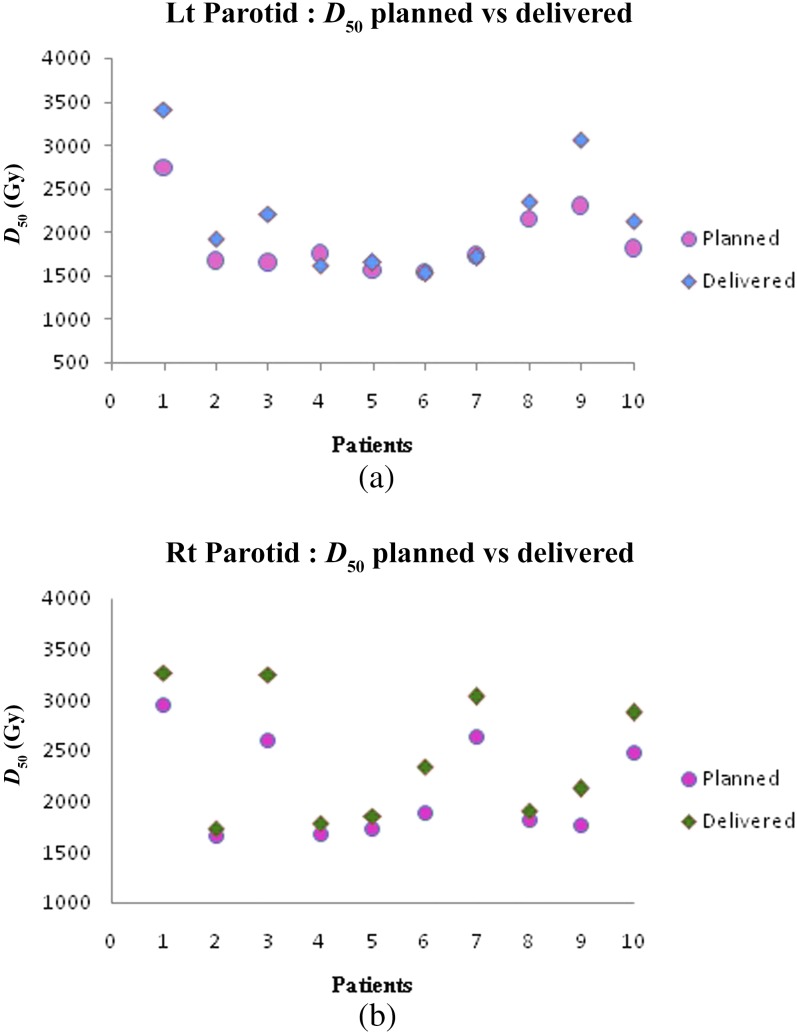
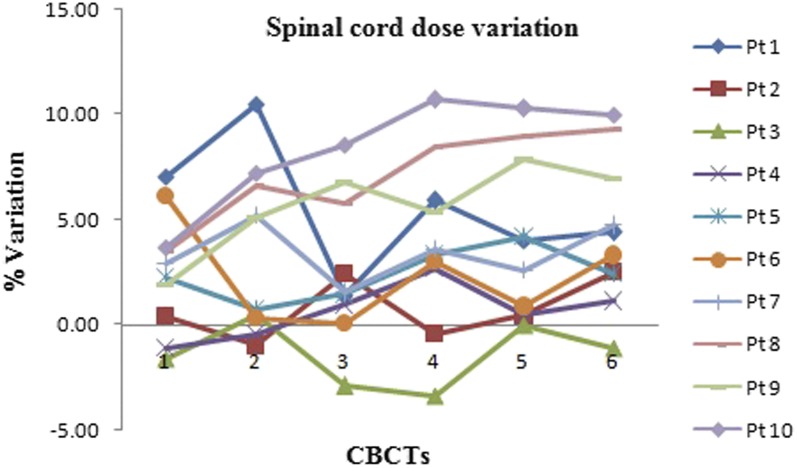
Results: Results showed a mean volume reduction of 18.82 ± 6.08% and 18.22 ± 6.1% for Clinical target volume 66 Gy and 60 Gy (CTV66 and CTV60), respectively, and their corresponding DSI values were 0.94 ± 0.03 and 0.95 ± 0.01. Mean volume reductions of left and right parotids were 32.79 ± 10.28% and 29.46 ± 8.78%, respectively, and their corresponding mean DSI values were 0.90 ± 0.05 and 0.89 ± 0.05. The cumulative mean dose difference for Planning target volume 66 Gy (PTV66) was -1.35 ± 1.71% and for Planning target volume 60 Gy (PTV60), it was -0.69 ± 1.37%. Spinal cord doses varied for all patients over the course.
Conclusion: The results from the study showed that it is clinically feasible to estimate the dose-volume relationship using deformed pCT. Monitoring of patient anatomic changes and incorporating patient-specific replanning strategy are necessary to avoid critical structure complications. Advances in knowledge: Deformable mapping of pCT electron density values on weekly CBCTs has been performed to establish the volumetric and dosimetric changes. The anatomical changes differ among the patients and hence, the choice for adaptive radiotherapy should be strictly patient specific rather than time specific.
Figures

References
-
- Holt A, Van Gestel D, Arends MP, Korevaar EW, Schuring D, Kunze-Busch MC, et al. Multi-institutional comparison of volumetric modulated arc therapy vs. intensity-modulated radiation therapy for head-and-neck cancer: a planning study. Radiat Oncol 2013; 8: 1. doi: https://doi.org/10.1186/1748-717X-8-26 - DOI - PMC - PubMed
-
- Syam Kumar SA, Vivekanandan N, Sriram P. A study on conventional IMRT and RapidArc treatment planning techniques for head and neck cancers. Rep Pract Oncol Radiother 2012; 17: 168–75. doi: https://doi.org/10.1016/j.rpor.2012.01.009 - DOI - PMC - PubMed
-
- Bujold A, Craig T, Jaffray D, Dawson LA. Image-guided radiotherapy: has it influenced patient outcomes? Semin Radiat Oncol 2012; 22: 50–61. doi: https://doi.org/10.1016/j.semradonc.2011.09.001 - DOI - PubMed
-
- Jaffray DA, Siewerdsen JH, Wong JW, Martinez AA. Flat-panel cone-beam computed tomography for image-guided radiation therapy. Int J Radiat Oncol Biol Phys 2002; 53: 1337–49. doi: https://doi.org/10.1016/S0360-3016(02)02884-5 - DOI - PubMed
-
- Stock M, Pasler M, Birkfellner W, Homolka P, Poetter R, Georg D. Image quality and stability of image-guided radiotherapy (IGRT) devices: a comparative study. Radiother Oncol 2009; 93: 1–7. doi: https://doi.org/10.1016/j.radonc.2009.07.012 - DOI - PMC - PubMed
MeSH terms
LinkOut - more resources
Full Text Sources
Other Literature Sources
Medical
