. 2016 Dec:22:724-736.
doi: 10.2119/molmed.2015.00262. Epub 2016 Oct 19.

Peroxisome proliferator activated receptor gamma 2 modulates late pregnancy homeostatic metabolic adaptations

Affiliations

Peroxisome proliferator activated receptor gamma 2 modulates late pregnancy homeostatic metabolic adaptations

Yurena Vivas et al. Mol Med. 2016 Dec.

Abstract

Pregnancy requires the adaptation of maternal energy metabolism including expansion and functional modifications of adipose tissue. Insulin resistance (IR), predominantly during late gestation, is a physiological metabolic adaptation that serves to support the metabolic demands of fetal growth. The molecular mechanisms underlying these adaptations are not fully understood and may contribute to gestational diabetes mellitus. Peroxisome proliferator-activated receptor gamma (PPARγ) controls adipogenesis, glucose and lipid metabolism and insulin sensitivity. The PPARγ2 isoform is mainly expressed in adipocytes and is thus likely to contribute to adipose tissue adaptation during late pregnancy. In the present study, we investigated the contribution of PPARγ2 to the metabolic adaptations occurring during the late phase of pregnancy in the context of IR. Using a model of late pregnancy in PPARγ2 knockout (KO) mice, we found that deletion of PPARγ2 exacerbated IR in association with lower serum adiponectin levels, increased body weight and enhanced lipid accumulation in liver. Lack of PPARγ2 provoked changes in the distribution of fat mass and preferentially prevented the expansion of the perigonadal depot while at the same time exacerbating inflammation. PPARγ2KO pregnant mice presented adipose tissue depot-dependent decreased expression of genes involved in lipid metabolism. Collectively, these data indicate that PPARγ2 is essential to promote healthy adipose tissue expansion and immune and metabolic functionality during pregnancy, contributing to the physiological adaptations that lead gestation to term.

Keywords: Insulin resistance; PPARγ; adiponectin; adipose tissue; diabetes; gestation; inflammation.


Conflict of interest statement

DISCLOSURE

The authors declare they have no competing interests as defined by Molecular Medicine, or other interests that might be perceived to influence the results and discussion reported in this paper.

Figures

Figure 1.
Figure 1.
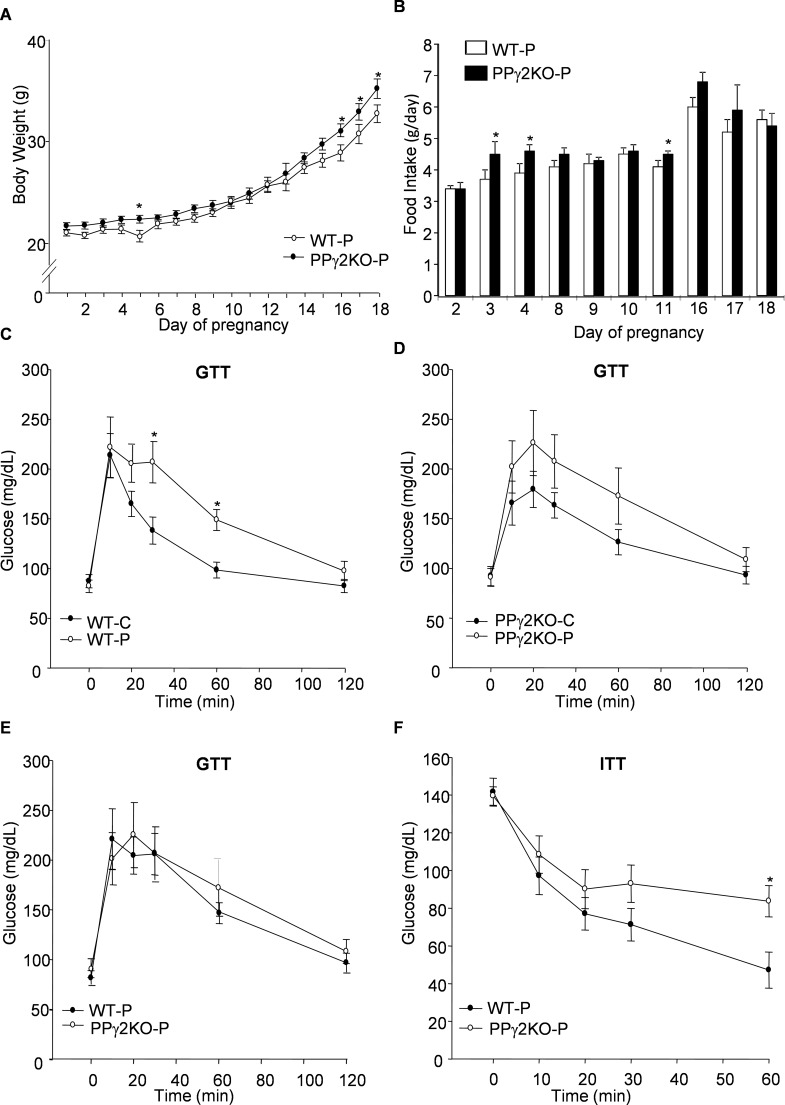
Alteration in body weight, food intake and insulin sensitivity in PPARγ2KO mice during pregnancy. (A) Evolution of body weight in pregnant mice with deletion of PPARγ2 (PPγ2KO-P) and in corresponding pregnant WT (WT-P) animals. (B) Changes in food intake during pregnancy. Food intake was measured every 24 h. Data from the first, second and third phase of pregnancy are shown. (C) GTT curves from nonpregnant and pregnant WT mice, (D) from nonpregnant and pregnant PPγ2KO mice and (E) from pregnant WT and PPγ2KO mice. All mice were at d 15 of gestation. (F) ITT curves from pregnant WT and PPγ2KO mice at d 16 of gestation. Data are expressed as mean ± SEM (A, B: n = 10–15 animals/group; C–F: n = 9–11 animals/group). *p ≤ .05.
Figure 2.
Figure 2.
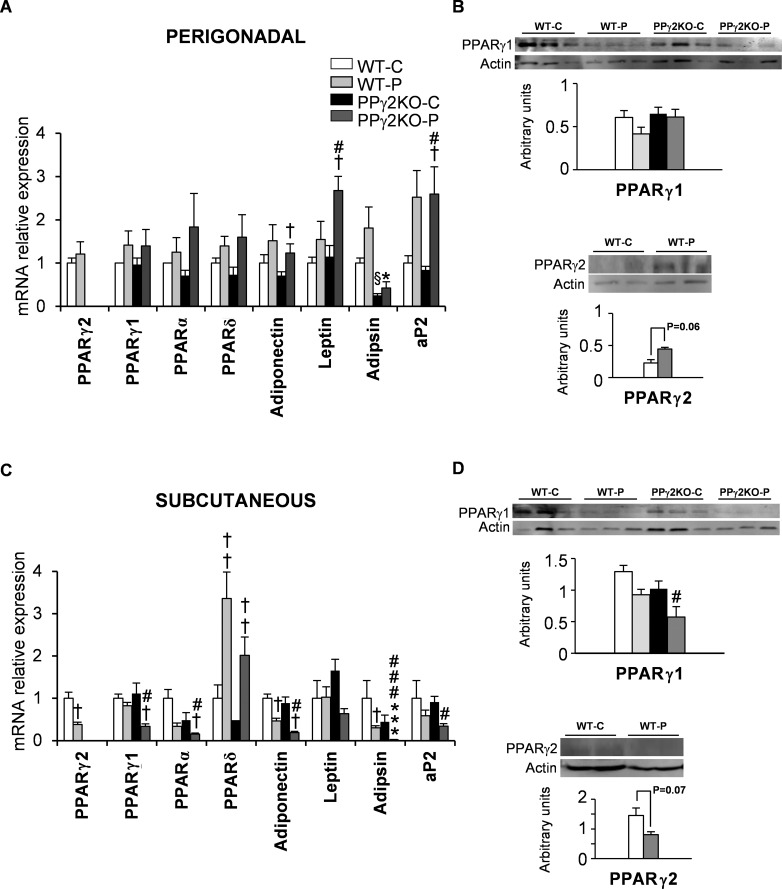
Expression pattern of PPARs and other adipose markers in perigonadal and subcutaneous WAT depots during pregnancy. (A and C) mRNA levels of adipogenic markers and other genes in (A) perigonadal and (C) subcutaneous fat depots from pregnant and nonpregnant WT and PPγ2KO mice. Data are expressed as mean ± SEM (n = 6–8 animals/group). (B and C) Quantification of PPARγ1 and PPARγ2 total protein expression in perigonadal (B) and subcutaneous (D) fat depots from pregnant and nonpregnant WT and PPγ2KO mice. Levels of protein were normalized to total β-actin. Data are expressed as mean ± SEM (n = 3–5 animals/group). *p ≤ .05; *** p ≤ .001 PPγ2KO-P versus WT-P; # p ≤ .05; ###p ≤ .001 PPγ2KO-P versus WT-C; † p ≤ .05; ††† p ≤ .001 pregnant versus non pregnant; § p ≤ .05 PPγ2KO-C versus WT-C.
Figure 3.
Figure 3.
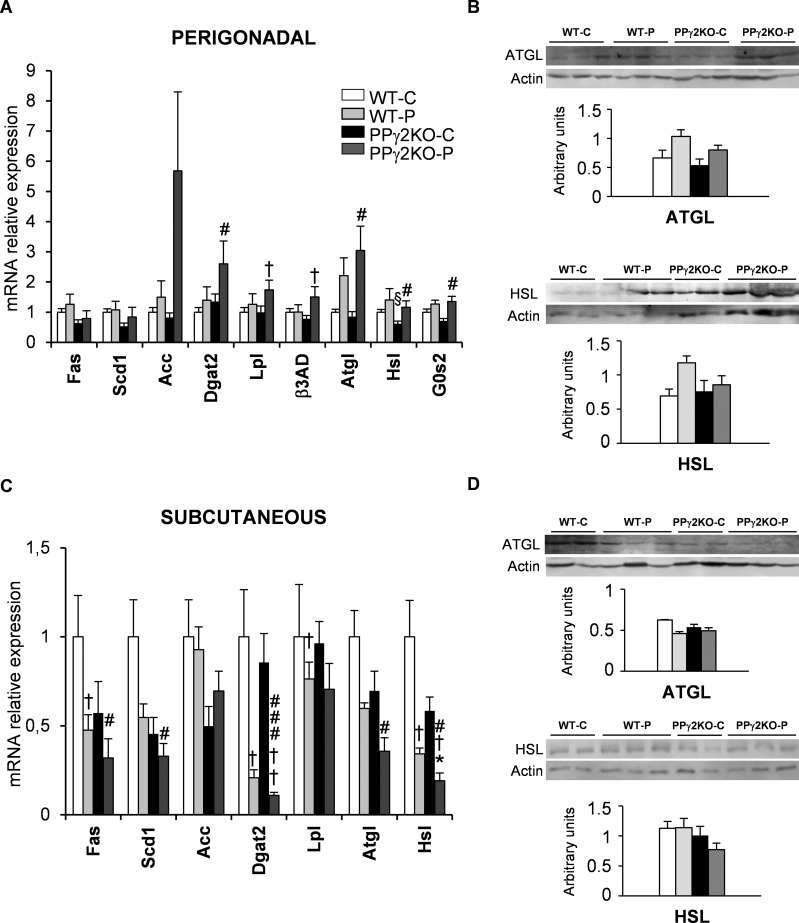
Role of PPARγ2 in fat storage and mobilization in perigonadal and subcutaneous WAT depots during pregnancy. (A and C) mRNA levels of lipogenic and lipolytic genes in (A) perigonadal and (C) subcutaneous fat depots from pregnant and nonpregnant WT and PPγ2KO mice. Data are expressed as mean ± SEM (n = 6–8 animals/group). Total protein quantification of lipolytic enzymes ATGL and HSL in homogenates from (B) perigonadal and (D) subcutaneous fat depots from pregnant and nonpregnant WT and PPγ2KO mice. Levels of protein were normalized to total β-actin. Data are expressed as mean ± SEM (n = 3–5 animals/group). *p ≤ .05 PPγ2KO-P versus WT-P; #p ≤ .05; ###p ≤ .001 PPγ2KO-P versus WT-C; † p ≤ .05; †† p ≤ .01 pregnant versus non pregnant; § p ≤ .05 PPγ2KO-C versus WT-C.
Figure 4.
Figure 4.
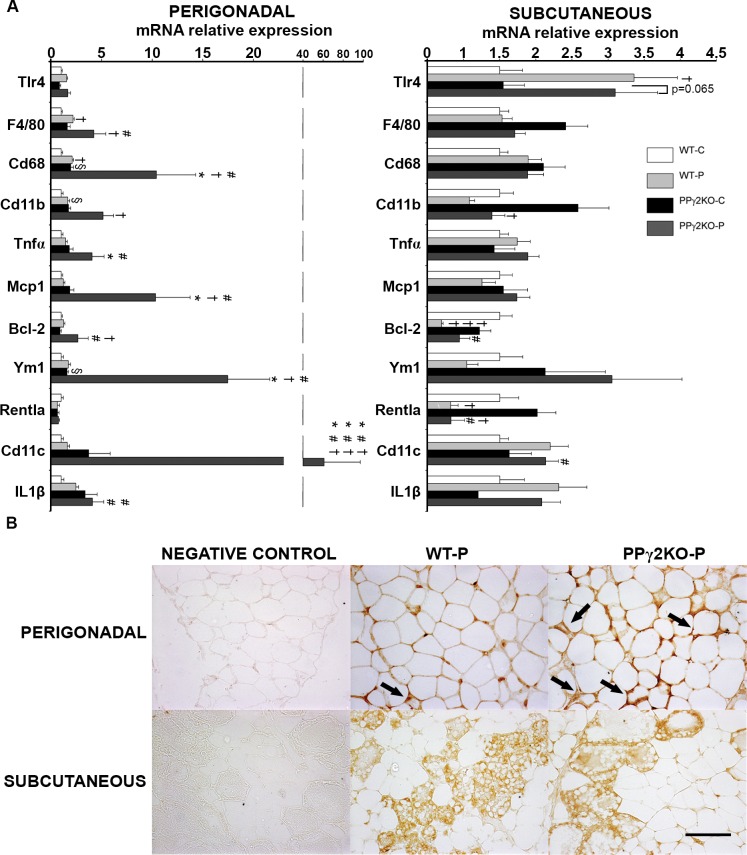
Increased inflammation in perigonadal but not subcutaneous WAT in pregnant mice lacking PPARγ2. (A) mRNA levels of representative inflammatory genes in perigonadal and subcutaneous fat depots from pregnant and nonpregnant WT and PPγ2KO mice. Data are expressed as mean ± SEM (n = 6–8 animals/group). † p ≤ .05; ††† p ≤ .001 pregnant versus nonpregnant; # p ≤ .05 ### p ≤ .001 PPγ2KO-P versus WT-C; * p ≤ .05 *** p ≤ .001 PPγ2KO-P versus WT-P; § p ≤ .05 PPγ2KO-C versus WT-C. (B) Immunohistochemical analysis of MCP-1 expression in paraffin-embedded perigonadal and subcutaneous fat depots from pregnant WT and PPγ2KO groups (n = 4 animals/group). No immunoreaction was observed in the negative control treated with PBS without primary antibody. Arrows indicate the locations of infiltrated macrophages, which form crown-like structures surrounding dead and dying adipocytes, which express MCP-1. Original magnification × 200. Scale bar: 100 μm.
Figure 5.
Figure 5.
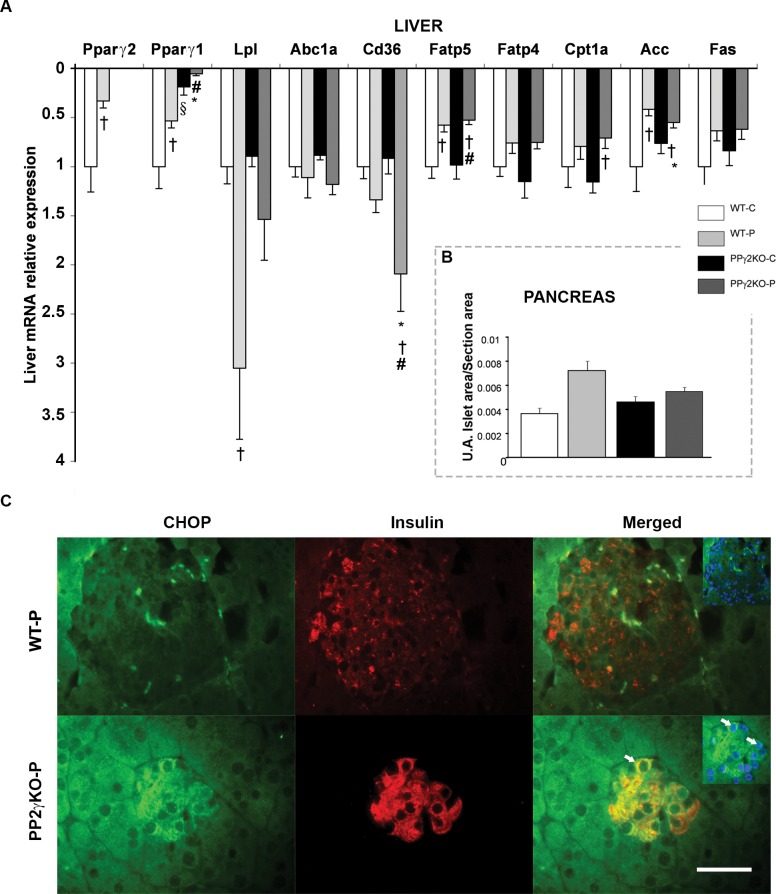
Expression levels of genes involved in hepatic lipid metabolism and morphological changes of the pancreas in the PPγ2KO mouse at late pregnancy. (A) mRNA levels of hepatic lipid metabolism genes in pregnant and nonpregnant WT and PPγ2KO mice (n = 6 animals/group). † p ≤ .05 pregnant versus non pregnant; # p ≤ .05 PPγ2KO-P versus WT-C; § p ≤ .05 PPγ2KO-C versus WT-C; * p ≤ .05 PPγ2KO-P versus WT-P. (B) Average area of the islets relative to total area of the analyzed pancreatic section in each group (A.U.: arbitrary units). (C) Representative images of insulin (red), CHOP (green) and nucleus (blue) immunohistochemistry in islets from pregnant WT and PPγ2KO mice (n = 4 animals/group). Arrows indicate colocalization of insulin and CHOP. Merged show original magnification × 400. Scale bar: 50 μm.
Figure 6.
Figure 6.
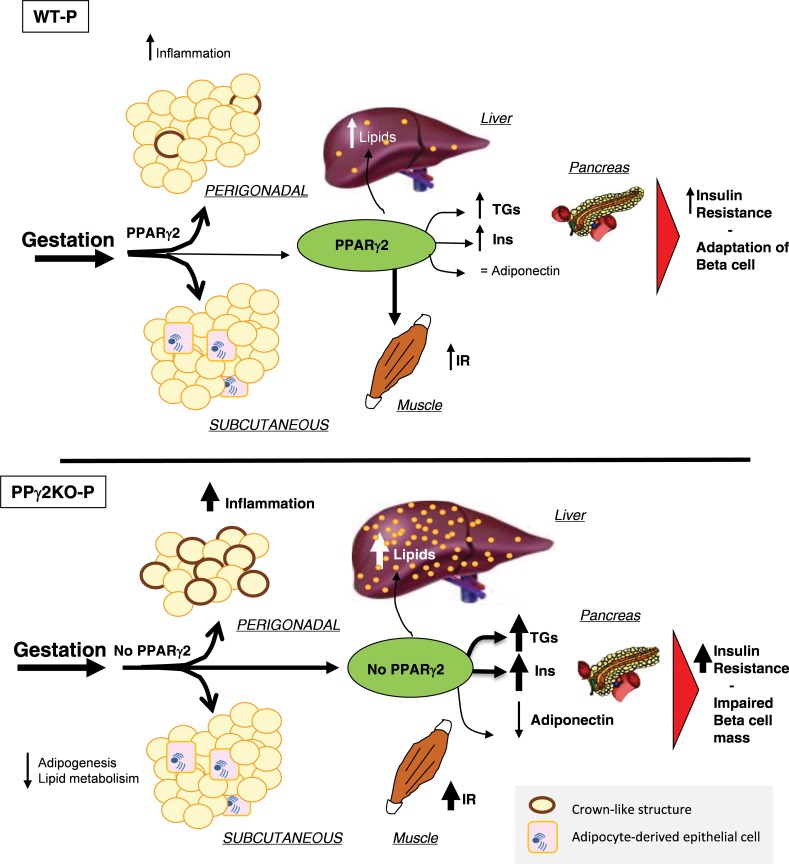
Role of PPARγ2 in the different adipose tissue depots during late pregnancy. Pregnant WT mice can expand both perigonadal and subcutaneous fat, inducing physiological insulin resistance and adaptation of β-cell mass. The absence of PPARγ2 in mouse perigonadal and subcutaneous fat, liver, muscle and β-cells during pregnancy results in inflammation associated with a lack of expansion of perigonadal fat, compromised subcutaneous fat and increased deposition of lipids in the liver, leading to marked peripheral insulin resistance and impaired β-cell mass. Inflammation shown as macrophages surrounding dying or dead adipocytes, detected as crown-like structures. Adipocyte-derived epithelial cells are shown in subcutaneous fat depot during pregnancy. TGs: triacylglycerides; Ins: insulin; IR: insulin resistance.

References

    1. Ramos MP, Crespo-Solans MD, del Campo S, Cacho J, Herrera E. Fat accumulation in the rat during early pregnancy is modulated by enhanced insulin responsiveness. Am J Physiol Endocrinol Metab. 2003;285(2):E318–28. - PubMed
    1. Colomiere M, Permezel M, Lappas M. Diabetes and obesity during pregnancy alter insulin signalling and glucose transporter expression in maternal skeletal muscle and subcutaneous adipose tissue. J Mol Endocrinol. 2010;44(4):213–23. - PubMed
    1. Sevillano J, de Castro J, Bocos C, Herrera E, Ramos MP. Role of insulin receptor substrate-1 serine 307 phosphorylation and adiponectin in adipose tissue insulin resistance in late pregnancy. Endocrinology. 2007;148(12):5933–42. - PubMed
    1. Resi V, et al. Molecular inflammation and adipose tissue matrix remodeling precede physiological adaptations to pregnancy. Am J Physiol Endocrinol Metab. 2012;303(7):E832–40. - PMC - PubMed
    1. Barbarroja N, et al. The obese healthy paradox: is inflammation the answer? Biochem J. 2010;430(1):141–49. - PubMed