


Acupuncture for the treatment of phantom limb syndrome in lower limb amputees: a randomised controlled feasibility study
- PMID: 27782861
- PMCID: PMC5080724
- DOI: 10.1186/s13063-016-1639-z
Acupuncture for the treatment of phantom limb syndrome in lower limb amputees: a randomised controlled feasibility study
Abstract
Background: Post amputation, the complication of phantom limb pain (PLP) is prevalent and difficult to manage. This study aimed to determine whether it was feasible and acceptable to undertake a definitive multicentred randomised controlled trial assessing the effectiveness of acupuncture for treating lower limb amputees with PLP.
Methods: A mixed-methods embedded design, including a randomised controlled trial and semistructured interviews, was undertaken. A total of 15 participants with PLP were randomly assigned to receive either eight pragmatic Traditional Chinese Medicine acupuncture treatments and usual care or usual care alone over 4 weeks. Outcome measures were completed at baseline, weekly throughout the study and at 1 month post completion of the study and included: a numerical pain-rating scale, the Short-Form McGill Pain Questionnaire 2, the EQ-5D-5 L, the Hospital Anxiety and Depression Scale, the Perceived Stress Scale 10-item, the Insomnia Severity Index, and the Patient Global Impression of Change. Post completion of the trial, participants in the acupuncture group were interviewed about their experience. Feasibility-specific data were also collected.
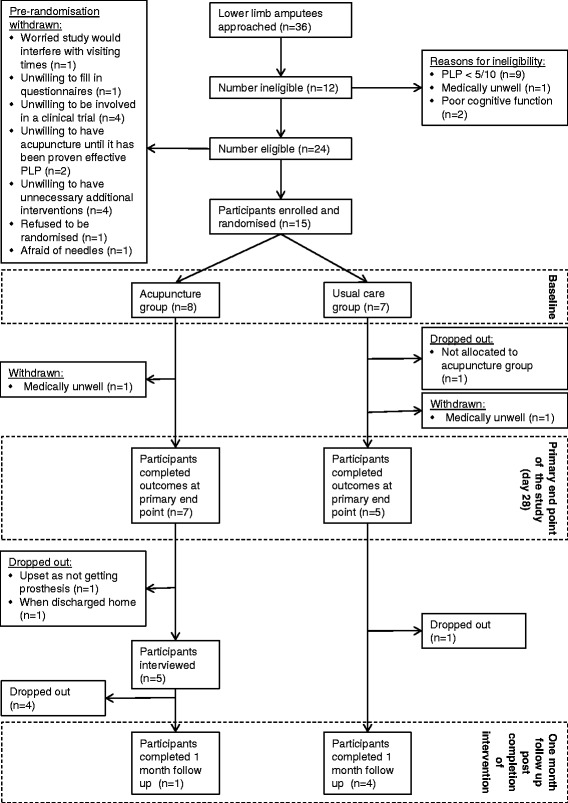
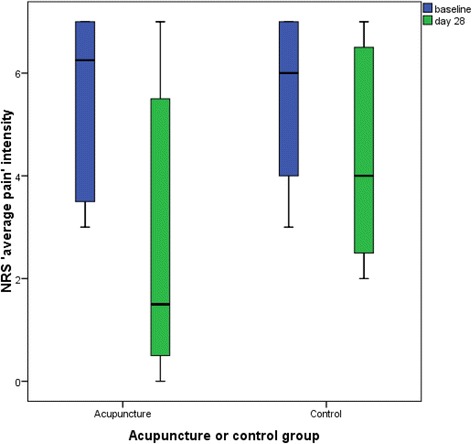
Results: Of 24 amputees meeting the study inclusion criteria, 15 agreed to participate (recruitment rate 62.50 %). Qualitatively, acupuncture was perceived to be beneficial and effective. Quantitatively, acupuncture demonstrated clinically meaningful change in average pain intensity (raw change = 2.69) and worst pain intensity (raw change = 4.00). Feasibility-specific data identified that before undertaking a definitive trial, recruitment, practitioner adherence to the acupuncture protocol, completion of outcome measures at 1 month follow-up and blinding should be addressed. Appropriate outcome measures were identified for use in a definitive trial. Data were generated for future sample size calculations (effect size 0.64). Allowing for a 20 % dropout rate, a sample size of 85 participants per group would be needed in a future definitive trial.
Conclusions: A future definitive trial may be possible if the areas identified in this study are addressed. As acupuncture may be effective at treating PLP, and as this feasibility study suggests that a definitive trial may be possible, a multicentred trial with adequate sample size and blinding is now needed.
Trial registration: ClinicalTrials.gov Identifier: NCT02126436 , registered on 4 September 2014.
Keywords: Acupuncture; Amputation; Mixed-methods research; Phantom limb; Randomised controlled trial.
Figures
References
-
- Flor H. Phantom-limb pain: Characteristics, causes, and treatment. Lancet Neurol. 2002;1(3):182-9. - PubMed
Publication types
MeSH terms
Associated data
LinkOut - more resources
Full Text Sources
Other Literature Sources
Medical
Research Materials
