


Toward a Novel Multilocus Phylogenetic Taxonomy for the Dermatophytes
- PMID: 27783317
- PMCID: PMC5283515
- DOI: 10.1007/s11046-016-0073-9
Toward a Novel Multilocus Phylogenetic Taxonomy for the Dermatophytes
Abstract
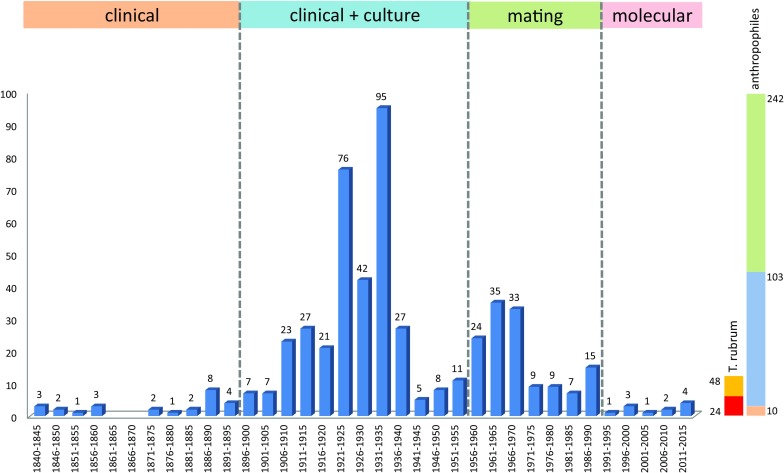
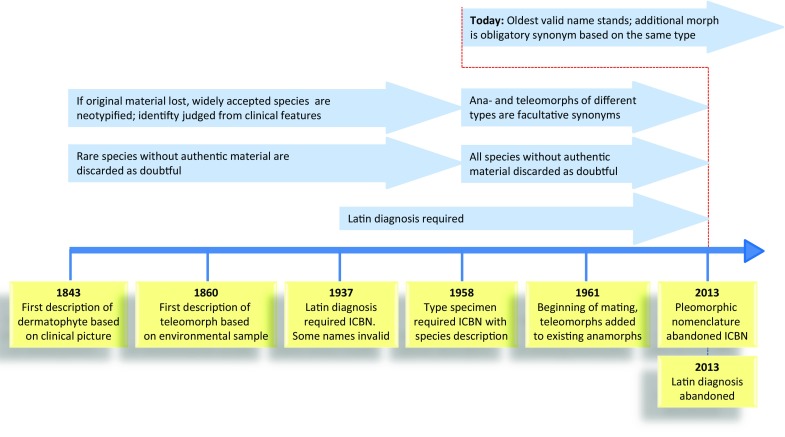
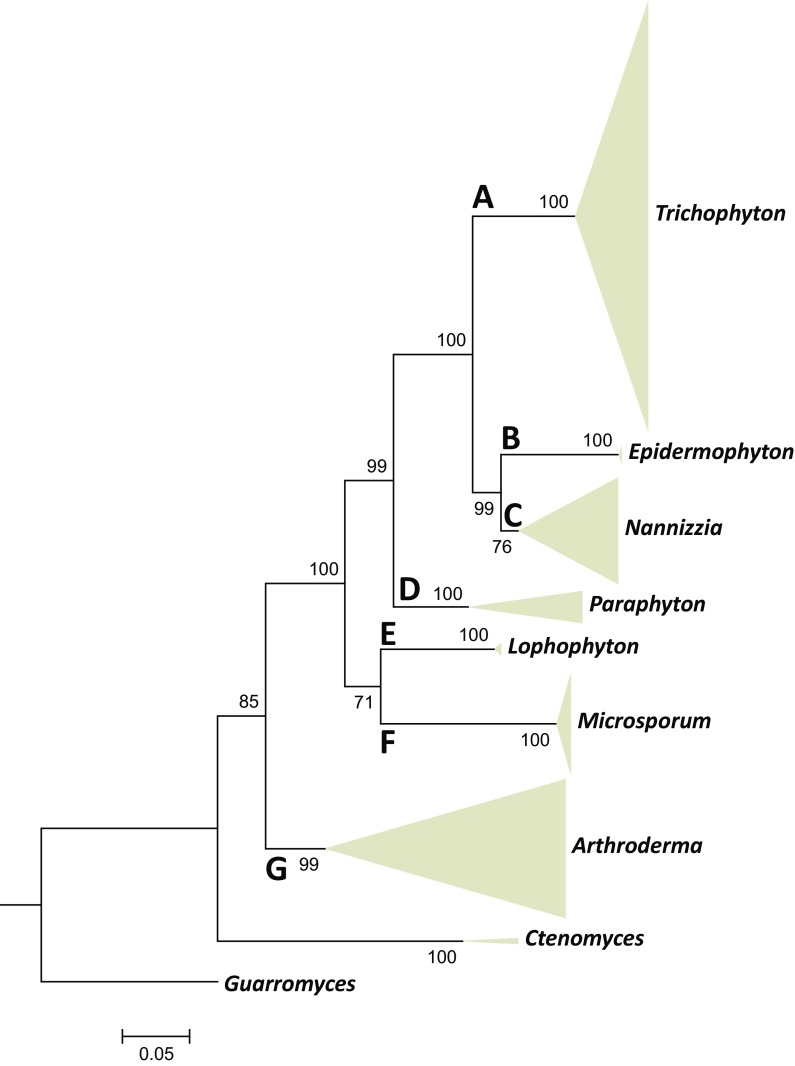
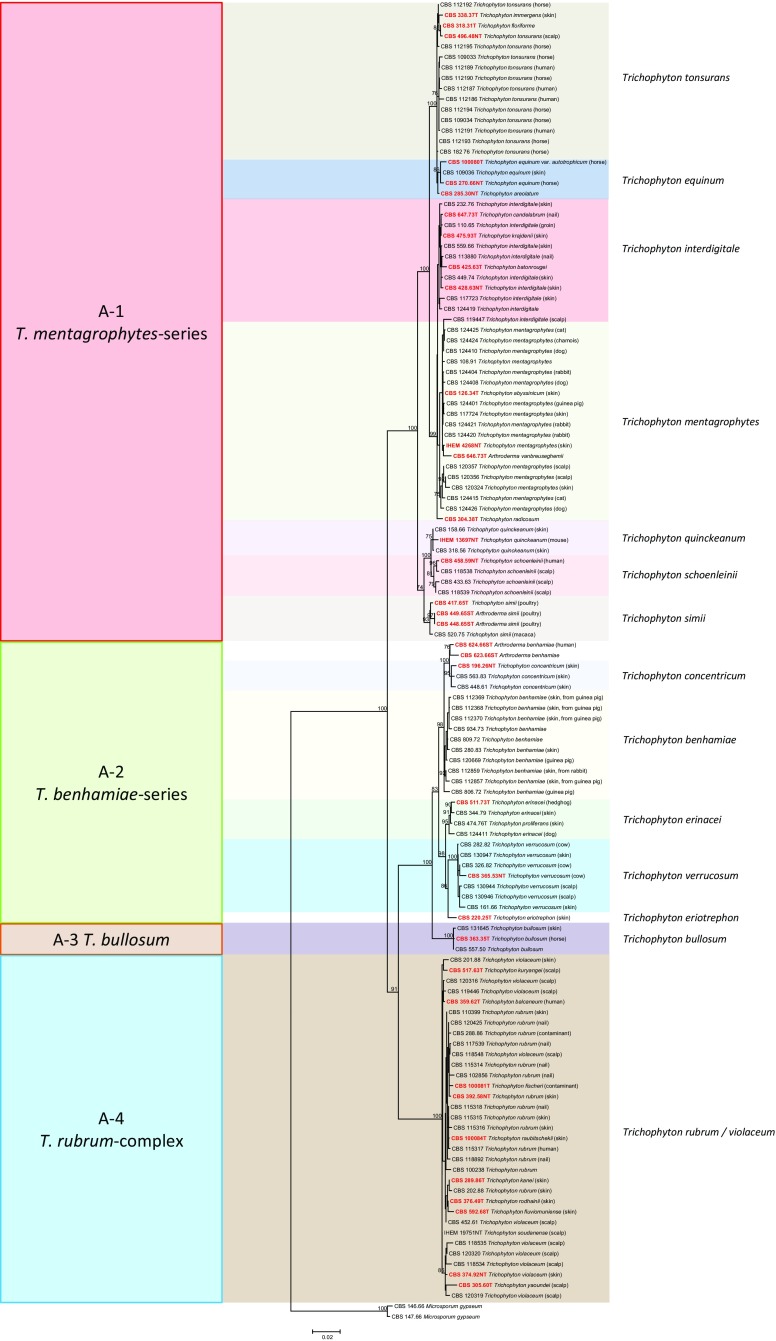
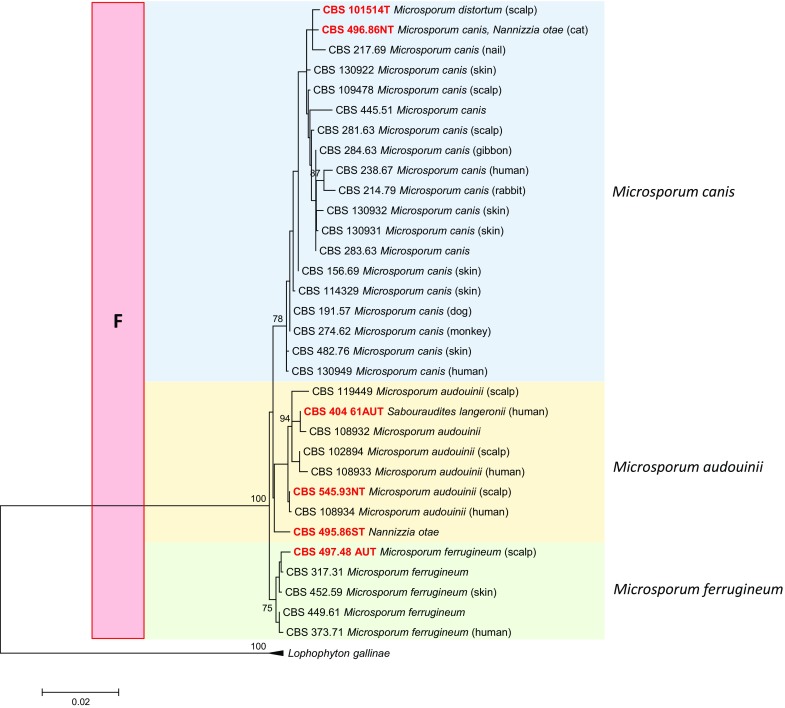
Type and reference strains of members of the onygenalean family Arthrodermataceae have been sequenced for rDNA ITS and partial LSU, the ribosomal 60S protein, and fragments of β-tubulin and translation elongation factor 3. The resulting phylogenetic trees showed a large degree of correspondence, and topologies matched those of earlier published phylogenies demonstrating that the phylogenetic representation of dermatophytes and dermatophyte-like fungi has reached an acceptable level of stability. All trees showed Trichophyton to be polyphyletic. In the present paper, Trichophyton is restricted to mainly the derived clade, resulting in classification of nearly all anthropophilic dermatophytes in Trichophyton and Epidermophyton, along with some zoophilic species that regularly infect humans. Microsporum is restricted to some species around M. canis, while the geophilic species and zoophilic species that are more remote from the human sphere are divided over Arthroderma, Lophophyton and Nannizzia. A new genus Guarromyces is proposed for Keratinomyces ceretanicus. Thirteen new combinations are proposed; in an overview of all described species it is noted that the largest number of novelties was introduced during the decades 1920-1940, when morphological characters were used in addition to clinical features. Species are neo- or epi-typified where necessary, which was the case in Arthroderma curreyi, Epidermophyton floccosum, Lophophyton gallinae, Trichophyton equinum, T. mentagrophytes, T. quinckeanum, T. schoenleinii, T. soudanense, and T. verrucosum. In the newly proposed taxonomy, Trichophyton contains 16 species, Epidermophyton one species, Nannizzia 9 species, Microsporum 3 species, Lophophyton 1 species, Arthroderma 21 species and Ctenomyces 1 species, but more detailed studies remain needed to establish species borderlines. Each species now has a single valid name. Two new genera are introduced: Guarromyces and Paraphyton. The number of genera has increased, but species that are relevant to routine diagnostics now belong to smaller groups, which enhances their identification.
Keywords: Arthrodermataceae; Dermatophytes; Phylogeny; Taxonomy; Trichophyton.
Figures
References
-
- Gruby D. Mémoire sur une végétation qui constitue la vraie teigne. C R Acad Sci. 1841;13:72–75.
-
- Castellani A. Observations on new species of epidermophyton found in Tinea cruris. Br J Dermatol. 1910;22:147–150. doi: 10.1111/j.1365-2133.1910.tb16618.x. - DOI
-
- Sabouraud RJA (1910) Maladies du cuir chevelu. 3me partie: Les teignes. Masson, Paris, 988 pp.
MeSH terms
Substances
LinkOut - more resources
Full Text Sources
Other Literature Sources
Molecular Biology Databases