Mutational Landscape and Gene Expression Patterns in Adult Acute Myeloid Leukemias with Monosomy 7 as a Sole Abnormality
- PMID: 27784745
- PMCID: PMC5215102
- DOI: 10.1158/0008-5472.CAN-16-1386
Mutational Landscape and Gene Expression Patterns in Adult Acute Myeloid Leukemias with Monosomy 7 as a Sole Abnormality
Abstract
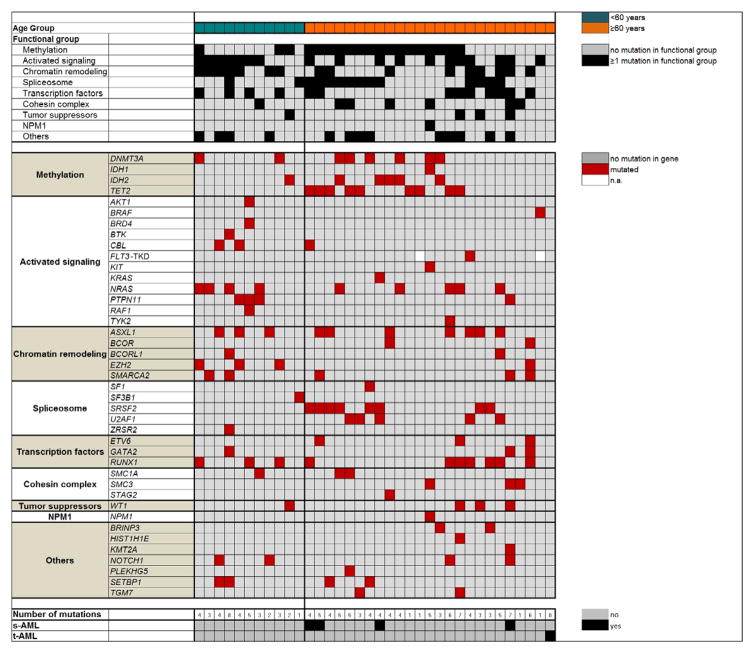
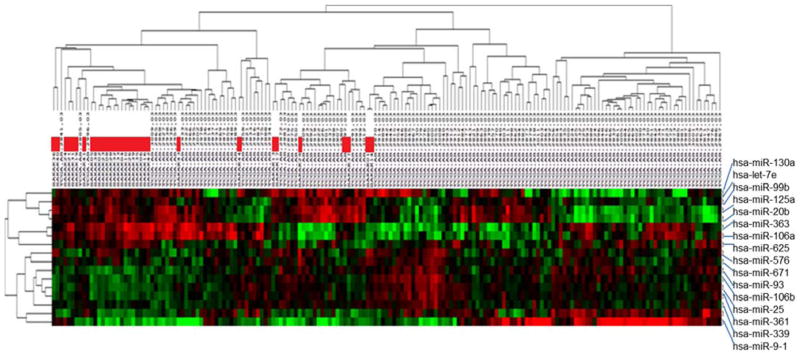
Monosomy of chromosome 7 is the most frequent autosomal monosomy in acute myeloid leukemia (AML), where it associates with poor clinical outcomes. However, molecular features associated with this sole monosomy subtype (-7 AML), which may give insights into the basis for its poor prognosis, have not been characterized. In this study, we analyzed 36 cases of -7 AML for mutations in 81 leukemia/cancer-associated genes using a customized targeted next-generation sequencing panel (Miseq). Global gene and miRNA expression profiles were also determined using paired RNA and small RNA sequencing data. Notably, gene mutations were detected in all the major AML-associated functional groups, which include activated signaling, chromatin remodeling, cohesin complex, methylation, NPM1, spliceosome, transcription factors, and tumor suppressors. Gene mutations in the chromatin remodeling groups were relatively more frequent in patients <60 years of age, who also had less mutations in the methylation and spliceosome groups compared with patients ≥60 years of age. Novel recurrent mutational events in AML were identified in the SMARCA2 gene. In patients ≥60 years of age, the presence of spliceosome mutations associated with a lower complete remission rate (P = 0.03). RNA sequencing revealed distinct gene and miRNA expression patterns between the sole -7 and non -7 AML cases, with reduced expression, as expected, of many genes and miRNAs mapped to chromosome 7, and overexpression of ID1, MECOM, and PTPRM, among others. Overall, our findings illuminate a number of molecular features of the underlying aggressive pathobiology in -7 AML patients. Cancer Res; 77(1); 207-18. ©2016 AACR.
©2016 American Association for Cancer Research.
Conflict of interest statement
of Potential Conflicts of Interest: The authors declare no conflict of interest.
Figures
References
-
- Grimwade D, Hills RK, Moorman AV, Walker H, Chatters S, Goldstone AH, et al. Refinement of cytogenetic classification in acute myeloid leukemia: determination of prognostic significance of rare recurring chromosomal abnormalities among 5876 younger adult patients treated in the United Kingdom Medical Research Council trials. Blood. 2010;116:354–65. - PubMed
-
- Byrd JC, Mrózek K, Dodge RK, Carroll AJ, Edwards CG, Arthur DC, et al. Pretreatment cytogenetic abnormalities are predictive of induction success, cumulative incidence of relapse, and overall survival in adult patients with de novo acute myeloid leukemia: results from Cancer and Leukemia Group B (CALGB 8461) Blood. 2002;100:4325–36. - PubMed
-
- Slovak ML, Kopecky KJ, Cassileth PA, Harrington DH, Theil KS, Mohamed A, et al. Karyotypic analysis predicts outcome of preremission and postremission therapy in adult acute myeloid leukemia: a Southwest Oncology Group/Eastern Cooperative Oncology Group study. Blood. 2000;96:4075–83. - PubMed
-
- Mrózek K, Heerema NA, Bloomfield CD. Cytogenetics in acute leukemia. Blood Rev. 2004;18:115–36. - PubMed
-
- Hussain FT, Nguyen EP, Raza S, Knudson R, Pardanani A, Hanson CA, et al. Sole abnormalities of chromosome 7 in myeloid malignancies: spectrum, histopathologic correlates, and prognostic implications. Am J Hematol. 2012;87:684–6. - PubMed
MeSH terms
Substances
Supplementary concepts
Grants and funding
LinkOut - more resources
Full Text Sources
Other Literature Sources
Medical