


FGFR1, 2 and 3 protein overexpression and molecular aberrations of FGFR3 in early stage non-small cell lung cancer
- PMID: 27785367
- PMCID: PMC5068193
- DOI: 10.1002/cjp2.51
FGFR1, 2 and 3 protein overexpression and molecular aberrations of FGFR3 in early stage non-small cell lung cancer
Abstract
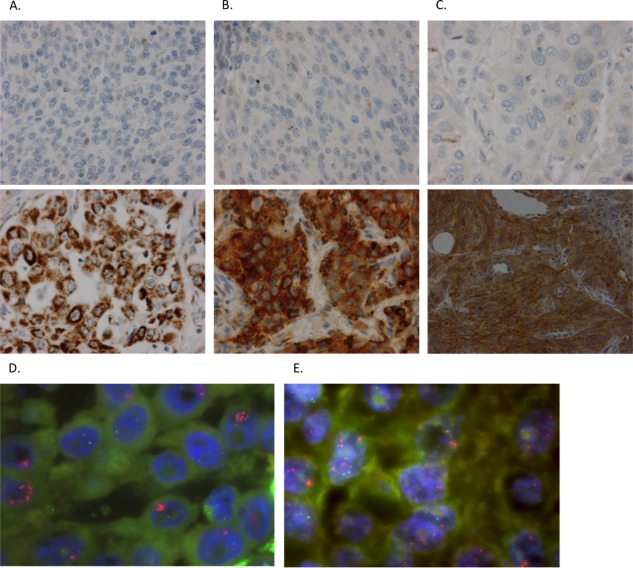
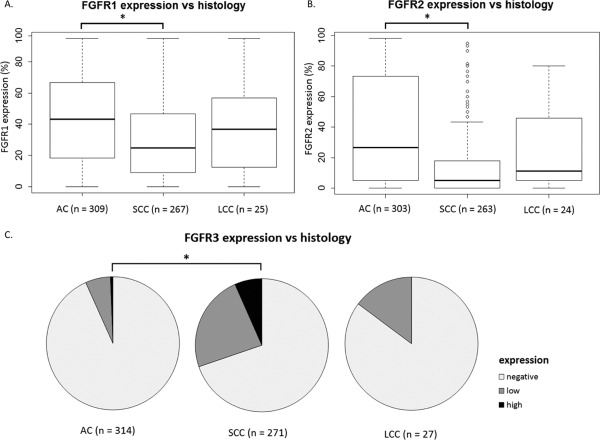
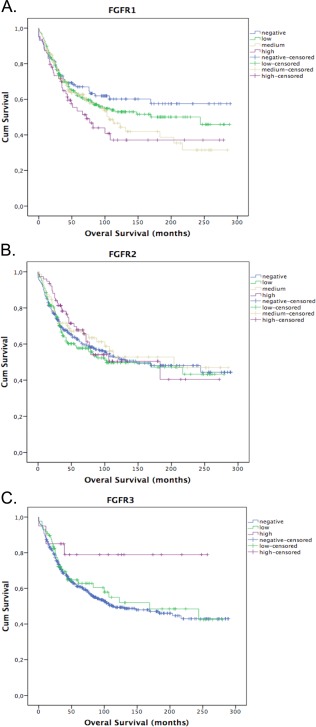
This study aimed to determine protein expression levels of fibroblast growth factor receptors (FGFR) 1, 2 and 3 in early stage non-small cell lung cancer (NSCLC). Additionally, a screen to define the frequency of FGFR3-TACC3 translocation and FGFR3 amplification was performed. Archived tissues from 653 NSCLC samples (adenocarcinoma (AC), squamous cell carcinoma (SCC) and large cell carcinoma (LCC)) were analysed with immunohistochemistry (IHC) for expression of FGFR1, 2 and 3. Expression levels of FGFR1, 2 and 3 were correlated with clinicopathological features. The presence of FGFR3-TACC3 translocation was detected by RT-PCR and FGFR3 amplification was detected by fluorescence in situ hybridization. FGFR1, 2 and 3 proteins were highly expressed in 64 (10.6%), 76 (12.9%) and 20 (3.3%) NSCLC tumour samples, respectively. Protein expression of FGFR1 was significantly related to worse overall survival in NSCLC. Furthermore, FGFR1 protein expression was associated with light smoking and histological subtype (AC), FGFR2 protein expression with female gender, younger age, histological subtype (AC) and lower tumour stage, and FGFR3 protein was significantly overexpressed in tumours of older patients and SCC histology. The FGFR3-TACC3 fusion was detected in 3.0% (6/200) of NSCLC samples and the FGFR3 gene was amplified in 4.7% of IHC positive NSCLC samples (2/43). FGFR1, 2 and 3 proteins are expressed in a high number of early stage NSCLC and FGFR1 protein expression may serve as a prognostic biomarker. Recurrent translocations and amplifications in FGFR3 can be found in NSCLC. This study shows that FGFR family members are frequently aberrant in NSCLC and could be interesting therapeutic targets for the treatment of NSCLC.
Keywords: FGFR3 amplification; FGFR3‐TACC3 translocation; fibroblast growth factor receptor (FGFR); immunohistochemistry (IHC); non‐small cell lung cancer (NSCLC).
Figures
References
-
- Kelsey CR, Marks LB, Hollis D, et al Local recurrence after surgery for early stage lung cancer: an 11‐year experience with 975 patients. Cancer 2009; 115: 5218–5227. - PubMed
-
- Lee CK, Brown C, Gralla RJ, et al Impact of EGFR inhibitor in non‐small cell lung cancer on progression‐free and overall survival: a meta‐analysis. J Natl Cancer Inst 2013; 105: 595–605. - PubMed
-
- Shaw AT, Kim DW, Nakagawa K, et al Crizotinib versus chemotherapy in advanced ALK‐positive lung cancer. N Engl J Med 2013; 368: 2385–2394. - PubMed
-
- Turner N, Grose R. Fibroblast growth factor signalling: from development to cancer. Nat Rev Cancer 2010; 10: 116–129. - PubMed
LinkOut - more resources
Full Text Sources
Other Literature Sources
Research Materials
Miscellaneous
