


The cancer precision medicine knowledge base for structured clinical-grade mutations and interpretations
- PMID: 27789569
- PMCID: PMC5391733
- DOI: 10.1093/jamia/ocw148
The cancer precision medicine knowledge base for structured clinical-grade mutations and interpretations
Abstract
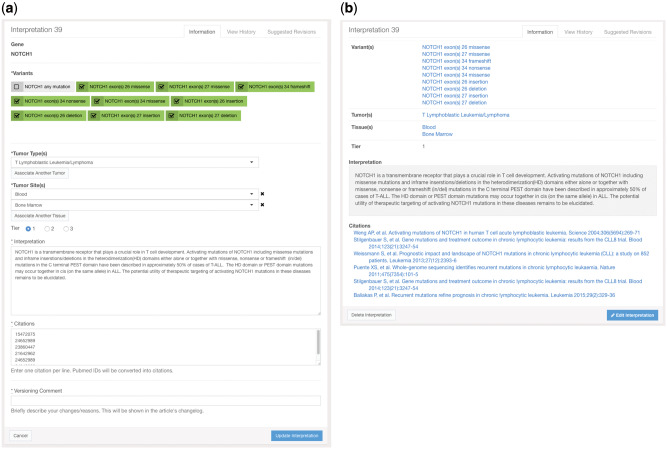
Objective: This paper describes the Precision Medicine Knowledge Base (PMKB; https://pmkb.weill.cornell.edu ), an interactive online application for collaborative editing, maintenance, and sharing of structured clinical-grade cancer mutation interpretations.
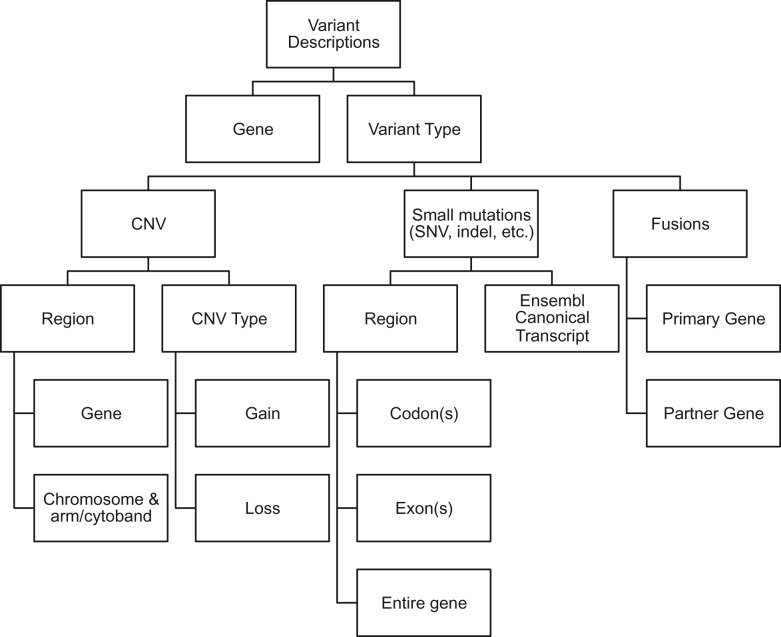
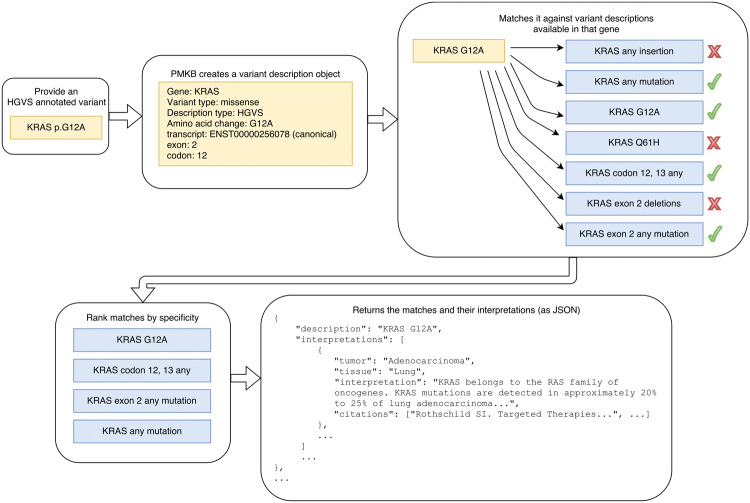
Materials and methods: PMKB was built using the Ruby on Rails Web application framework. Leveraging existing standards such as the Human Genome Variation Society variant description format, we implemented a data model that links variants to tumor-specific and tissue-specific interpretations. Key features of PMKB include support for all major variant types, standardized authentication, distinct user roles including high-level approvers, and detailed activity history. A REpresentational State Transfer (REST) application-programming interface (API) was implemented to query the PMKB programmatically.
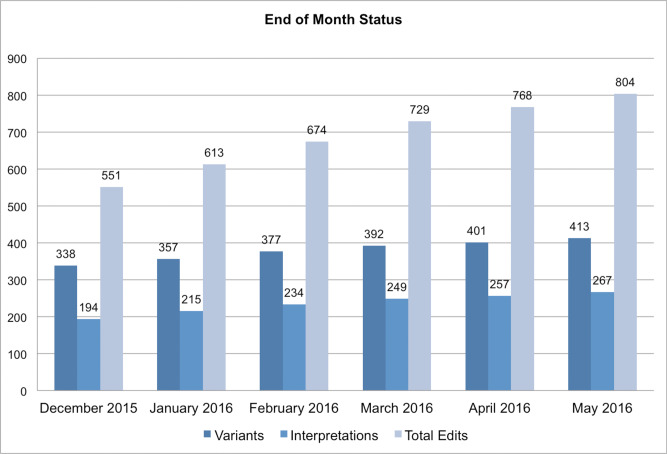
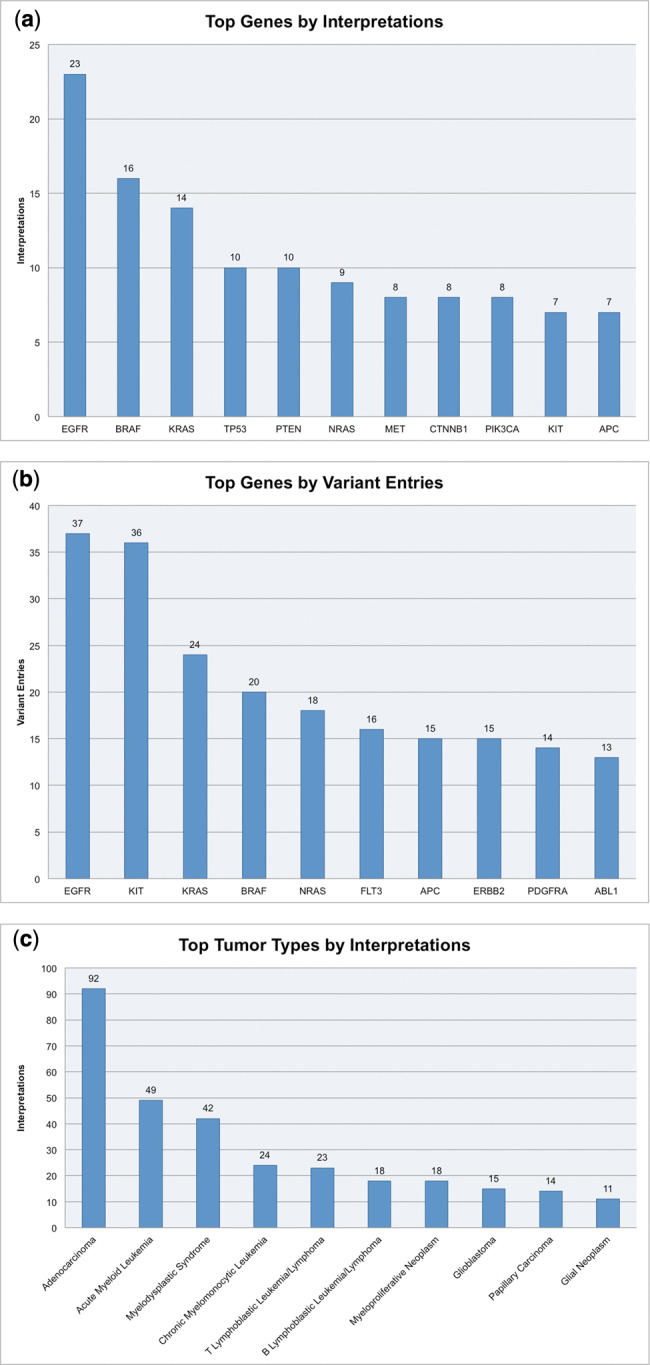
Results: At the time of writing, PMKB contains 457 variant descriptions with 281 clinical-grade interpretations. The EGFR, BRAF, KRAS, and KIT genes are associated with the largest numbers of interpretable variants. PMKB's interpretations have been used in over 1500 AmpliSeq tests and 750 whole-exome sequencing tests. The interpretations are accessed either directly via the Web interface or programmatically via the existing API.
Discussion: An accurate and up-to-date knowledge base of genomic alterations of clinical significance is critical to the success of precision medicine programs. The open-access, programmatically accessible PMKB represents an important attempt at creating such a resource in the field of oncology.
Conclusion: The PMKB was designed to help collect and maintain clinical-grade mutation interpretations and facilitate reporting for clinical cancer genomic testing. The PMKB was also designed to enable the creation of clinical cancer genomics automated reporting pipelines via an API.
Keywords: application-programming interface; cancer genomics; clinical reporting; database; pathology; precision medicine.
© The Author 2016. Published by Oxford University Press on behalf of the American Medical Informatics Association.
Figures
References
MeSH terms
Grants and funding
LinkOut - more resources
Full Text Sources
Other Literature Sources
Research Materials
Miscellaneous
