


Gravity field of the Orientale basin from the Gravity Recovery and Interior Laboratory Mission
- PMID: 27789835
- PMCID: PMC7462089
- DOI: 10.1126/science.aag0519
Gravity field of the Orientale basin from the Gravity Recovery and Interior Laboratory Mission
Abstract
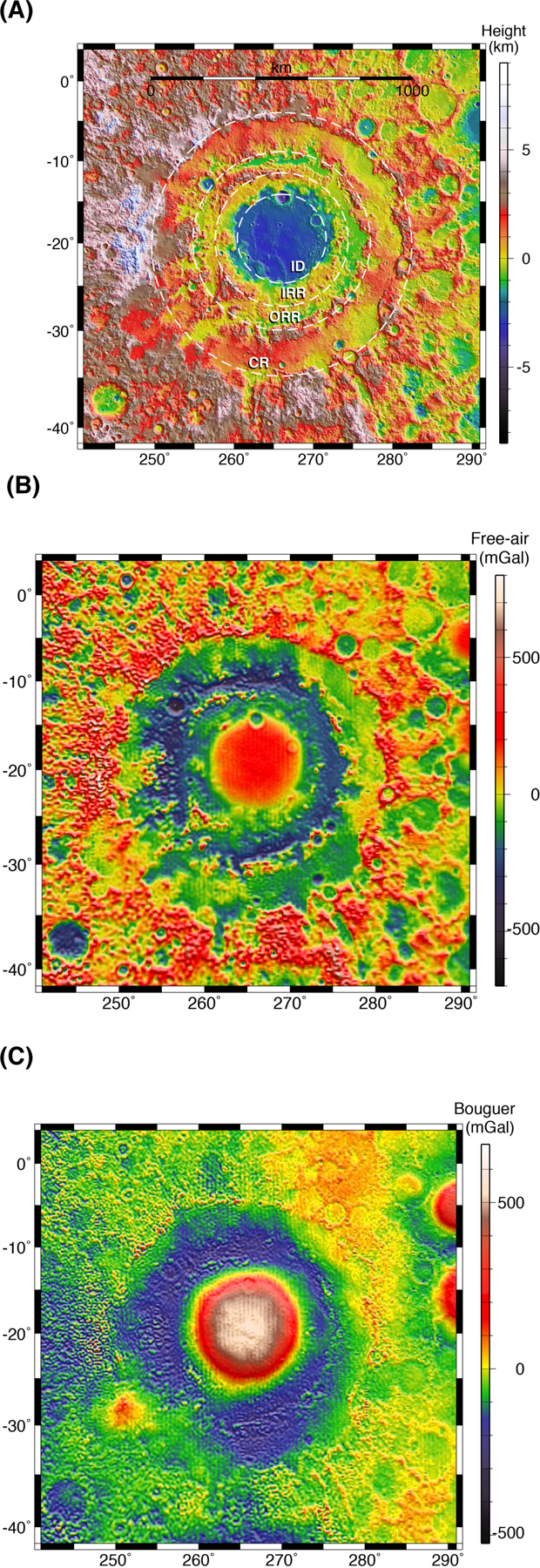
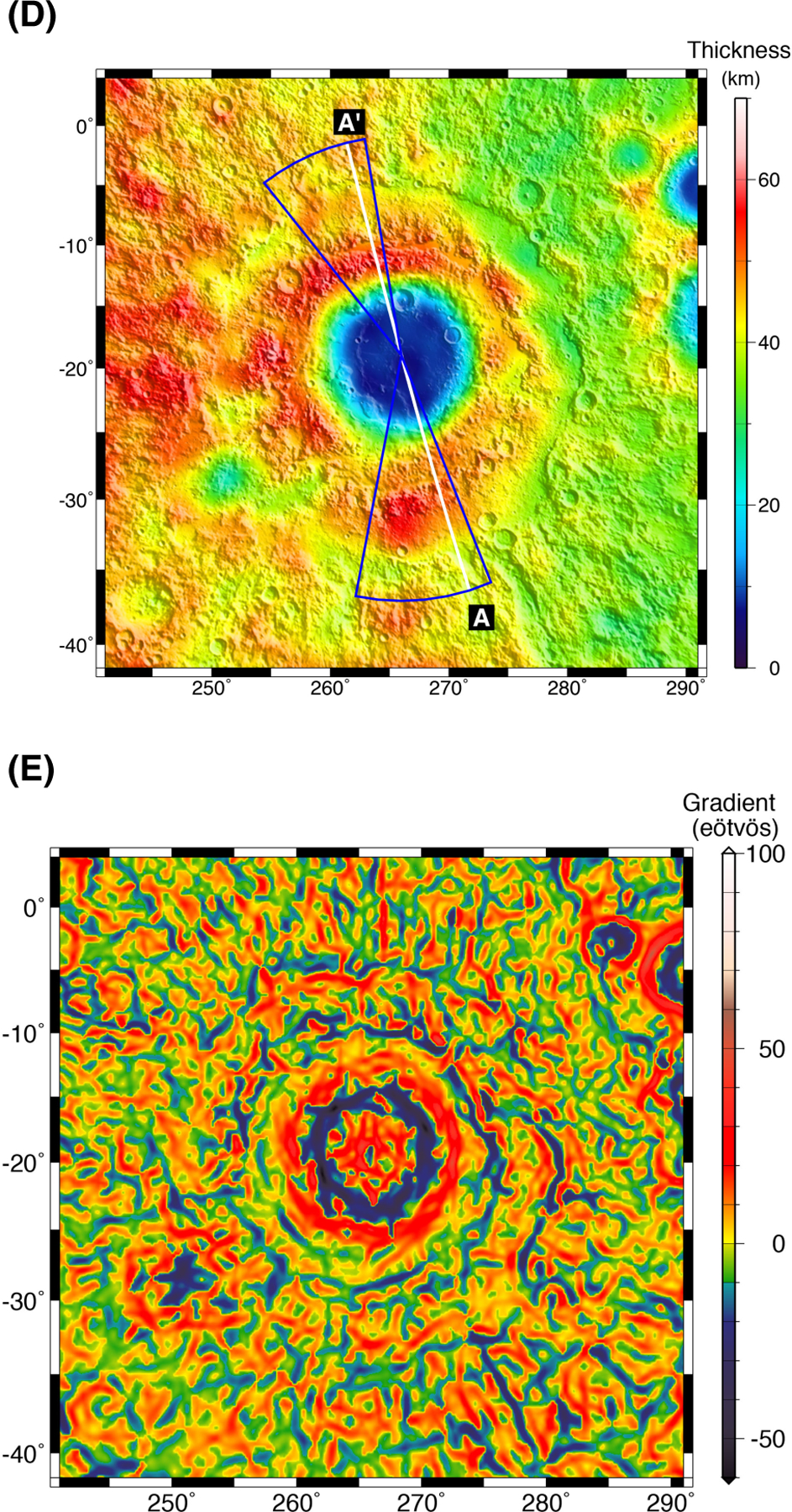
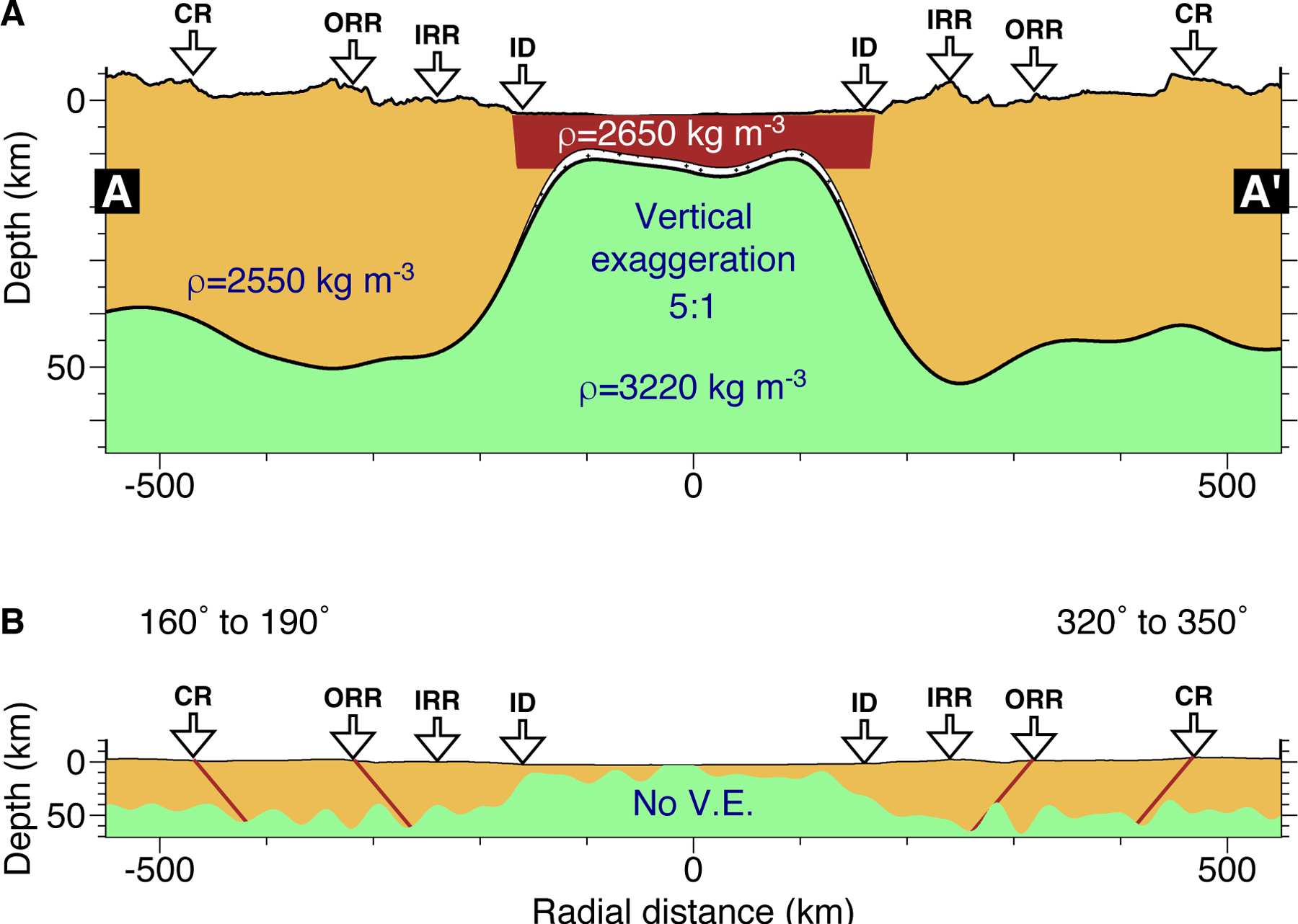
The Orientale basin is the youngest and best-preserved major impact structure on the Moon. We used the Gravity Recovery and Interior Laboratory (GRAIL) spacecraft to investigate the gravitational field of Orientale at 3- to 5-kilometer (km) horizontal resolution. A volume of at least (3.4 ± 0.2) × 106 km3 of crustal material was removed and redistributed during basin formation. There is no preserved evidence of the transient crater that would reveal the basin's maximum volume, but its diameter may now be inferred to be between 320 and 460 km. The gravity field resolves distinctive structures of Orientale's three rings and suggests the presence of faults associated with the outer two that penetrate to the mantle. The crustal structure of Orientale provides constraints on the formation of multiring basins.
Copyright © 2016, American Association for the Advancement of Science.
Figures
References
-
- Wilhelms DE, The Geologic History of the Moon U.S. Geol. Survey Prof. Paper 1348 (US Govt. Printing Office, Washington, DC, 1987), 302 pp.
-
- Spudis PD, The Geology of Multiring Impact Basins: The Moon and Other Planets. (Cambridge Univ. Press, Cambridge, England, 1993), 277 pp.
-
- Zuber MT, Lehman DH, Smith DE, Hoffman TL, Asmar SW, Gravity Recovery and Interior Laboratory (GRAIL): Mapping the lunar interior from crust to core. Space Sci. Rev 178, doi: 10.1007/s11214-012-9952-7 (2013). - DOI
-
- Stoffler D et al. , Cratering history and lunar chronology. Rev. Mineral. Geochem 60, 519–596 (2006).
-
- Head JW, Orientale multi-ringed basin interior and implications for the petrogenesis of lunar highland samples. Moon 11, 327–356 (1974).
Grants and funding
LinkOut - more resources
Full Text Sources
Other Literature Sources
