


Breastfeeding for procedural pain in infants beyond the neonatal period
- PMID: 27792244
- PMCID: PMC6461192
- DOI: 10.1002/14651858.CD011248.pub2
Breastfeeding for procedural pain in infants beyond the neonatal period
Abstract
Background: Randomised controlled trials (RCTs) show that breastfeeding newborn infants during painful procedures reduces pain. Mechanisms are considered to be multifactorial and include sucking, skin-to-skin contact, warmth, rocking, sound and smell of the mother, and possibly endogenous opiates present in the breast milk.
Objectives: To determine the effect of breastfeeding on procedural pain in infants beyond the neonatal period (first 28 days of life) up to one year of age compared to no intervention, placebo, parental holding, skin-to-skin contact, expressed breast milk, formula milk, bottle feeding, sweet-tasting solutions (e.g. sucrose or glucose), distraction, or other interventions.
Search methods: We searched the following databases to 18 February 2016: the Cochrane Central Register of Controlled Trials (CENTRAL) (the Cochrane Library), MEDLINE including In-Process & Other Non-Indexed Citations (OVID), Embase (OVID), PsycINFO (OVID), and CINAHL (EBSCO); the metaRegister of Controlled Trials (mRCT), ClinicalTrials.gov (clinicaltrials.gov), and the World Health Organization International Clinical Trials Registry Platform (WHO ICTRP) (apps.who.int/trialsearch/) for ongoing trials.
Selection criteria: We included RCTs and quasi-RCTs involving infants aged 28 days postnatal to 12 months and receiving breastfeeding while undergoing a painful procedure. Comparators included, but were not limited to, oral administration of water, sweet-tasting solutions, expressed breast or formula milk, no intervention, use of pacifiers, positioning, cuddling, distraction, topical anaesthetics, and skin-to-skin care. Procedures included, but were not limited to: subcutaneous or intramuscular injection, venipuncture, intravenous line insertion, heel lance, and finger lance. We applied no language restrictions.
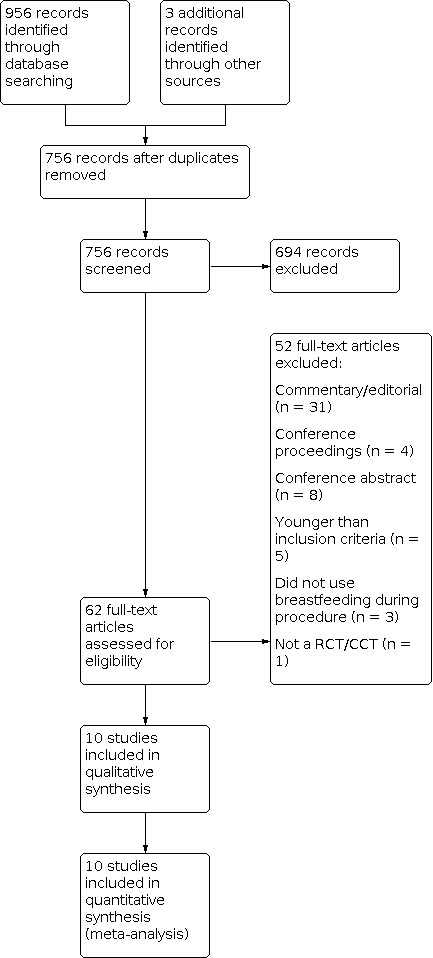
Data collection and analysis: We used standard methodological procedures expected by Cochrane. Two review authors independently considered trials for inclusion in the review, assessed risk of bias, and extracted data. The main outcome measures were behavioural or physiological indicators and composite pain scores, as well as other clinically important outcomes reported by the authors of included studies. We pooled data for the most comparable outcomes and where data from at least two studies could be included. We used mean difference (MD) with 95% confidence interval (CI), employing a random-effects model for continuous outcomes measured on the same scales. For continuous outcomes measured on different scales, we pooled standardised mean differences (SMDs) and associated 95% CIs. For dichotomous outcomes, we planned to pool events between groups across studies using risk ratios (RRs) and 95% CIs. However, as insufficient studies reported dichotomous outcomes, we did not pool such events. We assessed the evidence using GRADE and created a 'Summary of findings' table.
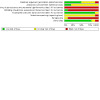
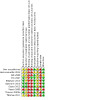
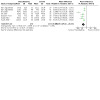
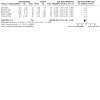
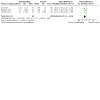
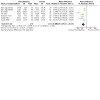
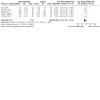
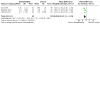
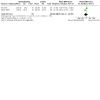
Main results: We included 10 studies with a total of 1066 infants. All studies were conducted during early childhood immunisation. As the breastfeeding intervention cannot be blinded, we rated all studies as being at high risk of bias for blinding of participants and personnel. We assessed nine studies as being at low risk of bias for incomplete outcome data. In addition, we rated nine studies as high risk for blinding of outcome assessment. We scored risk of bias related to random sequence generation, allocation concealment, and selective reporting as unclear for the majority of the studies due to lack of information.Our primary outcome was pain. Breastfeeding reduced behavioural pain responses (cry time and pain scores) during vaccination compared to no treatment, oral water, and other interventions such as cuddling, oral glucose, topical anaesthetic, massage, and vapocoolant. Breastfeeding did not consistently reduce changes in physiological indicators, such as heart rate. We pooled data for duration of cry from six studies (n = 547 infants). Breastfeeding compared to water or no treatment resulted in a 38-second reduction in cry time (MD -38, 95% CI -50 to -26; P < 0.00001). The quality of the evidence according to GRADE for this outcome was moderate, as most infants were 6 months or younger, and outcomes may be different for infants during their 12-month immunisation. We pooled data for pain scores from five studies (n = 310 infants). Breastfeeding was associated with a 1.7-point reduction in standardised pain scores (SMD -1.7, 95% CI -2.2 to -1.3); we considered this evidence to be of moderate quality as data were primarily from infants younger than 6 months of age. We could pool heart rate data following injections for only two studies (n = 186); we considered this evidence to be of low quality due to insufficient data. There were no differences between breastfeeding and control (MD -3.6, -23 to 16).Four of the 10 studies had more than two study arms. Breastfeeding was more effective in reducing crying duration or pain scores during vaccination compared to: 25% dextrose and topical anaesthetic cream (EMLA), vapocoolant, maternal cuddling, and massage.No included studies reported adverse events.
Authors' conclusions: We conclude, based on the 10 studies included in this review, that breastfeeding may help reduce pain during vaccination for infants beyond the neonatal period. Breastfeeding consistently reduced behavioural responses of cry duration and composite pain scores during and following vaccinations. However, there was no evidence that breastfeeding had an effect on physiological responses. No studies included in this review involved populations of hospitalised infants undergoing other skin-breaking procedures. Although it may be possible to extrapolate the review results to this population, further studies of efficacy, feasibility, and acceptability in this population are warranted.
Conflict of interest statement
DH: none known. DH is a registered nurse and midwife, and specialist in neonatal and infant pain research.
JR: none known.
MB: none known. MB is a registered nurse and specialist in neonatal and infant pain research.
MS: none known.
VSS: none known. VSS is a specialist physician and manages patients in the neonatal intensive care unit.
AT: none known. AT is a specialist pharmacist and researches knowledge translation about immunisation pain.
CL: none known.
LT: none known.
Figures
Update of
References
References to studies included in this review
Barr unpublished {published data only}
-
- Barr RG, Holsti L, Young SN, Paterson JA, MacMartin LM. Breastfeeding effects on biobehavioral responses to diptheria-pertussis-tetanus immunizations in infants at two and four months. 3rd Annual Canadian Child Health Clinician Scientist National Symposium.
Boroumandfar 2013 {published data only (unpublished sought but not used)}
Dilli 2009 {published and unpublished data}
Efe 2007 {published data only}
-
- Efe E, Ozer Z. The use of breast-feeding for pain relief during neonatal immunization injections. Applied Nursing Research 2007;20(1):10-16. [PMID: ] - PubMed
Esfahani 2013 {published data only}
-
- Esfahani MS, Sheykhi S, Abdeyazdan Z, Jodakee M, Boroumandfar K. A comparative study on vaccination pain in the methods of massage therapy and mothers' breast feeding during injection of infants referring to Navabsafavi Health Care Center in Isfahan. Iranian Journal of Nursing and Midwifery Research 2013;18(6):494-8. [PMID: ] - PMC - PubMed
Goswami 2013 {published data only (unpublished sought but not used)}
-
- Goswami G, Upadhyay A, Gupta NK, Chaudhry R, Chawla D, Sreenivas V. Comparison of analgesic effect of direct breastfeeding, oral 25% dextrose solution and placebo during 1st DPT vaccination in healthy term infants: a randomized, placebo controlled trial. Indian Pediatrics 2013;50(7):649-53. [PMID: ] - PubMed
Gupta 2013 {published data only}
Razek 2009 {published data only (unpublished sought but not used)}
-
- Razek A, El-Dein NAZ. Effect of breast-feeding on pain relief during infant immunization injections. International Journal of Nursing Practice 2009;15(2):99-104. [PMID: ] - PubMed
Taavoni 2009a {published data only}
-
- Taavoni S, ShahAli S, Haghani H, Neisani Samani L. Comparison the effect of breast feeding with routine clinical procedure on pain relieving during immunization injection. Journal of Arak University of Medical Sciences 2009;11(4):33-40.
Thomas 2011 {published data only}
-
- Thomas T, Shetty AP, Bagali PV. Role of breastfeeding in pain response during injectable immunisation among infants. Nursing Journal of India 2011;102(8):184-6. - PubMed
References to studies excluded from this review
Achema 2011 {published data only}
-
- Achema G, Oyeleye B, Olaogun AAE. Pain relief strategies for infants taking DPT immunization in health centres. African Journal of Midwifery & Women's Health 2011;5(3):123-7.
Barr 2001 {published data only}
-
- Barr RG, Paterson JA, MacMartin LM, Lessard J, Calinoiu N, Young SN. Breastfeeding analgesia for procedural pain in 2-month-old infants. Pediatric Research 2001;49(4):313A.
Gradin 2003 {published data only}
-
- Gradin M, Finnstrom O, Schollin J. Comparison of oral glucose and breast-feeding on neonatal pain response to venipuncture. Pediatric Research 2003;53:122.
Gray 2002 {published data only}
-
- Gray L, Miller LW, Philipp BL, Blass EM. Breastfeeding is analgesic in healthy newborns. Pediatrics 2002;109(4):590-3. - PubMed
Hashemi 2016 {published data only}
-
- Hashemi F, Taheri L, Ghodsbin F, Pishva N, Vossoughi M. Comparing the effect of swaddling and breastfeeding and their combined effect on the pain induced by BCG vaccination in infants referring to Motahari Hospital, Jahrom, 2010–2011. Applied Nursing Research 2016;29:217-21. - PubMed
Jebreili 2015 {published data only}
Modarres 2014 {published data only}
Otero López 2014 {published data only}
-
- Otero López MC, Gago López MM, Bouzada Rodriguez AL, Ballesteros Mantecón M, Garcia Álvarez MM, González Centeno MJ. Effective interventions in the handling of the pain in children submitted to procedures with needles [Intervenciones efectivas en el manejo del dolor en niños sometidos a procedimientos con agujas]. Nure Investigación 2014;72:1-17.
Sahebihag 2011 {published data only}
-
- Sahebihag MH, Hosseinzadeh M, Mohammadpourasi A, Kosha A. The effect of breastfeeding, oral sucrose and combination of oral sucrose and breastfeeding in infant’s pain relief during the vaccination. Iranian Journal of Nursing and Midwifery Research 2011;16(1):9-15.
Shendurnikar 2005 {published data only}
-
- Shendurnikar N, Gandhi K. Analgesic effects of breastfeeding on heel lancing. Indian Pediatrics 2005;42(7):730-2. - PubMed
Singal 2004 {published data only}
-
- Singal A, Upadhyay A, Aggarwal R, Kaushal M, Upadhyay M, Agarwal R, et al. Analgesic effect of breast feeding prior to venepuncture in term neonates: a randomized double blind, controlled trial [abstract]. In: 13th Congress of the Federation of Asia and Oceania Perinatal Societies. 2004.
Taavoni 2009b {published data only}
-
- Taavoni S, Shahali S, Haghani H, Neisani SL. Effect of breast feeding on pain relief during immunization injection. International Journal of Gynecology & Obstetrics 2009;107(S2):S683.
Taavoni 2010 {published data only}
-
- Taavoni S, Shahali S, Haghani H. Pain relief during immunization injection: Comparison between the effects of breast feeding with routine procedure. Journal of Paediatrics and Child Health 2010;World Congress of Internal Medicine, WCIM 2010 in Conjunction with Physicians Week Melbourne, VIC Australia:21-2.
Taavoni 2011 {published data only}
-
- Taavoni S, Shahali S Haghani H. Vaccination pain management: Effect of breast feeding on infant's behavioral pain scale, a randomized control trial study. European Journal of Pain Supplements 2011;5:159.
Taavoni 2012 {published data only}
-
- Taavoni S, Shahali S, Hagahni H, Neisani SL. Effect of breast feeding on infants behavioral pain scale during DPT vaccination. European Psychiatry 2012;27(S1):1. [DOI: ]
Taavoni 2013 {published data only}
-
- Taavoni S, Shahali S, Haghani H. Infants' vaccination pain management and effect of breast feeding, sucking the pacifier and mother's hug: a randomized control trial. European Psychiatry 2013;28(S1):1.
References to ongoing studies
Mohan 2014 {unpublished data only}
-
- Comparison of breastfeeding and 25% oral dextrose for pain relief during immunization of infants: a randomized controlled trial. Ongoing study. 15 May 2014 (first infant enrolled). Contact author for more information.
Additional references
Barrett 2000
-
- Barrett T, Kent S, Voudoris N. Does melatonin modulate beta-endorphin, corticosterone, and pain threshold? Life Sciences 2000;66(6):467-76. - PubMed
Blass 1992
-
- Blass EM, Smith BA. Differential effects of sucrose, fructose, glucose, and lactose on crying in 1- to 3-day-old human infants: qualitative and quantitative considerations. Developmental Psychology 1992;28(5):804-10.
Blass 1995
-
- Blass EM, Shide DJ, Zaw-Mon C, Sorrentino J. Mother as shield: differential effects of contact and nursing on pain responsivity in infant rats - evidence for nonopioid mediation. Behavioral Neuroscience 1995;109(2):342-53. - PubMed
Blass 1997
-
- Blass EM. Milk-induced hypoalgesia in human newborns. Pediatrics 1997;99(6):825-9. - PubMed
Bueno 2013
GRADEpro 2015 [Computer program]
-
- GRADE Working Group, McMaster University GRADEpro (www.gradepro.org) (developed by Evidence Prime, Inc.). Version accessed 12 October, 2016. Hamilton (ON): GRADE Working Group, McMaster University, 2015.
Harrison 2010a
-
- Harrison D, Bueno M, Yamada J, Adams-Webber T, Stevens B. Analgesic effects of sweet tasting solutions in infants: Do we have equipoise yet? Pediatrics 2010;126(5):894-902. - PubMed
Harrison 2010b
-
- Harrison D, Yamada J, Stevens B. Strategies for the prevention and management of neonatal and infant pain. Current Pain and Headache Reports 2010;14(2):113-23. - PubMed
Harrison 2010c
-
- Harrison D, Stevens B, Bueno M, Yamada J, Adams-Webber T, Beyene J, et al. Efficacy of sweet solutions for analgesia in infants between 1 and 12 months of age: a systematic review. Archives of Disease in Childhood 2010;95(6):406-13. [DOI: 10.1136/406 adc.2009.174227] - PubMed
Harrison 2013
-
- Harrison D, Elia S, Royle J, Manias E. Pain management strategies used during early childhood immunisation in Victoria. Journal of Paediatrics and Child Health 2013;49(4):313-8. - PubMed
Harrison 2016
-
- Harrison D, Children's Hospital of Eastern Ontario (CHEO). Reduce your infant's pain during newborn blood tests (updated). YouTube video (https://www.youtube.com/watch?v=HmJGQJ8ayL8&feature=youtu.be) 2016.
Heine 1999
-
- Heine WE. The significance of tryptophan in infant nutrition. Advances in Experimental Medicine and Biology 1999;467:705-10. - PubMed
Higgins 2011a
-
- Higgins JPT, Green S (editors). Cochrane Handbook for Systematic Reviews of Interventions Version 5.1.0 [updated March 2011]. The Cochrane Collaboration, 2011. Available from handbook.cochrane.org.
Higgins 2011b
Johnston 2011
-
- Johnston C, Barrington KJ, Taddio A, Carbajal R, Filion F. Pain in Canadian NICUs: Have we improved over the past 12 years? Clinical Journal of Pain 2011;27(3):225-32. - PubMed
Johnston 2014
Kassab 2012
Liberati 2009
-
- Liberati A, Altman DG, Tetzlaff J, Mulrow C, Gøtzsche PC, Ioannidiset JPA, et al. The PRISMA statement for reporting systematic reviews and meta-analyses of studies that evaluate health care interventions: explanation and elaboration. Annals of Internal Medicine 2009;151(4):65-94. [DOI: 10.1371/journal.pmed.1000100] - DOI - PubMed
Lisi 2013
McGowan 2010
-
- McGowan J, Sampson M, Lefebvre C. An evidence based checklist for the peer review of electronic search strategies. Evidence Based Library and Information Practice 2010;5(1):149-54.
Mills 2005
-
- Mills E, Jadad AR, Ross C, Wilson K. Systematic review of qualitative studies exploring parental beliefs and attitudes toward childhood vaccination identifies common barriers to vaccination. Journal of Clinical Epidemiology 2005;58(11):1081-8. - PubMed
PHA Canada 2014
-
- Public Health Agency of Canada. Immunization programs in Canada - routine schedule for infants and children including special programs and catch-up programs (as of January 2014). www.phac-aspc.gc.ca/im/iyc-vve/is-cv-eng.php (accessed 30 July 2014).
RevMan 2014 [Computer program]
-
- The Nordic Cochrane Centre, The Cochrane Collaboration Review Manager (RevMan). Version 5.3. Copenhagen: The Nordic Cochrane Centre, The Cochrane Collaboration, 2014.
Russell 2015
-
- Russell K, Harrison D. Managing pain in early childhood immunisation. Kai Tiaki Nursing New Zealand 2015;21(2):22-4. [PMID: ] - PubMed
Schechter 2007
-
- Schechter NL, Zempsky WT, Cohen LL, McGrath PJ, McMurtry CM, Bright NS. Pain reduction during pediatric immunizations: evidence-based review and recommendations. Pediatrics 2007;119(5):e1184-98. - PubMed
Shah 2004
-
- Shah V, Ipp M, Sam J, Einarson TR, Taddio A. Eliciting the minimal clinically important difference in the pain response from parents of newborn infants and nurses. Paediatrics & Child Health 2004;9(Suppl A):Abstract 82.
Shah 2009
-
- Shah V, Taddio A, Rieder MJ. Effectiveness and tolerability of pharmacologic and combined interventions for reducing injection pain during routine childhood immunizations: systematic review and meta-analyses. Clinical Therapeutics 2009;31(Suppl B):S104-51. - PubMed
Shah 2012
Shah 2015
Sterne 2011
-
- Sterne JAC, Sutton AJ, Ioanidis JPA, Terrin N, Jones DR, Lau J, et al. Recommendations for examining and interpreting funnel plot asymmetry in meta-analyses of randomised controlled trials. BMJ 2011;343:d4002. - PubMed
Stevens 2011
Stevens 2013
Taddio 1995
-
- Taddio A, Goldbach M, Ipp M, Stevens B, Koren G. Effect of neonatal circumcision on pain responses during vaccination in boys. Lancet 1995;345(8945):291-2. - PubMed
Taddio 2005
-
- Taddio A, Katz J. The effects of early pain experience in neonates on pain responses in infancy and childhood. Pediatric Drugs 2005;7(4):245-57. - PubMed
Taddio 2007
-
- Taddio A, Manley J, Potash L, Ipp M, Sgro M, Shah V. Routine immunization practices: use of topical anesthetics and oral analgesics. Pediatrics 2007;120(3):e637-43. - PubMed
Taddio 2009
-
- Taddio A, Chambers CT, Halperin SA, Ipp M, Lockett D, Rieder MJ, et al. Inadequate pain management during routine childhood immunizations: the nerve of it. Clinical Therapeutics 2009;31(Suppl 2):S152-67. - PubMed
Weissman 2009
Wong 1999
-
- Wong D, Hockenberry-Eaton M, Wilson D, Winkelstein M, Ahlman E, Devito-Thomas M. Nursing Care of Infants and Children. 6th edition. St. Louis (MO): Mosby, 1999.
World Health Organization 2015
-
- World Health Organization. Reducing pain at the time of vaccination: WHO position paper - September 2015. Weekly Epidemiological Record September 2015;90:505-16.
Wright 2009
-
- Wright S, Yelland M, Heathcote K, Ng SK, Wright G. Fear of needles - nature and prevalence in general practice. Australian Family Physician 2009;38(3):172-6. - PubMed
Zanardo 2001
-
- Zanardo V, Nicolussi S, Carlo G, Marzari F, Faggian D, Favaro F, et al. Beta endorphin concentrations in human milk. Journal of Pediatric Gastroenterology and Nutrition 2001;33(2):160-4. - PubMed
Publication types
MeSH terms
Substances
LinkOut - more resources
Full Text Sources
Other Literature Sources
Medical
Research Materials
