


Improving the well-being of children and youths: a randomized multicomponent, school-based, physical activity intervention
- PMID: 27793141
- PMCID: PMC5084346
- DOI: 10.1186/s12889-016-3794-2
Improving the well-being of children and youths: a randomized multicomponent, school-based, physical activity intervention
Abstract
Background: The benefits of physical activity for the mental health and well-being of children and young people are well-established. Increased physical activity during school hours is associated with better physical, psychological and social health and well-being. Unfortunately many children and young people exercise insufficiently to benefit from positive factors like well-being. The main aim of this study is to develop, implement and evaluate a multi-component, school-based, physical activity intervention to improve psychosocial well-being among school-aged children and youths from the 4th to the 6th grade (10-13 years).
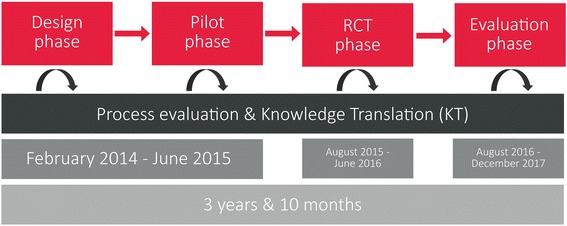
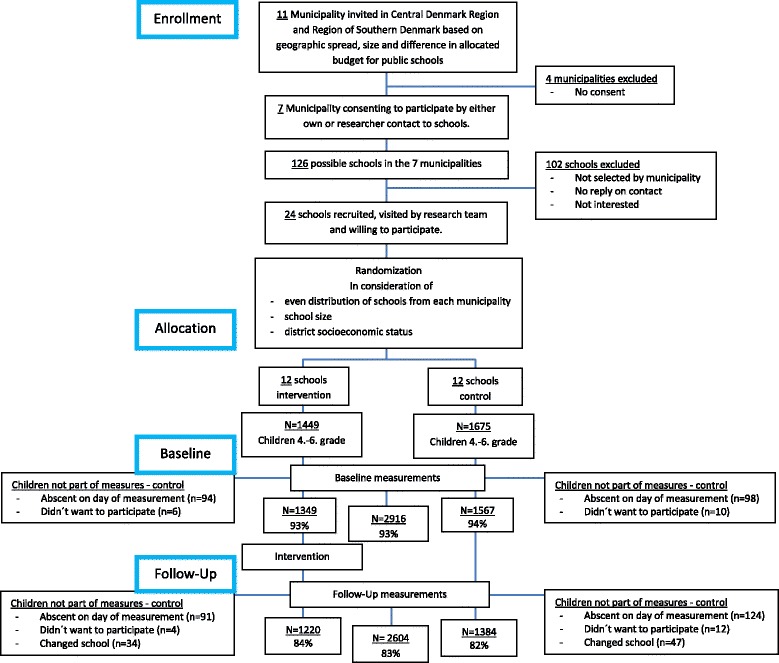
Methods: A four-phased intervention - design, pilot, RCT, evaluation - is carried out for the development, implementation and evaluation of the intervention which are guided by The Medical Research Council framework for the development of complex interventions. 24 schools have been randomized and the total study population consists of 3124 children (baseline), who are followed over a period of 9 months. Outcome measure data at the pupil level are collected using an online questionnaire at baseline and at follow-up, 9 months later with instruments for measuring primary (general physical self-worth) and secondary outcomes (self-perceived sport competences, body attractiveness, scholastic competences, social competences and global self-worth; enjoyment of PA; self-efficacy; and general well-being) that are both valid and manageable in setting-based research. The RE-AIM framework is applied as an overall instrument to guide the evaluation.
Discussion: The intervention focuses on the mental benefits of physical activity at school, which has been a rather neglected theme in health promotion research during recent decades. This is unfortunate as mental health has been proclaimed as one of the most important health concerns of the 21st century. Applying a cluster RCT study design, evaluating the real-world effectiveness of the intervention, this study is one of the largest physical activity intervention projects promoting psychosocial well-being among children and youths. Through a comprehensive effectiveness evaluation and a similar substantial process evaluation, this study is designed to gain knowledge on a broad variety of implementation issues and give detailed information on project delivery and challenges at the school level - among other things to better inform future practice.
Trial registration: Date of registration: 24 April 2015 retrospectively registered at Current Controlled Trials with study ID ISRCTN12496336.
Keywords: Children; Denmark; Physical activity; Physical education; School; Well-being; Youth.
Figures
References
-
- Biddle SJ, Mutrie N, Gorely T. Psychology of Physical Activity: Determinants, Well-Being and Interventions. 3rd ed. Abingdon: Routledge; 2015.
-
- Eime RM, Young JA, Harvey JT, Charity MJ, Payne WR. A systematic review of the psychological and social benefits of participation in sport for children and adolescents: informing development of a conceptual model of health through sport. Int J Behav Nutr Phys Act. 2013;10:98. doi: 10.1186/1479-5868-10-98. - DOI - PMC - PubMed
Publication types
MeSH terms
Associated data
LinkOut - more resources
Full Text Sources
Other Literature Sources
Medical
Miscellaneous
