


Metabolic syndrome is independently associated with increased 20-year mortality in patients with stable coronary artery disease
- PMID: 27793156
- PMCID: PMC5084328
- DOI: 10.1186/s12933-016-0466-6
Metabolic syndrome is independently associated with increased 20-year mortality in patients with stable coronary artery disease
Abstract
Background: Data regarding long-term association of metabolic syndrome (MetS) with adverse outcomes are conflicting. We aim to determine the independent association of MetS (based on its different definitions) with 20 year all-cause mortality among patients with stable coronary artery disease (CAD).
Methods: Our study comprised 15,524 patients who were enrolled in the Bezafibrate Infarction Prevention registry between February 1, 1990, and October 31, 1992, and subsequently followed-up for the long-term mortality through December 31, 2014. MetS was defined according to two definitions: The International Diabetes Federation (IDF); and the National Cholesterol Education Program-Third Adult Treatment Panel (NCEP).
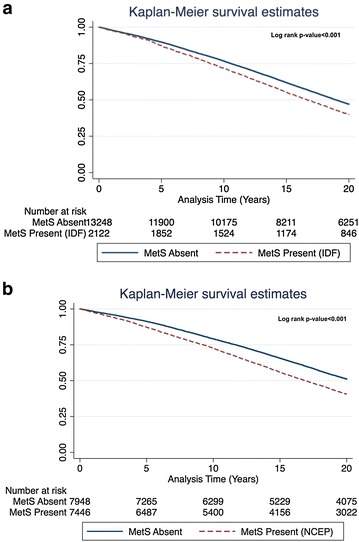
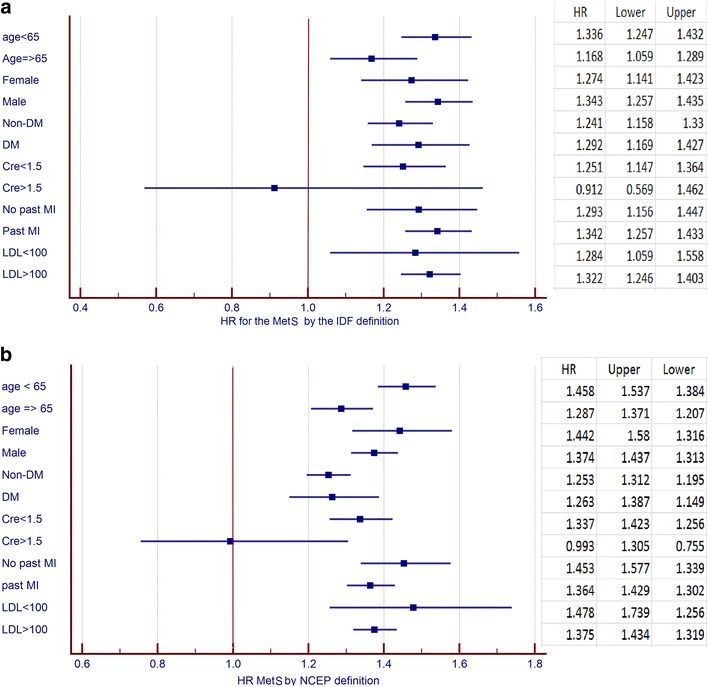
Results: According to the IDF criteria 2122 (14%) patients had MetS, whereas according to the NCEP definition 7446 (48%) patients had MetS. Kaplan-Meier survival analysis showed that all-cause mortality was significantly higher among patients with MetS defined by both the IDF (67 vs. 61%; log rank-p < 0.001) as well as NCEP (67 vs. 54%; log rank-p < 0.001) criteria. Multivariate adjusted mortality risk was 17% greater [Hazard Ratio (HR) 1.17; 95% Confidence Interval (CI) 1.07-1.28] in patients with MetS according to IDF and 21% (HR 1.21; 95% CI 1.13-1.29) using the NCEP definition. Subgroup analysis demonstrated that long-term increased mortality risk associated with MetS was consistent among most clinical subgroups excepted patients with renal failure (p value for interaction < 0.05).
Conclusions: Metabolic syndrome is independently associated with an increased 20-year all-cause mortality risk among patients with stable CAD. This association was consistent when either the IDF or NCEP definitions were used. Trial registration retrospective registered.
Keywords: All-cause mortality; Long term outcomes; Metabolic syndrome; Prognosis; Stable coronary artery disease.
Figures
References
MeSH terms
Substances
LinkOut - more resources
Full Text Sources
Other Literature Sources
Medical
Miscellaneous
