Dual-Reporter Mycobacteriophages (Φ2DRMs) Reveal Preexisting Mycobacterium tuberculosis Persistent Cells in Human Sputum
- PMID: 27795387
- PMCID: PMC5080378
- DOI: 10.1128/mBio.01023-16
Dual-Reporter Mycobacteriophages (Φ2DRMs) Reveal Preexisting Mycobacterium tuberculosis Persistent Cells in Human Sputum
Abstract
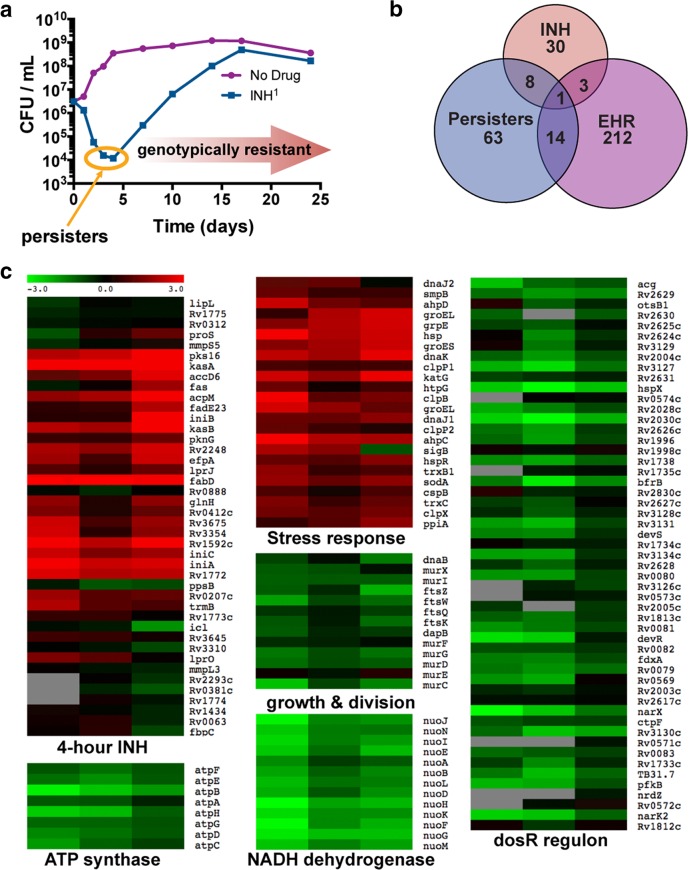
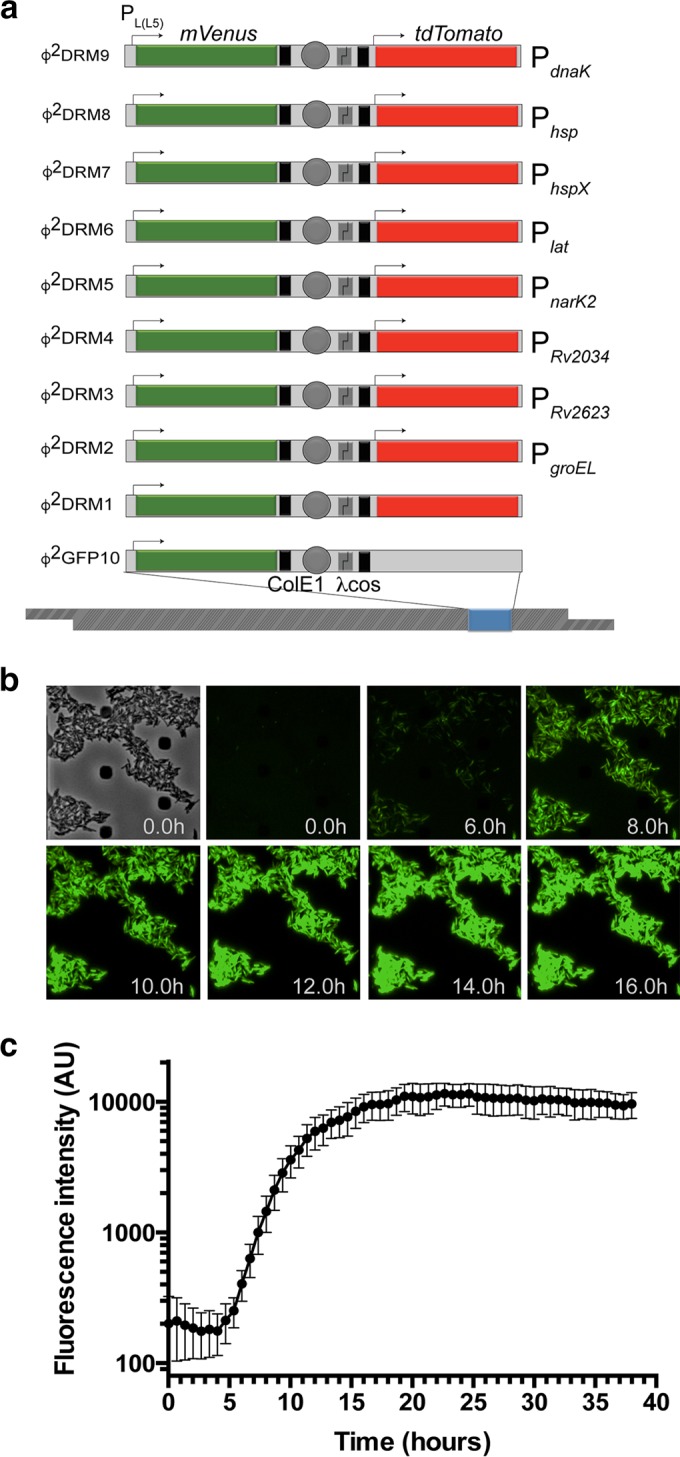
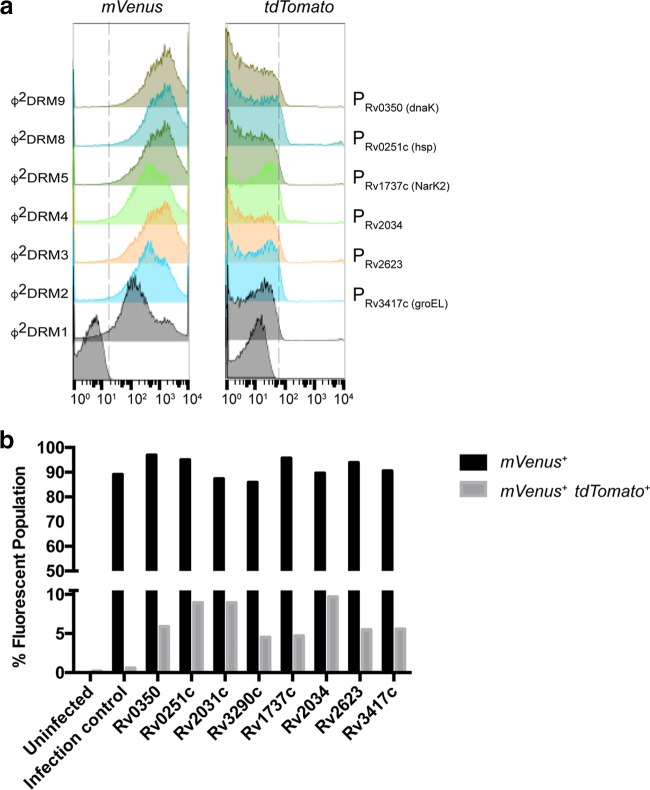
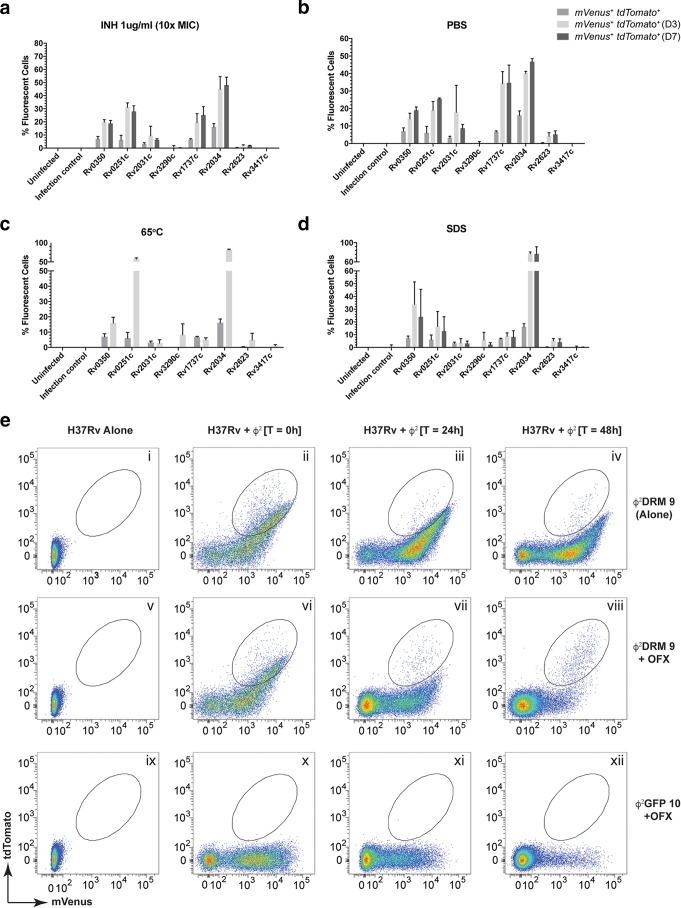
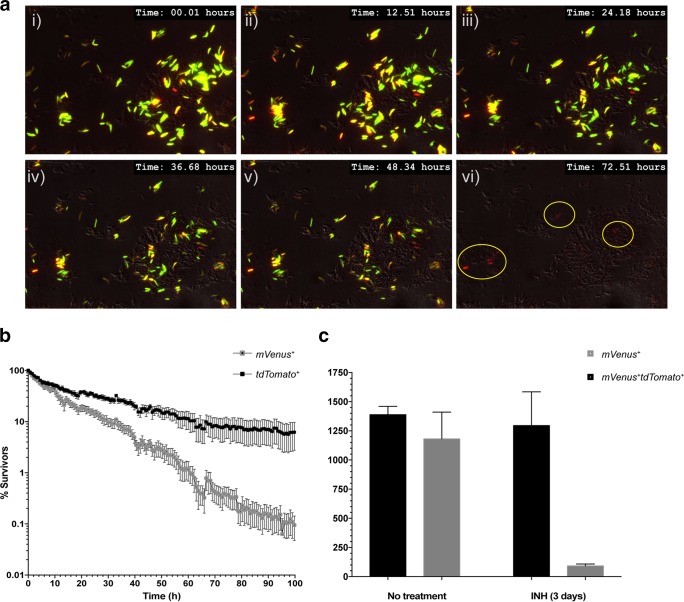
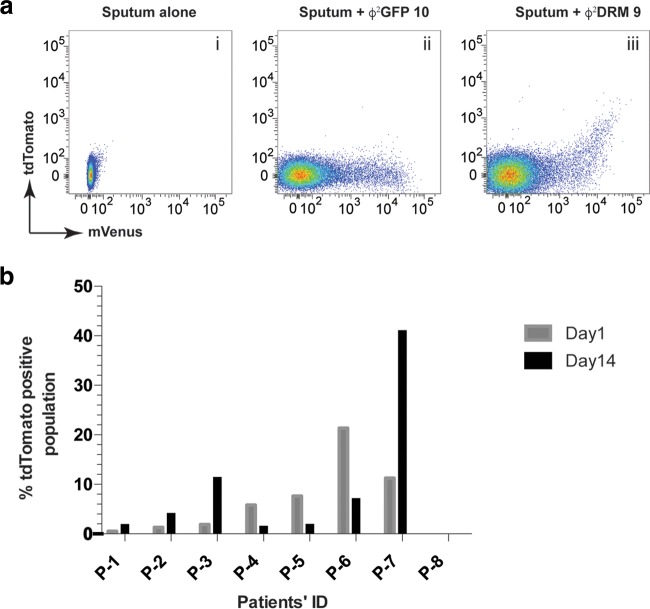
Persisters are the minor subpopulation of bacterial cells that lack alleles conferring resistance to a specific bactericidal antibiotic but can survive otherwise lethal concentrations of that antibiotic. In infections with Mycobacterium tuberculosis, such persisters underlie the need for long-term antibiotic therapy and contribute to treatment failure in tuberculosis cases. Here, we demonstrate the value of dual-reporter mycobacteriophages (Φ2DRMs) for characterizing M. tuberculosis persisters. The addition of isoniazid (INH) to exponentially growing M. tuberculosis cells consistently resulted in a 2- to 3-log decrease in CFU within 4 days, and the remaining ≤1% of cells, which survived despite being INH sensitive, were INH-tolerant persisters with a distinct transcriptional profile. We fused the promoters of several genes upregulated in persisters to the red fluorescent protein tdTomato gene in Φ2GFP10, a mycobacteriophage constitutively expressing green fluorescent protein (GFP), thus generating Φ2DRMs. A population enriched in INH persisters exhibited strong red fluorescence, by microscopy and flow cytometry, using a Φ2DRM with tdTomato controlled from the dnaK promoter. Interestingly, we demonstrated that, prior to INH exposure, a population primed for persistence existed in M. tuberculosis cells from both cultures and human sputa and that this population was highly enriched following INH exposure. We conclude that Φ2DRMs provide a new tool to identify and quantitate M. tuberculosis persister cells.
Importance: Tuberculosis (TB) is again the leading cause of death from a single infectious disease, having surpassed HIV. The recalcitrance of the TB pandemic is largely due to the ability of the pathogen Mycobacterium tuberculosis to enter a persistent state in which it is less susceptible to antibiotics and immune effectors, necessitating lengthy treatment. It has been difficult to study persister cells, as we have lacked tools to isolate these rare cells. In this article, we describe the development of dual-reporter mycobacteriophages that encode a green fluorescent marker of viability and in which the promoters of genes we have identified as induced in the persister state are fused to a gene encoding a red fluorescent protein. We show that these tools can identify heterogeneity in a cell population that correlates with propensity to survive antibiotic treatment and that the proportions of these subpopulations change in M. tuberculosis cells within human sputum during the course of treatment.
Copyright © 2016 Jain et al.
Figures
References
-
- Hobby GL, Meyer K, Chaffee E. 1942. Observations on the mechanism of action of penicillin. Exp Biol Med 50:281–285. doi: 10.3181/00379727-50-13773. - DOI
-
- Hobby GL, Meyer K, Chaffee E. 1942. Activity of penicillin in vitro. Exp Biol Med 50:277–280. doi: 10.3181/00379727-50-13772. - DOI
-
- Bigger J. 1944. Treatment of staphylococcal infections with penicillin by intermittent sterilisation. Lancet 244:497–500. doi: 10.1016/S0140-6736(00)74210-3. - DOI
-
- McCune RM Jr, Tompsett R. 1956. Fate of Mycobacterium tuberculosis in mouse tissues as determined by the microbial enumeration technique. I. The persistence of drug-susceptible tubercle bacilli in the tissues despite prolonged antimicrobial therapy. J Exp Med 104:737–762. doi: 10.1084/jem.104.5.737. - DOI - PMC - PubMed
Publication types
MeSH terms
Substances
Grants and funding
LinkOut - more resources
Full Text Sources
Other Literature Sources
Molecular Biology Databases