


Change of perspective: bibliometrics from the point of view of cited references-a literature overview on approaches to the evaluation of cited references in bibliometrics
- PMID: 27795596
- PMCID: PMC5065900
- DOI: 10.1007/s11192-016-2111-2
Change of perspective: bibliometrics from the point of view of cited references-a literature overview on approaches to the evaluation of cited references in bibliometrics
Abstract
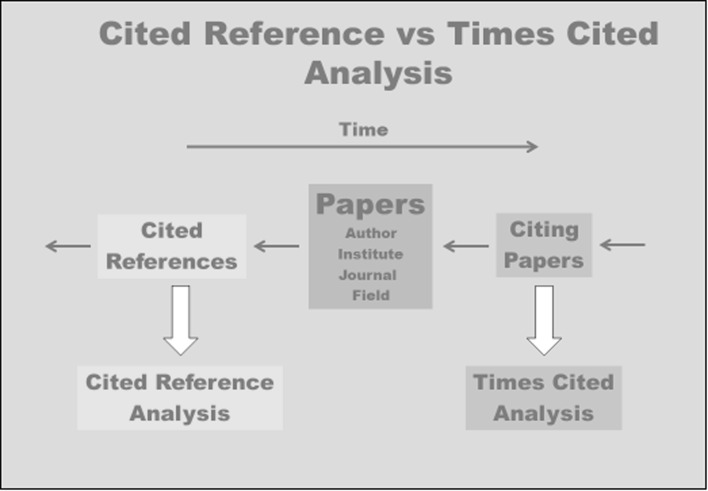
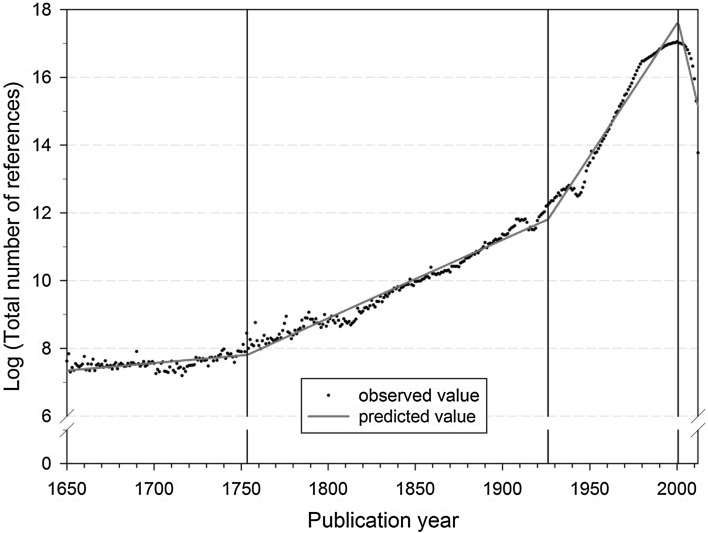
Citation analyses normally investigate the number of citations of publications (e.g. by people, institutions or journals) where the information on times cited from the bibliographic databases (such as Scopus or Web of Science) is evaluated. But in recent years, a series of works have also been published which have undertaken a change of perspective and are based on the evaluation of the cited references. The cited references are the works cited in the publications which are used to calculate the times cited. Since these evaluations have led to important insights into science and into scientometric indicators, this paper presents an overview of methods based on cited references, and examples of some empirical results from studies are presented. Thus, the investigation of references allows general statements to be made on the precision of citation analyses, and offers alternatives for the normalization of citation numbers in the framework of research evaluation using citation impact. Via the analysis of references, the historical roots of research areas or the works of decisive importance in an area can be determined. References allow quantitative statements on the interdisciplinarity of research units and the overall growth of science. The use of a selection for the analysis of references from the publications of specific research areas enables the possibility of measuring citation impact target-oriented (i.e. limited to these areas). As some empirical studies have shown, the identification of publications with a high creative content seems possible via the analysis of the cited references. The possibilities presented here for cited reference analysis indicate the great potential of the data source. We assume that there are additional possibilities for its application in scientometrics.
Keywords: Cited references; Creativity; Growth of science; Interdisciplinarity; Reference analysis.
Figures
References
-
- Bornmann L, Marx W. The proposal of a broadening of perspective in evaluative bibliometrics by complementing the times cited with a cited reference analysis. Journal of Informetrics. 2013;7(1):84–88. doi: 10.1016/j.joi.2012.09.003. - DOI
-
- Bornmann L, Marx W. The wisdom of citing scientists. Journal of the American Society of Information Science and Technology. 2014;65(6):1288–1292. doi: 10.1002/asi.23100. - DOI
-
- Bornmann L, Marx W. Methods for the generation of normalized citation impact scores in bibliometrics: Which method best reflects the judgements of experts? Journal of Informetris. 2015;9(2):408–418. doi: 10.1016/j.joi.2015.01.006. - DOI
-
- Bornmann L, Marx W, Barth A. The normalization of citation counts based on classification systems. Publications. 2013;1(2):78–86. doi: 10.3390/publications1020078. - DOI
-
- Bornmann L, Mutz R. Growth rates of modern science: A bibliometric analysis based on the number of publications and cited references. Journal of the Association for Information Science and Technology. 2015;66(11):2215–2222. doi: 10.1002/asi.23329. - DOI
LinkOut - more resources
Full Text Sources
Other Literature Sources
Research Materials