


Molecular and Cellular Mechanisms of Antitumor Immune Response Activation by Dendritic Cells
- PMID: 27795841
- PMCID: PMC5081705
Molecular and Cellular Mechanisms of Antitumor Immune Response Activation by Dendritic Cells
Abstract
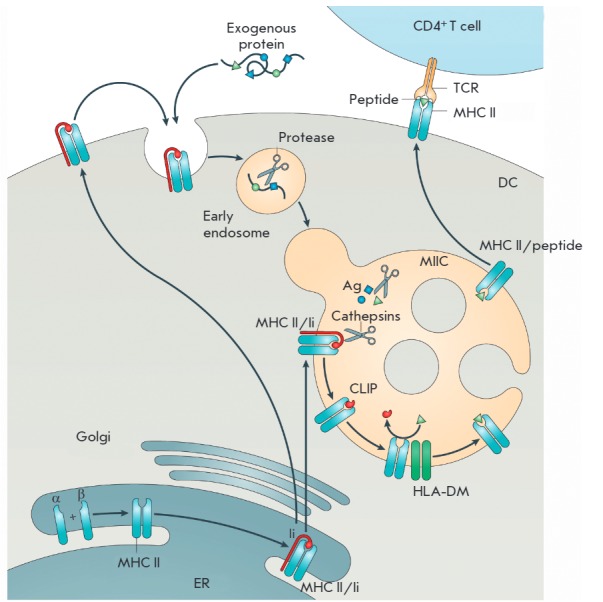
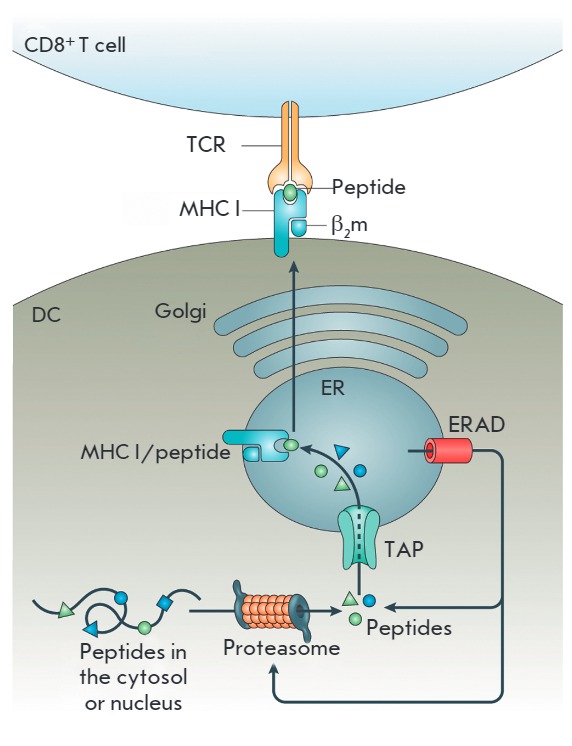
Dendritic cells (DCs) play a crucial role in the initiation and regulation of the antitumor immune response. Already , DC-based antitumor vaccines have been thoroughly explored both in animal tumor models and in clinical trials. DC-based vaccines are commonly produced from DC progenitors isolated from peripheral blood or bone marrow by culturing in the presence of cytokines, followed by loading the DCs with tumor-specific antigens, such as DNA, RNA, viral vectors, or a tumor cell lysate. However, the efficacy of DC-based vaccines remains low. Undoubtedly, a deeper understanding of the molecular mechanisms by which DCs function would allow us to enhance the antitumor efficacy of DC-based vaccines in clinical applications. This review describes the origin and major subsets of mouse and human DCs, as well as the differences between them. The cellular mechanisms of presentation and cross-presentation of exogenous antigens by DCs to T cells are described. We discuss intracellular antigen processing in DCs, cross-dressing, and the acquisition of the antigen cross-presentation function. A particular section in the review describes the mechanisms of tumor escape from immune surveillance through the suppression of DCs functions.
Keywords: antigen presentation and cross-presentation; dendritic cells; proteasome; subsets; tumor immunosuppression.
Figures
References
-
- Greenberg S., Grinstein S.. Curr. Opin. Immunol. 2002;14:136–145. - PubMed
-
- Yarilin A.A. The basics of immunology. M.: Medicine, 1999. 1999. The basics of immunology; p. 608.
-
- Figdor C.G., van Kooyk Y., Adema G.J.. Nat. Rev. Immunol. 2002;2:77–84. - PubMed
-
- Fong L., Engleman E.G.. Annu. Rev. Immunol. 2000;18:245–273. - PubMed
LinkOut - more resources
Full Text Sources
Other Literature Sources