. 2016 Oct 31:6:36170.
doi: 10.1038/srep36170.

Antileukemic Scalarane Sesterterpenoids and Meroditerpenoid from Carteriospongia (Phyllospongia) sp., Induce Apoptosis via Dual Inhibitory Effects on Topoisomerase II and Hsp90

Affiliations

Antileukemic Scalarane Sesterterpenoids and Meroditerpenoid from Carteriospongia (Phyllospongia) sp., Induce Apoptosis via Dual Inhibitory Effects on Topoisomerase II and Hsp90

Kuei-Hung Lai et al. Sci Rep. .

Abstract

Two new scalarane sesterterpenoids, 12β-(3'β-hydroxybutanoyloxy)-20,24-dimethyl-24-oxo-scalara-16-en-25-al (1) and 12β-(3'β-hydroxypentanoyloxy)-20,24-dimethyl-24-oxo-scalara-16-en-25-al (2), along with one known tetraprenyltoluquinol-related metabolite (3), were isolated from the sponge Carteriospongia sp. In leukemia Molt 4 cells, 1 at 0.0625 μg/mL (125 nM) triggered mitochondrial membrane potential (MMP) disruption and apoptosis showing more potent effect than 2 and 3. The isolates inhibited topoisomerase IIα expression. The apoptotic-inducing effect of 3 was supported by the in vivo experiment through suppressing the volume of xenograft tumor growth (47.58%) compared with the control. Compound 1 apoptotic mechanism of action in Molt 4 cells was further elucidated through inducing ROS generation, calcium release and ER stress. Using the molecular docking analysis, 1 exhibited more binding affinity to N-terminal ATP-binding pocket of Hsp90 protein than 17-AAG, a standard Hsp90 inhibitor. The expression of Hsp90 client proteins, Akt, p70S6k, NFκB, Raf-1, p-GSK3β, and XIAP, MDM 2 and Rb2, and CDK4 and Cyclin D3, HIF 1 and HSF1 were suppressed by the use of 1. However, the expression of Hsp70, acetylated tubulin, and activated caspase 3 were induced after 1 treatment. Our results suggested that the proapoptotic effect of the isolates is mediated through the inhibition of Hsp90 and topoisomerase activities.


Figures
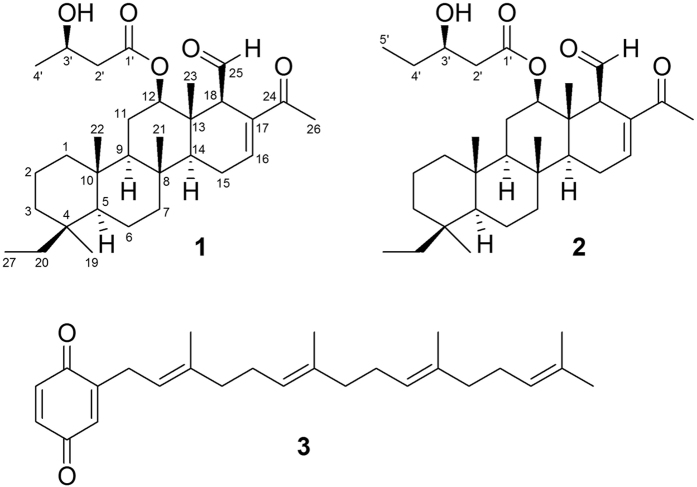
Figure 1
Figure 1. Terpenoids from Carteriospongia (Phyllospongia) sp.
Figure 2
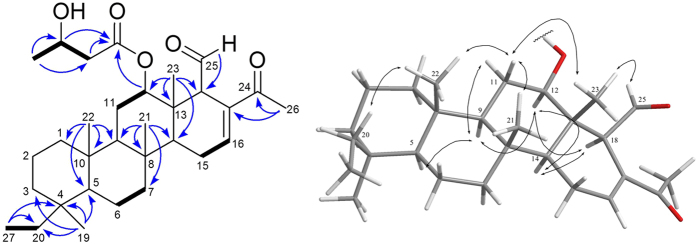
Figure 2. Selected 1H–1 H COSY (), HMBC () and NOESY (↔) correlations of 1.
Figure 3
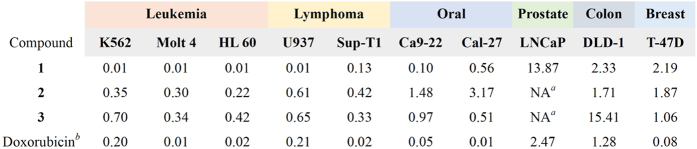
Figure 3. Cytotoxic effects of 1–3 against several cancer cell lines for 72 h (IC50, μg/mL).
aNA (non-active) = IC50 > 20 μg/mL for 72 h. bPositive control.
Figure 4
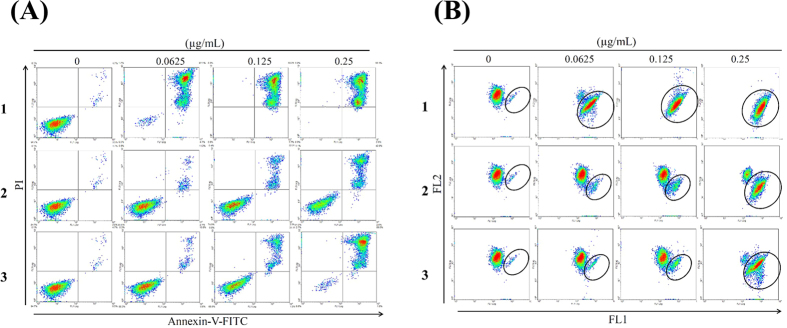
Figure 4. Effect of compounds 1–3 on apoptosis induction and MMP disruption.
Cells were treated with the indicated concentration of 13 for 24 h, respectively. (A) Apoptosis induction and (B) mitochondrial membrane potential were assessed with annexin V/PI and JC-1 staining using flow cytometric analysis.
Figure 5
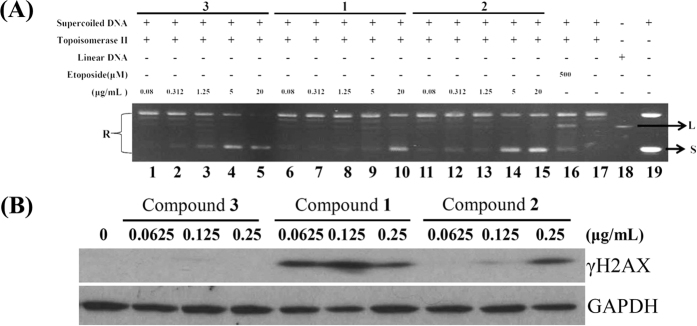
Figure 5. Effect of marine terpenoids on Topo II α activity.
(A) Effect of compounds 13 on topo II activity. Lanes 1–5: 3 (0.08, 0.3125, 1.25, 5, and 20 μg/mL); Lanes 6–10: 1 (0.08, 0.3125, 1.25, 5, and 20 μg/mL); Lanes 11–15: 2 (0.08, 0.3125, 1.25, 5, and 20 μg/mL); Lane 16: positive control, etoposide (500 μM), as topo II poison (induction of linear DNA); Lane 17: plasmid DNA + topo II + solvent control (induction of DNA relaxation); Lane 18: Linear DNA; Lane 19: negative control plasmid DNA (supercoiled DNA); The full length gel of Topo IIα is supplied in Supplementary data Fig. S20 (B) The treatment with marine terpenoids induced the expression of γH2AX protein in Molt 4 cells. The cells were treated with compounds 1-3 (0, 0.0625, 0.125 and 0.25 μg/mL) for 24 h, respectively. Protein expression was analyzed with Western blotting. GAPDH was used the loading control.
Figure 6
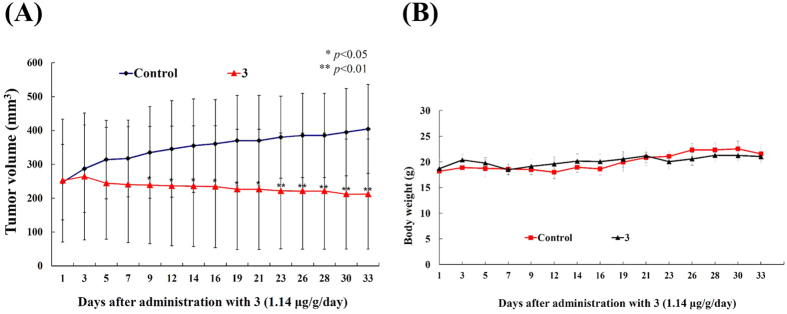
Figure 6. Effect of compound 3 on tumor growth and body weight in in vivo human Molt 4 tumor xenograft animal model.
Tumor-bearing nude mice were intraperitoneally injected with solvent control (DMSO) and 3 (1.14 μg/g) for 33 days. (A) Tumor volumes were measured every other day, and the results are expressed as mean ± SD. *Significantly different from control groups at *p < 0.05; **p < 0.01. (B) The body weight were measured every other day, and the results are expressed as mean ± SD. Control, n = 8; Compound 3, n = 7.
Figure 7
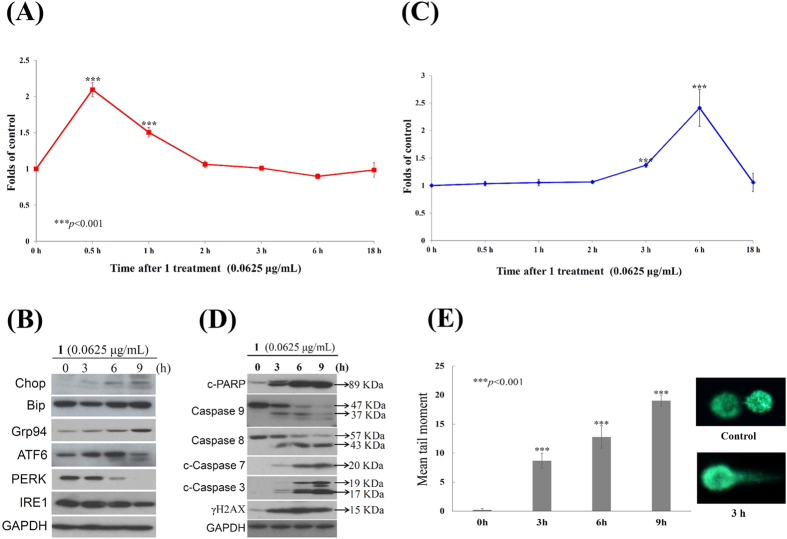
Figure 7. Apoptotic effect of compound 1 involved the induction of ROS generation, ER stress and DNA damage in Molt 4 cells.
(A,C) Effect of 1 on ROS generation and calcium accumulation. Cells were treated with 1 (0.0625 μg/mL) for the indicated times. Quantitative results showed a gradual increase in the ROS production or calcium accumulation in response to the 1 treatment when compared with the control group. (***p < 0.001); (B,D) Cells were harvested and lysates were prepared and subjected to SDS-PAGE followed by immunoblotting for ER- or apoptosis-related proteins. GAPDH was used as the loading control. The full length blots of caspase 9, 8 and 3 expression are supplied in Supplementary data Fig. S21 (E) An example of “comet tail” due to chromosomal DNA double-strand breaks in 1 (0.0625 μg/mL)-treated Molt 4 cells compared to the untreated control. Electrophoresis was carried out under neutral conditions. Quantitative results showed a gradual increase in tail movement upon 1 treatment for indicated time when compared with the control. Results are presented as mean ± SD of three independent experiments (*p < 0.05).
Figure 8
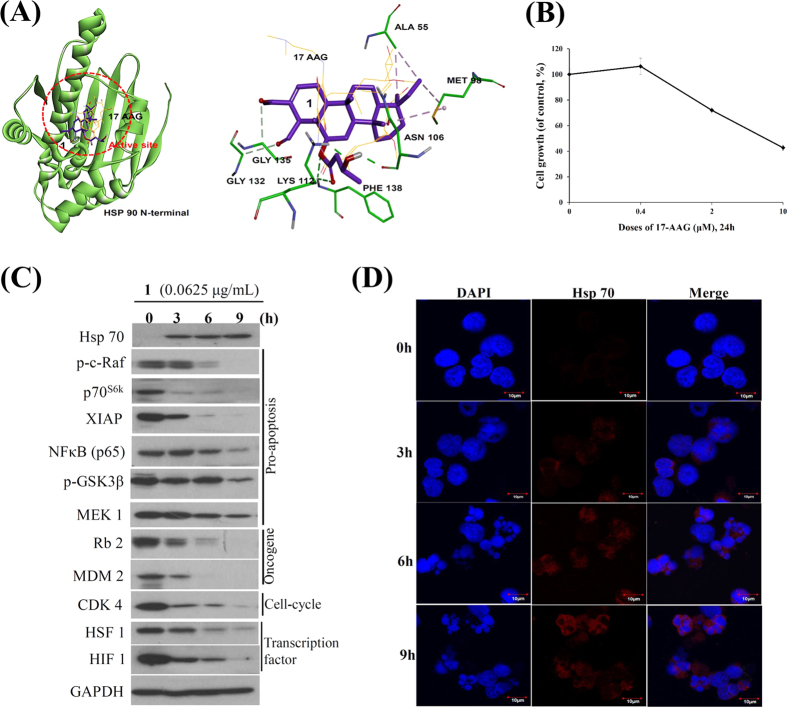
Figure 8. Compound 1 as the potent inhibitor of Hsp90.
(A) Molecular modeling of Hsp90 protein with compound 1 as assessed by Autodock 4.2 software with Lamarckian Genetic Algorithm. (17-AAG: labeled with yellow; Compound 1: labeled with purple). (B) Effect of 17-AAG on cytotoxicity of Molt 4 cells. (C) Effect of compound 1 on expression of Hsp90 client proteins. (D) Effect of compound 1 on localization of Hsp70 protein.

References

    1. Sreedhar A. S. & Csermely P. Heat shock proteins in the regulation of apoptosis: new strategies in tumor therapy: a comprehensive review. Pharmacol Ther 101, 227–257, doi: 10.1016/j.pharmthera.2003.11.004 (2004). - DOI - PubMed
    1. Zhang K. et al. A novel mechanism for small heat shock proteins to function as molecular chaperones. Sci Rep 5, 8811, doi: 10.1038/srep08811 (2015). - DOI - PMC - PubMed
    1. Jego G., Hazoume A., Seigneuric R. & Garrido C. Targeting heat shock proteins in cancer. Cancer Lett 332, 275–285, doi: 10.1016/j.canlet.2010.10.014 (2013). - DOI - PubMed
    1. Porter J. R., Fritz C. C. & Depew K. M. Discovery and development of Hsp90 inhibitors: a promising pathway for cancer therapy. Curr Opin Chem Biol 14, 412–420, doi: 10.1016/j.cbpa.2010.03.019 (2010). - DOI - PubMed
    1. Pandey M. K. et al. Targeting Cell Survival Proteins for Cancer Cell Death. Pharmaceuticals 9, doi: 10.3390/ph9010011 (2016). - DOI - PMC - PubMed

Publication types

MeSH terms