


Serological and molecular epidemiology of canine adenovirus type 1 in red foxes (Vulpes vulpes) in the United Kingdom
- PMID: 27796367
- PMCID: PMC5086850
- DOI: 10.1038/srep36051
Serological and molecular epidemiology of canine adenovirus type 1 in red foxes (Vulpes vulpes) in the United Kingdom
Abstract
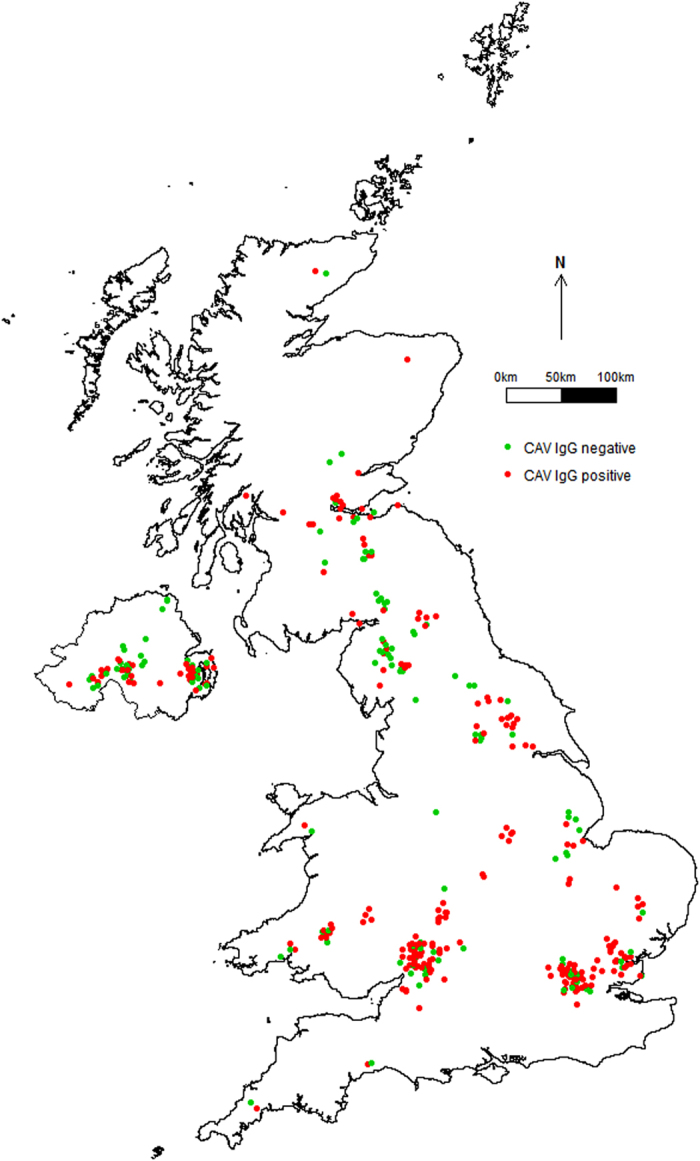
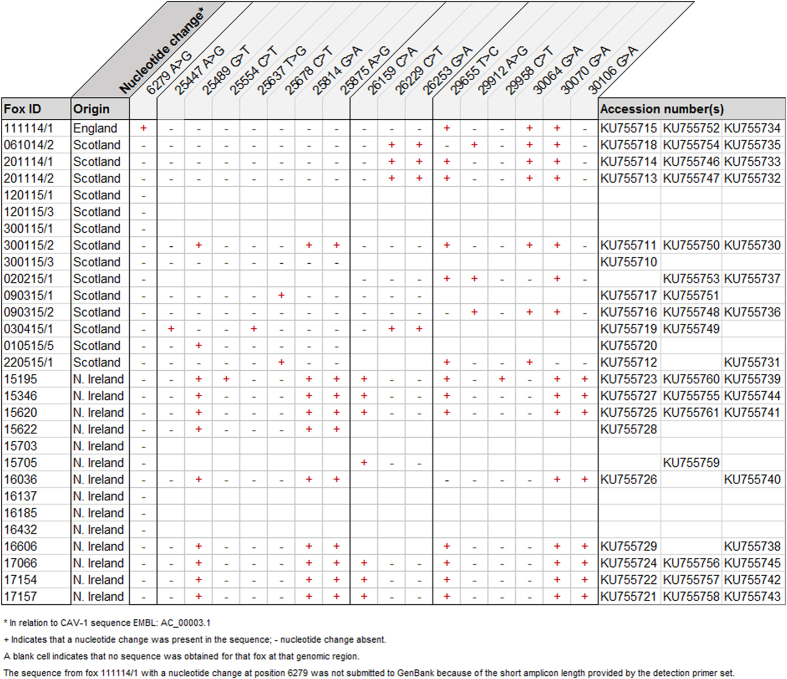
Canine adenovirus type 1 (CAV-1) causes infectious canine hepatitis (ICH), a frequently fatal disease which primarily affects canids. In this study, serology (ELISA) and molecular techniques (PCR/qPCR) were utilised to investigate the exposure of free-ranging red foxes (Vulpes vulpes) to CAV-1 in the United Kingdom (UK) and to examine their role as a wildlife reservoir of infection for susceptible species. The role of canine adenovirus type 2 (CAV-2), primarily a respiratory pathogen, was also explored. In foxes with no evidence of ICH on post-mortem examination, 29 of 154 (18.8%) red foxes had inapparent infections with CAV-1, as detected by a nested PCR, in a range of samples, including liver, kidney, spleen, brain, and lung. CAV-1 was detected in the urine of three red foxes with inapparent infections. It was estimated that 302 of 469 (64.4%) red foxes were seropositive for canine adenovirus (CAV) by ELISA. CAV-2 was not detected by PCR in any red foxes examined. Additional sequence data were obtained from CAV-1 positive samples, revealing regional variations in CAV-1 sequences. It is concluded that CAV-1 is endemic in free-ranging red foxes in the UK and that many foxes have inapparent infections in a range of tissues.
Figures
References
-
- Decaro N., Buonavoglia C., Eatwell K., Erdélyi K. & Duff J. P. Adenovirus infections. In Infectious Diseases of Wild Mammals and Birds in Europe 1st edn (eds Gavier-Widén D., Duff J. P. & Meredith A.) Ch. 14, 210–218 (Wiley-Blackwell, 2012).
-
- Green R. G., Zeigler N. R., Green B. B. & Dewey E. T. Epizootic fox encephalitis. I. General description. Am. J. Hyg. 12, 109–129 (1930).
-
- Walker D. et al. Infectious canine hepatitis in red foxes (Vulpes vulpes) in wildlife rescue centres in the United Kingdom. Vet. Rec. 178, 421 (2016). - PubMed
-
- Cabasso V. J. Infectious canine hepatitis virus. Ann. N. Y. Acad. Sci. 101, 498–514 (1962). - PubMed
Publication types
MeSH terms
Substances
Grants and funding
LinkOut - more resources
Full Text Sources
Other Literature Sources
