


What factors predict length of stay in a neonatal unit: a systematic review
- PMID: 27797978
- PMCID: PMC5073598
- DOI: 10.1136/bmjopen-2015-010466
What factors predict length of stay in a neonatal unit: a systematic review
Abstract
Objective: In the UK, 1 in 10 babies require specialist neonatal care. This care can last from hours to months depending on the need of the baby. The increasing survival of very preterm babies has increased neonatal care resource use. Evidence from multiple studies is crucial to identify factors which may be important for predicting length of stay (LOS). The ability to predict LOS is vital for resource planning, decision-making and parent counselling. The objective of this review was to identify which factors are important to consider when predicting LOS in the neonatal unit.
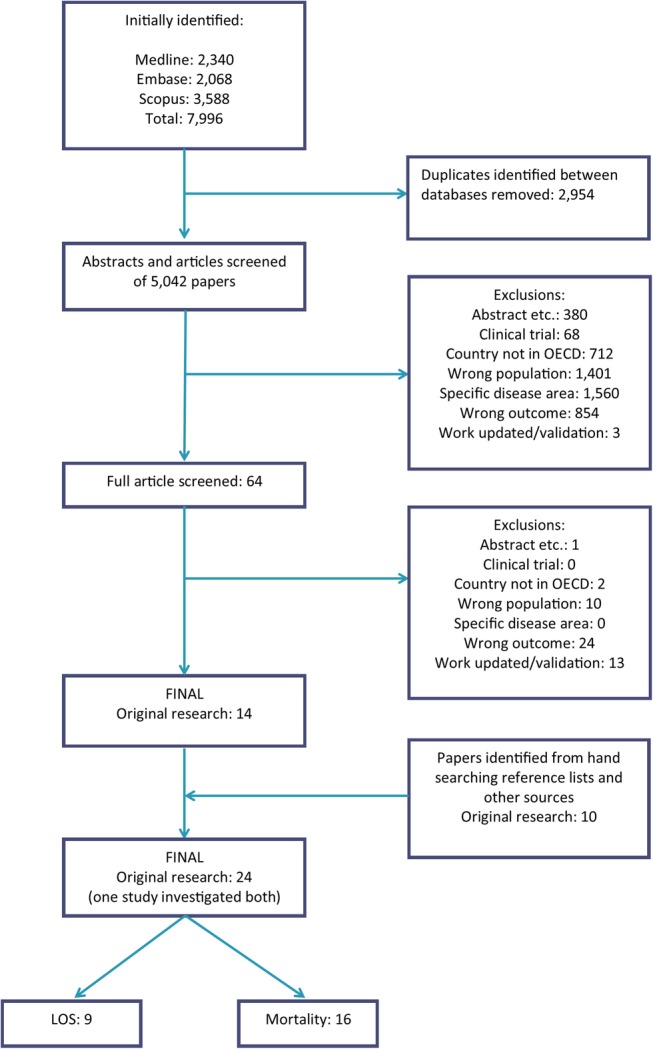
Design: A systematic review was undertaken which searched MEDLINE, EMBASE and Scopus for papers from 1994 to 2016 (May) for research investigating prediction of neonatal LOS. Strict inclusion and exclusion criteria were applied. Quality of each study was discussed, but not used as a reason for exclusion from the review.
Main outcome measure: Prediction of LOS in the neonatal unit.
Results: 9 studies were identified which investigated the prediction of neonatal LOS indicating a lack of evidence in the area. Inherent factors, particularly birth weight, sex and gestational age allow for a simple and objective prediction of LOS, which can be calculated on the first day of life. However, other early occurring factors may well also be important and estimates may need revising throughout the baby's stay in hospital.
Conclusions: Predicting LOS is vital to aid the commissioning of services and to help clinicians in their counselling of parents. The lack of evidence in this area indicates a need for larger studies to investigate methods of accurately predicting LOS.
Keywords: EPIDEMIOLOGY; NEONATOLOGY.
Published by the BMJ Publishing Group Limited. For permission to use (where not already granted under a licence) please go to http://www.bmj.com/company/products-services/rights-and-licensing/.
Conflict of interest statement
Conflicts of Interest: None declared.
Figures
References
-
- National Institute for Health and Clinical Excellence (NICE), Quality Standards Programme. NICE cost impact and commissioning assessment: quality standard for specialist neonatal care 2010. https://www.nice.org.uk/guidance/qs4
-
- Field DJ, Dorling JS, Manktelow BN et al. Survival of extremely premature babies in a geographically defined population: prospective cohort study of 1994-9 compared with 2000-5. BMJ 2008;336:1221–3. 10.1136/bmj.39555.670718.BE - DOI - PMC - PubMed
-
- Organisation for Economic Co-operation and Development (OECD). OECD: better policies for better lives . 2014. http://www.oecd.org
-
- University of York Centre for Reviews Dissemination. Systematic reviews: CRD's guidance for undertaking reviews in healthcare. Centre for Reviews and Dissemination, 2009.
Publication types
MeSH terms
Grants and funding
LinkOut - more resources
Full Text Sources
Other Literature Sources
