


Zika virus infection damages the testes in mice
- PMID: 27798603
- PMCID: PMC5432198
- DOI: 10.1038/nature20556
Zika virus infection damages the testes in mice
Abstract
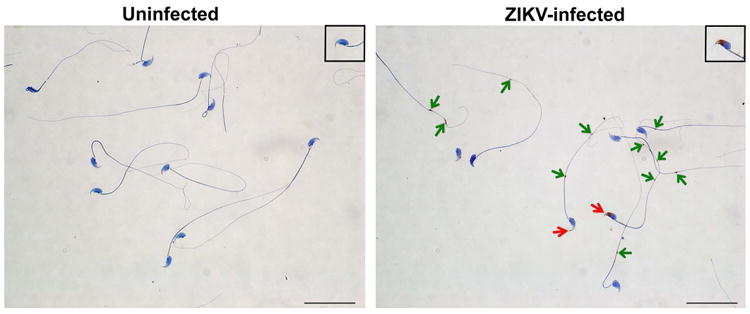
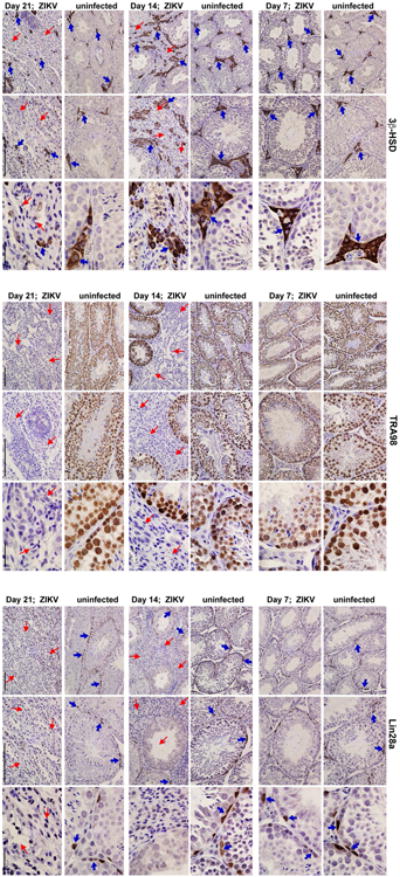
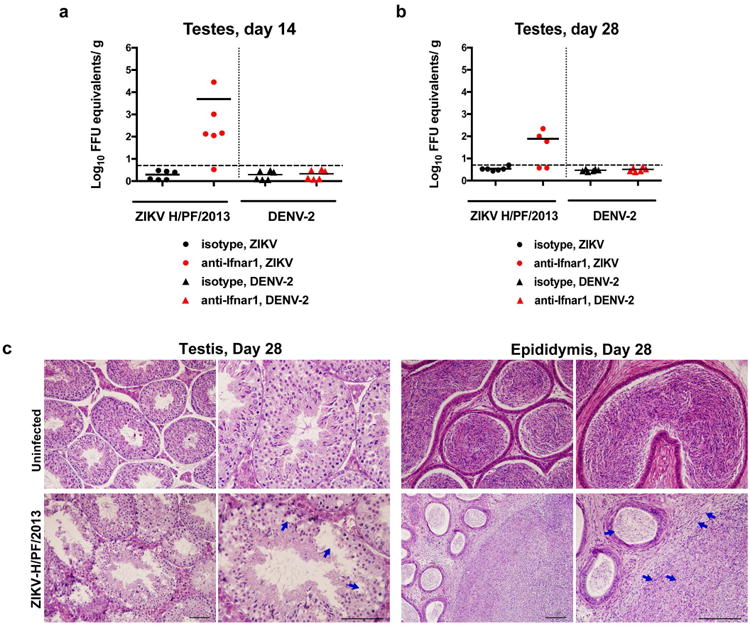
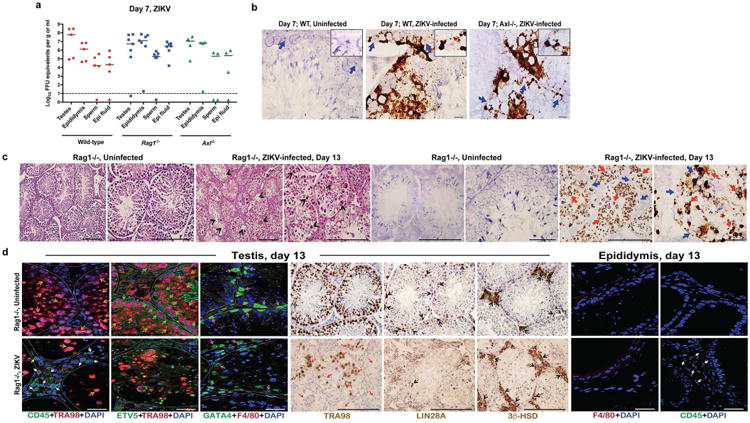
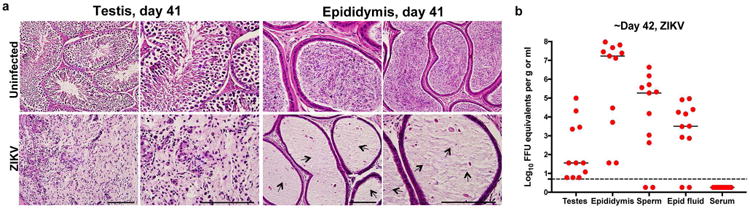
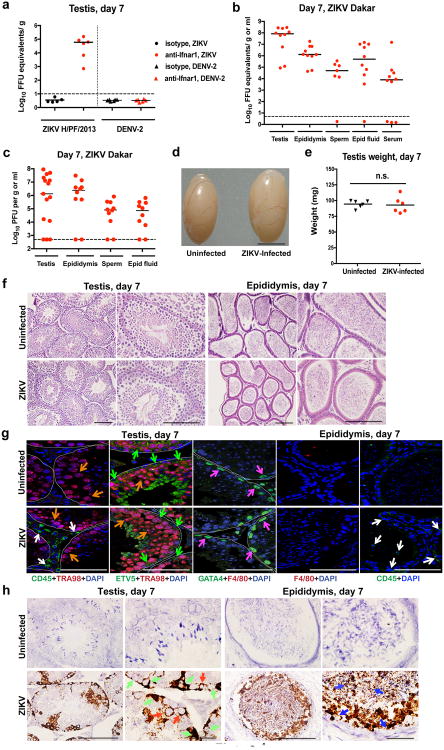
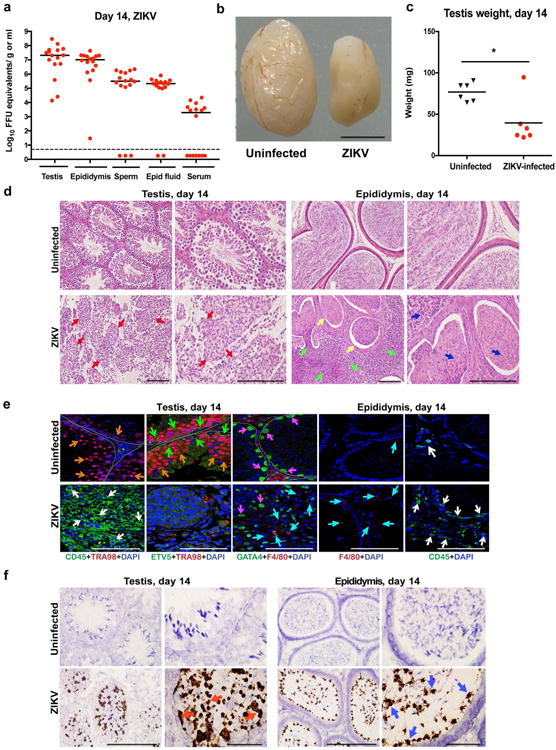
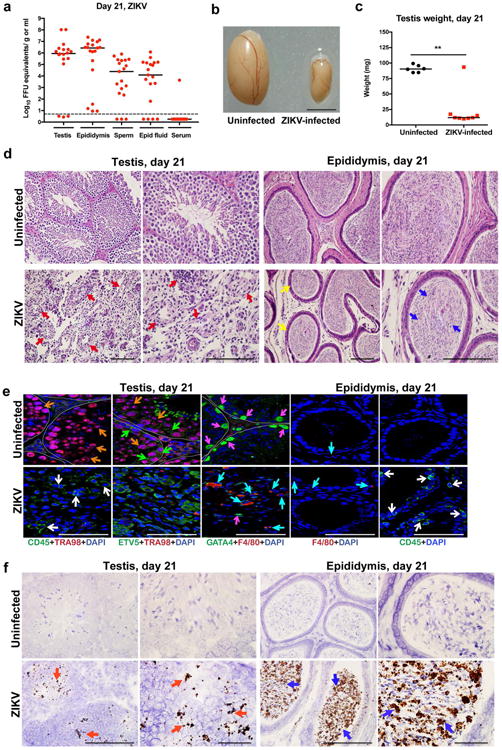
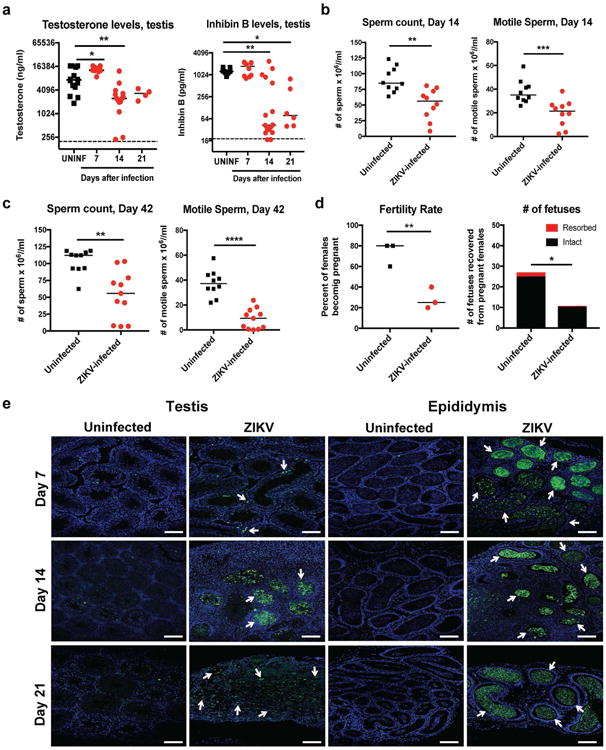
Infection of pregnant women with Zika virus (ZIKV) can cause congenital malformations including microcephaly, which has focused global attention on this emerging pathogen. In addition to transmission by mosquitoes, ZIKV can be detected in the seminal fluid of affected males for extended periods of time and transmitted sexually. Here, using a mouse-adapted African ZIKV strain (Dakar 41519), we evaluated the consequences of infection in the male reproductive tract of mice. We observed persistence of ZIKV, but not the closely related dengue virus (DENV), in the testis and epididymis of male mice, and this was associated with tissue injury that caused diminished testosterone and inhibin B levels and oligospermia. ZIKV preferentially infected spermatogonia, primary spermatocytes and Sertoli cells in the testis, resulting in cell death and destruction of the seminiferous tubules. Less damage was caused by a contemporary Asian ZIKV strain (H/PF/2013), in part because this virus replicates less efficiently in mice. The extent to which these observations in mice translate to humans remains unclear, but longitudinal studies of sperm function and viability in ZIKV-infected humans seem warranted.
Figures
Comment in
-
Disease watch: Zika virus - concerns for male fertility.Nat Rev Endocrinol. 2017 Jan;13(1):3. doi: 10.1038/nrendo.2016.191. Epub 2016 Nov 18. Nat Rev Endocrinol. 2017. PMID: 27857129 No abstract available.
References
Additional References (Methods)
Publication types
MeSH terms
Substances
Grants and funding
- U19 AI083019/AI/NIAID NIH HHS/United States
- R01 AI073755/AI/NIAID NIH HHS/United States
- R01 HD083895/HD/NICHD NIH HHS/United States
- P41 GM103422/GM/NIGMS NIH HHS/United States
- P50 HD028934/HD/NICHD NIH HHS/United States
- T32 AI007163/AI/NIAID NIH HHS/United States
- T32 AI007172/AI/NIAID NIH HHS/United States
- R01 AI104972/AI/NIAID NIH HHS/United States
- UL1 TR000448/TR/NCATS NIH HHS/United States
- P41 GM103422-35/GM/NIGMS NIH HHS/United States
- R01 AI101400/AI/NIAID NIH HHS/United States
- R01 HD065435/HD/NICHD NIH HHS/United States
