Renal Fanconi Syndrome and Hypophosphatemic Rickets in the Absence of Xenotropic and Polytropic Retroviral Receptor in the Nephron
- PMID: 27799484
- PMCID: PMC5373462
- DOI: 10.1681/ASN.2016070726
Renal Fanconi Syndrome and Hypophosphatemic Rickets in the Absence of Xenotropic and Polytropic Retroviral Receptor in the Nephron
Abstract
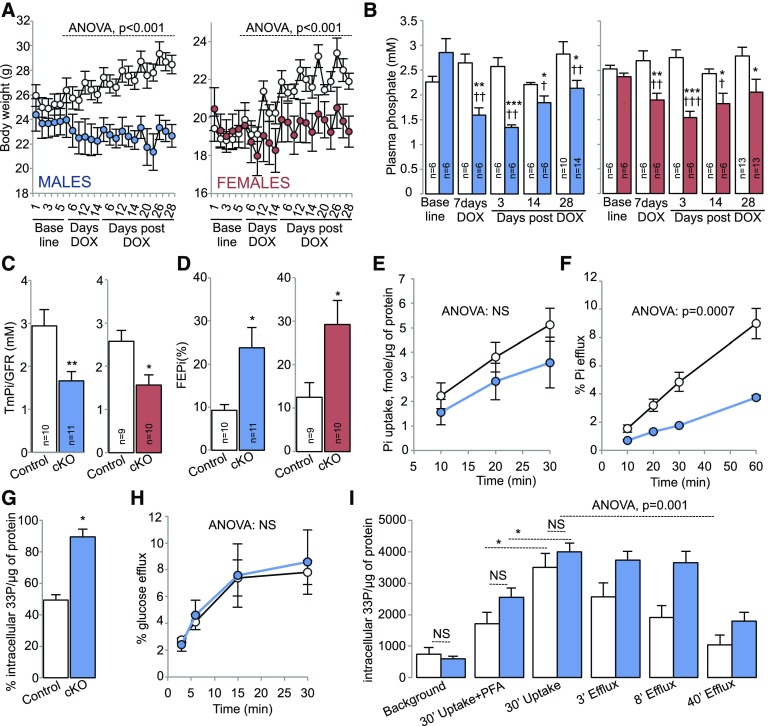
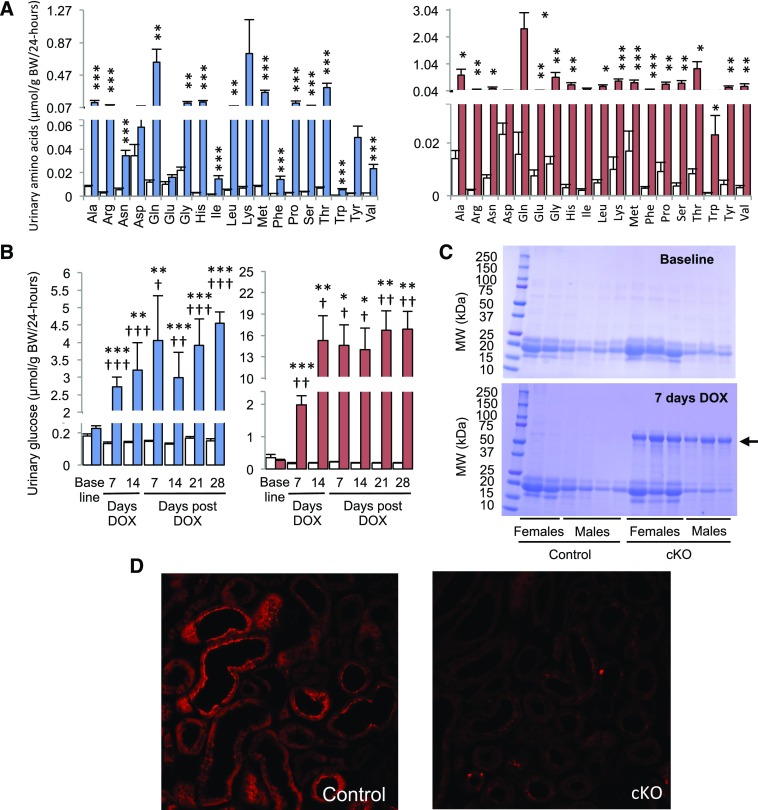
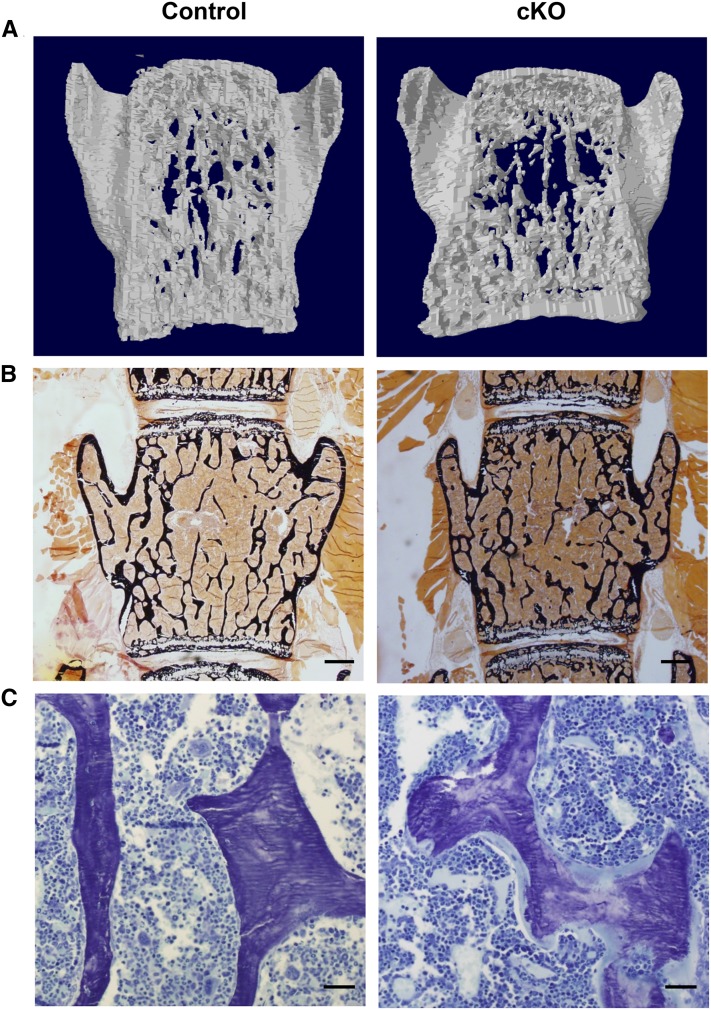
Tight control of extracellular and intracellular inorganic phosphate (Pi) levels is critical to most biochemical and physiologic processes. Urinary Pi is freely filtered at the kidney glomerulus and is reabsorbed in the renal tubule by the action of the apical sodium-dependent phosphate transporters, NaPi-IIa/NaPi-IIc/Pit2. However, the molecular identity of the protein(s) participating in the basolateral Pi efflux remains unknown. Evidence has suggested that xenotropic and polytropic retroviral receptor 1 (XPR1) might be involved in this process. Here, we show that conditional inactivation of Xpr1 in the renal tubule in mice resulted in impaired renal Pi reabsorption. Analysis of Pi transport in primary cultures of proximal tubular cells or in freshly isolated renal tubules revealed that this Xpr1 deficiency significantly affected Pi efflux. Further, mice with conditional inactivation of Xpr1 in the renal tubule exhibited generalized proximal tubular dysfunction indicative of Fanconi syndrome, characterized by glycosuria, aminoaciduria, calciuria, and albuminuria. Dramatic alterations in the renal transcriptome, including a significant reduction in NaPi-IIa/NaPi-IIc expression, accompanied these functional changes. Additionally, Xpr1-deficient mice developed hypophosphatemic rickets secondary to renal dysfunction. These results identify XPR1 as a major regulator of Pi homeostasis and as a potential therapeutic target in bone and kidney disorders.
Keywords: Fanconi syndrome; hypophosphatemic rickets; kidney; phosphate homeostasis; retroviral receptor XPR1.
Copyright © 2017 by the American Society of Nephrology.
Figures
References
-
- Stefanovic A, Arpat AB, Bligny R, Gout E, Vidoudez C, Bensimon M, Poirier Y: Over-expression of PHO1 in Arabidopsis leaves reveals its role in mediating phosphate efflux. Plant J 66: 689–699, 2011 - PubMed
-
- Giovannini D, Touhami J, Charnet P, Sitbon M, Battini JL: Inorganic phosphate export by the retrovirus receptor XPR1 in metazoans. Cell Reports 3: 1866–1873, 2013 - PubMed
-
- Wege S, Poirier Y: Expression of the mammalian Xenotropic Polytropic Virus Receptor 1 (XPR1) in tobacco leaves leads to phosphate export. FEBS Lett 588: 482–489, 2014 - PubMed
-
- Legati A, Giovannini D, Nicolas G, López-Sánchez U, Quintáns B, Oliveira JR, Sears RL, Ramos EM, Spiteri E, Sobrido MJ, Carracedo Á, Castro-Fernández C, Cubizolle S, Fogel BL, Goizet C, Jen JC, Kirdlarp S, Lang AE, Miedzybrodzka Z, Mitarnun W, Paucar M, Paulson H, Pariente J, Richard AC, Salins NS, Simpson SA, Striano P, Svenningsson P, Tison F, Unni VK, Vanakker O, Wessels MW, Wetchaphanphesat S, Yang M, Boller F, Campion D, Hannequin D, Sitbon M, Geschwind DH, Battini JL, Coppola G: Mutations in XPR1 cause primary familial brain calcification associated with altered phosphate export. Nat Genet 47: 579–581, 2015 - PMC - PubMed
MeSH terms
Substances
LinkOut - more resources
Full Text Sources
Other Literature Sources
Medical
Molecular Biology Databases
Research Materials
Miscellaneous