


Neuroimaging in vascular cognitive impairment: a state-of-the-art review
- PMID: 27806705
- PMCID: PMC5094143
- DOI: 10.1186/s12916-016-0725-0
Neuroimaging in vascular cognitive impairment: a state-of-the-art review
Abstract
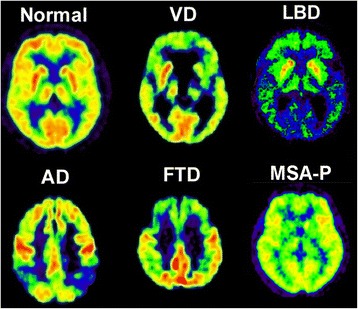
Imaging is critical in the diagnosis and treatment of dementia, particularly in vascular cognitive impairment, due to the visualization of ischemic and hemorrhagic injury of gray and white matter. Magnetic resonance imaging (MRI) and positron emission tomography (PET) provide structural and functional information. Clinical MRI is both generally available and versatile - T2-weighted images show infarcts, FLAIR shows white matter changes and lacunar infarcts, and susceptibility-weighted images reveal microbleeds. Diffusion MRI adds another dimension by showing graded damage to white matter, making it more sensitive to white matter injury than FLAIR. Regions of neuroinflammatory disruption of the blood-brain barrier with increased permeability can be quantified and visualized with dynamic contrast-enhanced MRI. PET shows metabolism of glucose and accumulation of amyloid and tau, which is useful in showing abnormal metabolism in Alzheimer's disease. Combining MRI and PET allows identification of patients with mixed dementia, with MRI showing white matter injury and PET demonstrating regional impairment of glucose metabolism and deposition of amyloid. Excellent anatomical detail can be observed with 7.0-Tesla MRI. Imaging is the optimal method to follow the effect of treatments since changes in MRI scans are seen prior to those in cognition. This review describes the role of various imaging modalities in the diagnosis and treatment of vascular cognitive impairment.
Keywords: CT; Cerebral small vessel disease; MRI; Molecular imaging; Neuroimaging; PET; Vascular cognitive impairment.
Figures

References
Publication types
MeSH terms
LinkOut - more resources
Full Text Sources
Other Literature Sources
